
Flood Readiness and Recovery
Objective
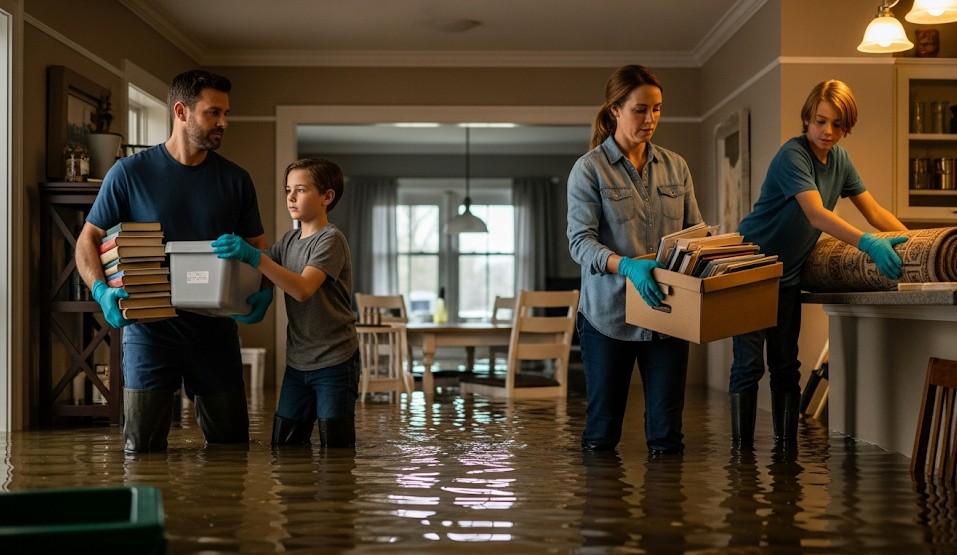
Reduce flood damage and keep people safe by acting before water rises, evacuating early when necessary, and recovering correctly after the flood passes.
Scenario (Example)
Example: A regional storm system is forecast to dump 10–15 cm of rain in 24 hours. Rivers are already high, your basement has flooded before, and nearby roads frequently become impassable during flash flooding.
Why Flooding Becomes So Dangerous
Floods often develop faster than people expect. Water does not need to be deep to become deadly. Fast-moving water can sweep people off their feet, stall vehicles, destroy roads, and contaminate entire neighborhoods with sewage and chemicals.
Many flood deaths occur because people wait too long to leave or attempt to drive through flooded roads. Water depth can be difficult to judge, especially at night or during heavy rain.
Flash floods are particularly dangerous because they can develop within minutes. Urban flooding may happen even when rivers are far away because storm drains become overwhelmed.
Before the Flood (6–24 Hours Out)
- Protect Utilities. Raise appliances off the floor if possible. Test sump pumps and battery backups. Shut off breakers to basement circuits if water becomes likely.
- Use Barriers Correctly. Stack sandbags in overlapping rows with plastic sheeting facing the water side. Keep exits clear so evacuation remains possible.
- Move Valuables Early. Elevate electronics, photos, tools, and important documents. Waterproof bins and contractor bags work well for temporary protection.
- Prepare Vehicles. Park on high ground facing outward for quick departure. Keep fuel tanks above half full.
- Check Communications. Monitor weather alerts continuously. Review your family communications plan in case networks become overloaded.
- Identify Escape Routes. Choose at least two evacuation routes that avoid low-water crossings and flood-prone underpasses.
Flood Supply Priorities
Flood emergencies often involve power outages, contaminated water, and road closures. Build a dedicated flood kit before storm season begins.
- Flashlights and spare batteries
- Portable power bank
- Waterproof document bag
- Rubber boots and gloves
- Plastic sheeting and duct tape
- Battery weather radio
- Food and water for 72 hours
- Prescription medications
- N95 masks and cleaning supplies
For broader outage preparation, see our blackout preparedness guide.
Evacuation Timing
One of the biggest mistakes during floods is waiting too long to leave. Traffic, panic, and road closures compound quickly once flooding begins.
If evacuation is recommended, leaving early is usually safer than trying to protect additional belongings. Roads that are open now may become impossible to use an hour later.
Families should establish clear evacuation trigger points ahead of time, such as:
- Water entering streets nearby
- Mandatory evacuation notice
- Rapidly rising creek or river levels
- Power failure combined with heavy rain
- Loss of safe escape routes
During the Flood
- Leave immediately if evacuation is advised.
- Never drive through moving water. “Turn Around, Don’t Drown.”
- Only 15–30 cm of moving water can sweep away many vehicles.
- Avoid walking through floodwater because debris, contamination, and hidden holes may be present.
- If trapped inside, move to the highest safe level with an exit path.
- Avoid attics without roof access because rising water can trap occupants.
Floodwater Hazards
Floodwater should always be treated as contaminated. Sewage, fuel, chemicals, sharp debris, and electrical hazards are common after major flooding.
Standing water may also contain bacteria and mold risks. Cuts and abrasions should be cleaned immediately.
Downed power lines are especially dangerous because floodwater can conduct electricity through large areas.
After the Flood (Recovery)
- Safety First. Wear gloves, boots, eye protection, and masks before entering flooded areas. Shut off electricity at the main breaker before entering wet spaces.
- Document Everything. Take photos and video before cleanup begins. Record damage thoroughly for insurance claims.
- Remove Water Carefully. Pump water gradually to avoid pressure damage to walls and foundations.
- Remove Wet Materials. Carpets, drywall, insulation, and furniture may require removal if heavily soaked.
- Dry Quickly. Use fans, dehumidifiers, and ventilation immediately. Mold growth can begin within 24–48 hours.
- Disinfect Hard Surfaces. Clean all exposed surfaces thoroughly using approved disinfectants.
Common Errors
- Waiting too long to evacuate.
- Driving through flooded roads.
- Running generators indoors or in garages.
- Turning power back on before inspection.
- Ignoring mold growth during cleanup.
- Failing to document damage before repairs.
Real Example
During a flash flood event, one homeowner used a battery-backed sump pump and elevated appliances before the storm arrived. Water still entered the basement, but the furnace and electrical systems remained dry, reducing damage dramatically.
Another family evacuated early when a nearby creek overflowed. Neighbors who waited longer became trapped by flooded roads and required rescue assistance several hours later.
Checklist
- Sump pump tested
- Battery backup charged
- Sandbags and plastic sheeting ready
- Waterproof document storage
- Go-bags packed
- Vehicle fueled and positioned
- Evacuation routes confirmed
- Cleaning and protective gear staged
Contingencies
- Water rising faster than pumps → shut off power and evacuate immediately.
- Gas smell or sparking → leave immediately and call utilities from outside.
- No outside help for 24–48 hours → prioritize clean water, drying, and sanitation.
- Road closures → move to pre-identified alternate shelter locations.
Final Thoughts
Flood preparedness is mostly about timing. Small actions taken early can prevent massive losses later. Waiting until water is already rising often removes safe options.
Build layered plans before storm season arrives. Know your evacuation routes, protect critical equipment early, and practice moving quickly when conditions change.
Recovery can take weeks or months after major flooding, but preparation dramatically improves safety and speeds cleanup.
After-Action
After recovery, update drainage, improve grading, install backflow protection, and record what equipment or supplies failed during the event. Use those lessons to improve your next flood plan.
← Previous | All Articles | Next →