
Top 10 Items for Your First Bug-Out Bag
Why a Bug-Out Bag Matters
A bug-out bag is a portable emergency kit designed to help you survive for roughly 72 hours during an evacuation or sudden emergency. The goal is not to carry your entire life on your back. The goal is mobility, safety, and enough critical supplies to stabilize your situation while you move toward shelter, family, or a safer location.
Most emergencies are not movie scenarios. More commonly, people evacuate because of wildfires, hurricanes, severe storms, blackouts, chemical spills, civil unrest, flooding, or infrastructure failures. In many of these situations, roads become congested, fuel becomes difficult to find, communication networks become unreliable, and stores empty quickly.
A well-built bug-out bag gives you options when normal systems stop working.
What a Bug-Out Bag Is NOT
- It is not a military rucksack overloaded with unnecessary gear.
- It is not a survival fantasy backpack packed for months in the wilderness.
- It is not meant to replace long-term shelter or home preparedness.
Your first bug-out bag should focus on the essentials: water, shelter, warmth, navigation, communication, first aid, and enough calories to stay functional.
Baseline Scenario (Example)
Example: Two adults evacuating a metro area after a prolonged blackout. You may need to walk 8–10 miles per day while staying with family or moving toward a safer location. Fuel availability is uncertain. Cell service is unreliable. Temperatures are dropping overnight.
The 10 Core Items Every Beginner Bug-Out Bag Should Include
-
Backpack (20–30 liters)
Choose a durable backpack with a hip belt, padded shoulder straps, and a stiff back panel. Comfort matters more than camouflage. -
Water & Water Treatment
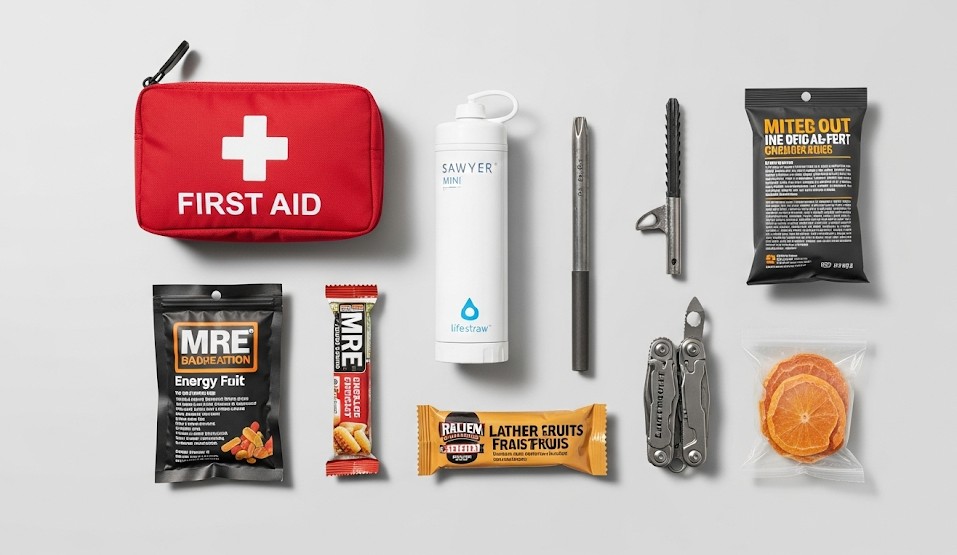
Carry at least two liters of water plus a method to purify additional water. A squeeze filter and purification tablets are excellent lightweight options. -
Food & Calories
Focus on calorie density and shelf stability. Energy bars, nuts, jerky, tuna packets, peanut butter, electrolyte mixes, and trail mix work well. -
Shelter & Rain Protection
A compact tarp, poncho, emergency bivy, or lightweight sleeping system can prevent exposure injuries surprisingly fast. -
Fire & Heat
Carry multiple ignition methods. A lighter is primary. Ferro rods and waterproof tinder provide backup. -
Medical Kit
Include bandages, gauze, medications, blister treatment, tape, gloves, and basic trauma supplies. -
Lighting
A headlamp is usually better than a flashlight because it keeps your hands free. -
Navigation Tools
Phones fail. Carry printed maps and a basic compass even if you rarely use them. -
Tools & Repairs
A multitool, knife, duct tape, cordage, and zip ties solve many unexpected problems. -
Communication & Documents
Include cash, charging cables, battery bank, emergency contacts, copies of IDs, and a whistle.
Packing Order Matters
Poor packing creates fatigue and slows movement. Heavy items should stay centered close to your back. Frequently used items should remain easy to access.
- Bottom: spare clothing and sleeping layers.
- Middle near spine: food, water, batteries.
- Top or outer pockets: medical kit, rain gear, maps, snacks, flashlight.
Weight Targets for Beginners
One of the biggest mistakes beginners make is packing too much weight.
A realistic beginner bug-out bag should usually stay:
- 10–14 pounds base weight (without water)
- 18–22 pounds fully loaded
If your pack feels miserable after one mile, it is too heavy.
Water Planning Is More Important Than Food
Many people overpack food and underprepare for water. In most emergency situations, dehydration becomes a problem much faster than calorie shortages.
You should know:
- Where you can refill water locally
- How to purify questionable water
- How much water you realistically consume during heat or exertion
Learn more in: How to Purify Water in the Wild.
Common Beginner Mistakes
- Buying gear before practicing with it.
- Packing too much clothing.
- Ignoring foot care and blister prevention.
- Carrying heavy cookware instead of lightweight calories.
- Building a tactical-looking bag that attracts attention.
- Never actually testing the bag outside the house.
Vehicle Evacuation vs Walking Evacuation
Most real evacuations begin in vehicles. Your bug-out bag should support both driving and walking scenarios.
Keep additional supplies in your vehicle when possible:
- Extra water
- Blankets
- Fuel can
- Battery jump pack
- Vehicle emergency kit
Read: Vehicle Emergency Kit for Any Season.
Practice Your Bag Before You Need It
The best bug-out bag is the one you know how to use under stress.
Practice:
- Packing and unpacking quickly
- Walking several miles with the full load
- Filtering water
- Setting up shelter in rain or darkness
- Using your flashlight and backup batteries
Simple 10-Minute Drill
- Lay out every item.
- Pack using your standard order.
- Be ready to leave the house in under 10 minutes.
- Repeat every few months.
Final Thoughts
A bug-out bag is not about fear. It is about reducing panic and buying time during uncertain situations.
Start simple. Build gradually. Improve your skills alongside your gear. A lightweight, practical bag that you understand is far more valuable than an expensive pack full of equipment you have never tested.