
Wildfire Prep: Hardening Home & Habits
Objective
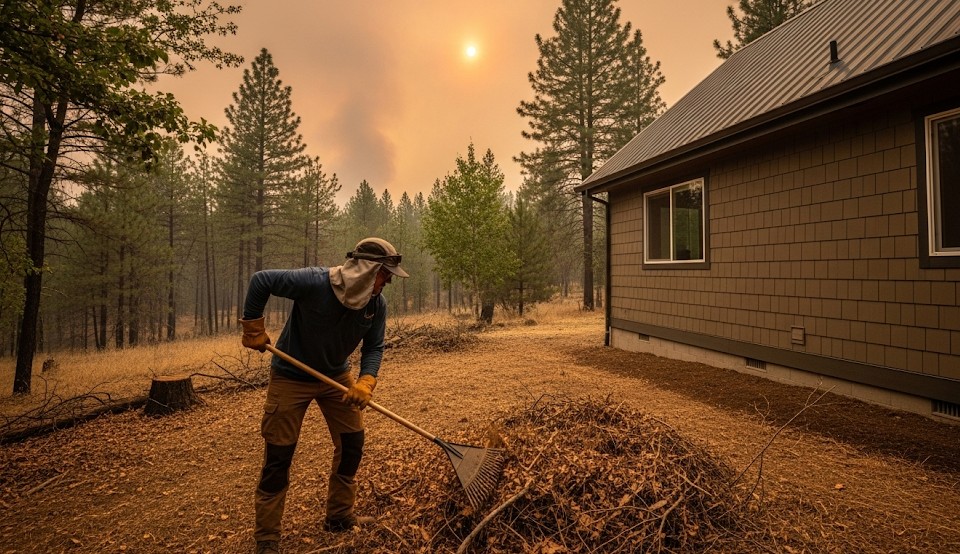
Wildfire survival is not only about what you do when flames are visible. The most important work happens before smoke is in the air: clearing fuels, hardening the home against embers, preparing evacuation routes, and setting trigger points that tell you when to leave. The objective is to survive a wildfire threat by reducing ignition risk, leaving early enough to avoid gridlock, and avoiding entrapment on dangerous roads.
Many homes lost in wildfires do not ignite from direct flame contact. They ignite because wind-driven embers land in gutters, vents, mulch, decks, leaf piles, wood stacks, patio furniture, or gaps around structures. That means small habits can make a major difference. A clean gutter and a clear zone around the house are not glamorous, but neither is explaining to your future self that the welcome mat tried to become kindling.
Scenario (Example)
Example: A Red Flag warning is issued. A wildfire is roughly 15 km away with shifting winds. You live in a wildland-urban interface neighborhood with one main paved road out and one secondary dirt route. Power may be shut off, smoke is increasing, and neighbors are debating whether to wait for a mandatory evacuation order.
Your safest plan is not to wait until everyone else makes the same decision. You need pre-set triggers, a staged vehicle, a pet plan, and alternate routes. Under stress, people delay, overpack, and underestimate how fast road conditions can change. For decision-making under pressure, review Mindset & Decision-Making Under Stress .
Why Wildfires Move So Fast
Wildfires are shaped by fuel, weather, and terrain. Dry vegetation, low humidity, high winds, steep slopes, and unstable weather can rapidly change fire behavior. Wind can push embers far ahead of the main fire, creating spot fires and confusing escape conditions.
- Wind: Drives flames, smoke, and embers into neighborhoods.
- Slope: Fire usually moves faster uphill because heat preheats fuel above it.
- Fuel: Dry grass, brush, leaves, needles, wood piles, decks, and fences can carry fire.
- Access: Narrow roads, parked vehicles, and one-way exits can delay evacuation.
Because conditions change quickly, wildfire planning should use trigger points instead of wishful thinking.
Home Hardening: Defensible Zones
Defensible space is the area around your home where vegetation, debris, and combustible materials are managed to reduce ignition risk and give firefighters safer working conditions. Local recommendations vary, so follow your fire authority’s guidance. The zone concept below is a practical planning framework.
Zone 0: Immediate Zone, 0–1.5 m
This is the most critical area because embers landing right against the house can start structure fires.
- Use noncombustible materials such as gravel, pavers, concrete, or bare mineral soil.
- Remove wood mulch, dry leaves, bark, pine needles, and flammable decor.
- Keep patio cushions, brooms, firewood, cardboard, and plastic bins away from walls.
- Clean under decks, stairs, and porches.
- Use ember-resistant vents where appropriate.
Zone 1: Lean and Clean Zone, 1.5–9 m
- Clear leaves and needles from roofs, gutters, decks, and corners.
- Trim branches away from roofs and chimneys.
- Move wood piles, fuel cans, and propane cylinders away from structures.
- Space shrubs and remove dead plants.
- Install metal gutter guards where appropriate.
Zone 2: Reduced Fuel Zone, 9–30 m
- Thin trees and shrubs to break continuous fuel paths.
- Keep grass cut short.
- Remove ladder fuels that allow fire to climb from ground vegetation into tree canopies.
- Maintain driveways and access routes for emergency vehicles.
- Keep address numbers visible from the road.
Ember Defense
Embers are one of the biggest wildfire threats to homes. They can enter vents, collect in gutters, lodge under decks, or ignite dry debris against the structure.
- Screen vents with appropriate ember-resistant material.
- Seal gaps around roof edges, siding, decks, and eaves where embers can collect.
- Clean gutters before fire season and again during high-risk periods.
- Store firewood well away from the home during wildfire season.
- Replace flammable doormats and decorative items near doors.
- Keep fences clear where they connect directly to the house.
A wooden fence can act like a fuse if it connects burning vegetation to the structure. Break fuel continuity wherever possible.
Trigger Points
Trigger points are pre-decided actions tied to conditions. They prevent hesitation when information is incomplete and emotions are high.
- T1: Prep. Fire nearby, Red Flag warning, smoke column visible, or official watch. Pack car, load pets, close vents and windows, gather documents, and prepare to leave.
- T2: Leave. Smoke column leans toward you, visibility drops, advisory upgrades, evacuation route becomes uncertain, or vulnerable household members are at risk. Leave now.
- T3: Emergency. Fire visible nearby, routes closing, heavy ember fall, or official evacuation order. Do not delay for more packing.
Leaving early is not overreacting. It is buying road space, daylight, fuel, calm, and options.
Evacuation Checklist
- Go-bags, medications, IDs, cash, insurance papers, and important documents
- Phones, chargers, power banks, and backup communication plan
- Pets in carriers with leashes, food, medication, and vaccination records
- Long sleeves, long pants, sturdy shoes, gloves, N95 masks, and goggles
- Vehicle loaded early, parked nose-out, fueled, and ready
- Windows up, headlights on, and air conditioning on recirculate during smoke
- Offline maps or printed routes for primary and secondary exits
For everyday evacuation gear planning, see Top 10 Items for Your First Bug-Out Bag .
Pets, Kids, and Vulnerable People
Evacuating with pets, children, older adults, or people with medical needs takes longer. Your trigger points should be earlier if your household needs more time.
- Practice loading pets before an emergency.
- Keep carriers accessible, not buried in a garage.
- Maintain a medication grab list.
- Pre-pack comfort items for children.
- Identify hotels, shelters, or relatives that accept pets.
- Do not wait until smoke is heavy to move people with breathing issues.
If smoke, stress, or evacuation causes distress, review Psychological First Aid: Stabilize, Orient, Support .
On the Road
Road survival during wildfire depends on avoiding entrapment routes and staying ahead of congestion.
- Avoid canyons, narrow roads, and tree tunnels that can channel heat and embers.
- Keep distance from utility lines, emergency crews, and stalled vehicles.
- Drive with headlights on and windows closed.
- Use recirculated air to reduce smoke inside the vehicle.
- Do not drive toward smoke columns or visible flame to “check it out.”
- Follow official evacuation routes unless they are clearly blocked and you have a safe alternate.
If trapped with fire nearby, seek a cleared area such as a parking lot, wide road, gravel area, or previously burned zone if safely reachable. Stay in the vehicle if it is the safest shelter available, keep windows up, cover exposed skin, get low, and wait for the worst heat to pass. This is a last-resort situation, not a strategy.
Shelter-in-Place Warning
Sheltering in place during wildfire is extremely dangerous unless directed by authorities or there is no safe evacuation route. Some buildings and communities are designed with specific fire refuge planning, but most homes are not reliable wildfire shelters under severe conditions.
If routes are still open, leaving early is usually safer than waiting until evacuation becomes impossible. Do not let property protection override life safety.
Real Example
A neighborhood in a fire-prone area performed seasonal cleanup before a Red Flag event. Residents cleared gutters, removed needles from decks, screened vents, moved firewood away from homes, and staged vehicles early. When embers began falling and smoke shifted toward the area, several households left at their T2 trigger instead of waiting for a mandatory order. Traffic became congested about 30 minutes later. Their homes survived the ember exposure, and the early evacuation avoided the worst gridlock.
Common Mistakes
- Waiting for visible flames before preparing to leave.
- Leaving gutters full of dry leaves and needles.
- Storing firewood against the house.
- Forgetting manual garage door release during power loss.
- Trying to evacuate pets only after smoke is heavy.
- Driving into smoke or toward the fire out of curiosity.
- Depending on one evacuation route.
- Overpacking until escape time disappears.
Checklist
- Clean gutters, roof valleys, decks, and corners
- Clear immediate zone around the house
- Move wood piles and flammable items away from structures
- Install or inspect ember-resistant vents and gutter guards
- Pack go-bags, medications, IDs, cash, and documents
- Prepare pet carriers, leashes, food, and records
- Fuel vehicles and park nose-out
- Print or download primary and secondary evacuation routes
- Stage masks, goggles, gloves, sturdy shoes, and long clothing
Contingencies
- Power loss: Use manual garage door release and battery lighting.
- Pets hiding: Pre-stage carriers and practice loading before fire season.
- Primary road closed: Use a pre-scouted secondary route only if it is safe and not blocked.
- Heavy smoke: Leave earlier, use N95 masks, close vehicle windows, and use recirculated air.
- Family separated: Use pre-set rendezvous locations outside the danger zone.
For broader disaster planning after fire season, see Flood Readiness and Recovery , because burned landscapes can increase runoff and flood risk after storms.
After-Action
After the fire threat passes and authorities say it is safe to return, inspect carefully. Watch for hot spots, damaged trees, downed lines, ash hazards, unstable structures, and poor air quality. Replace HVAC filters, wash ash from roofs and gutters, and document damage for insurance before cleanup when safe.
Review what happened. Did your trigger points work? Did you leave early enough? Were pets easy to load? Did the secondary route make sense? Update your checklist and routes based on what you learned. Wildfire prep is not a one-time weekend project; it is a set of habits that quietly protect your home until the day they are very loud about it.
← Previous | All Articles | Next →