How to Purify Water in the Wild
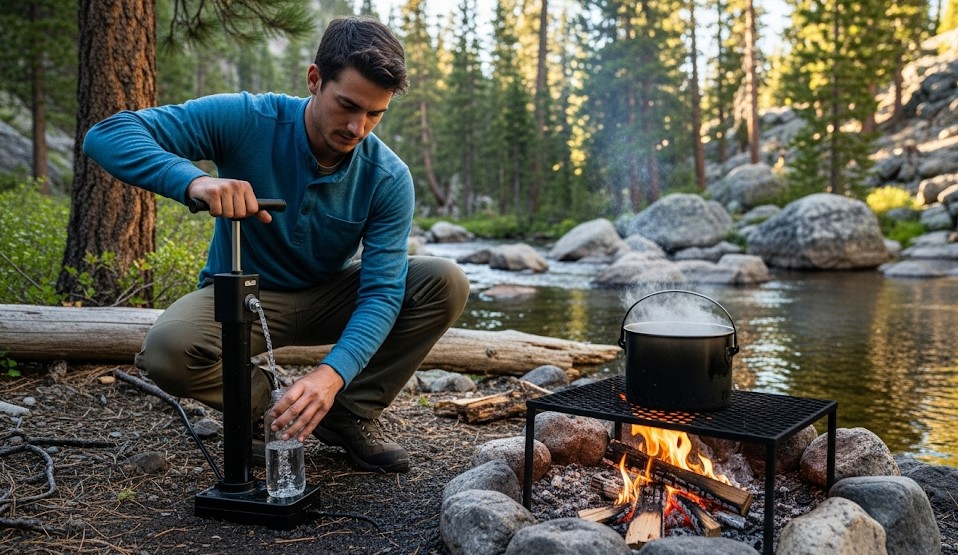
Why Water Becomes Critical So Quickly
Water problems become survival problems faster than food shortages in most emergencies. Dehydration affects judgment, physical performance, body temperature regulation, and decision-making long before starvation becomes a concern.
In hot environments, during strenuous movement, or under high stress, a person can lose dangerous amounts of fluid quickly. Unsafe water can also introduce bacteria, parasites, or viruses that become serious problems when medical care is limited.
Knowing how to collect, filter, boil, chemically treat, and safely store water is one of the most valuable preparedness skills you can learn.
Objective
Produce safer drinking water under field conditions using the fastest effective method for your situation without re-contaminating it afterward.
Scenario Example
Example: After heavy rain, the creek is cloudy and cold. You have a canister stove, a 0.1 micron squeeze filter with backflush syringe, chlorine dioxide tablets, and one 1-liter bottle. You need drinking water now, but you also need extra treated water for the next several hours of travel.
Choosing Safer Water Sources
Cleaner-looking water is not automatically safe, but source selection still matters. A good water source reduces risk before you even begin treatment.
- Moving water is generally preferable to stagnant water.
- Clear streams are usually better than muddy ponds.
- Avoid water near livestock, sewage discharge, trash, road runoff, or industrial areas.
- Floodwater should be treated as highly contaminated.
- Algae-covered water may contain toxins that many filters cannot remove.
When possible, collect water upstream from campsites, animal activity, heavy foot traffic, and obvious pollution sources.
Decision Flow: Which Method Should You Use?
- Clear water and limited fuel: Filter first, then use chemical or UV treatment if needed.
- Cloudy or silty water: Let sediment settle, pre-filter through cloth, then boil or filter.
- Very cold water: Chemical treatment may take longer, so follow product instructions carefully.
- Unknown contamination: If chemical or industrial pollution is possible, find another source if you can.
- Emergency hurry: Filter enough to drink now, then treat extra liters while you move.
Method 1: Boiling Water
Boiling is one of the most reliable field methods for biological contamination. It does require fuel, time, a container, and safe handling after boiling.
- Collect from moving water when possible.
- Pre-filter muddy water through a bandana, shirt, or coffee filter.
- Bring water to a rolling boil for at least 1 minute.
- At elevations above 6,500 feet, boil for 3 minutes.
- Let water cool with the lid on and avoid touching the inside of the cap or container.
Field note: On a small canister stove, one liter often reaches a rolling boil in 4–7 minutes depending on wind, pot shape, stove type, and starting water temperature.
Method 2: Squeeze Filters
A 0.1 micron squeeze filter is lightweight, fast, and useful for backpacking, emergency kits, and bug-out bags. It is excellent for many biological threats, but filters require maintenance and can clog in silty water.
- Fill the dirty-water bag without dragging sediment from the bottom.
- Attach the filter securely.
- Squeeze steadily instead of crushing the bag aggressively.
- Backflush when flow slows.
- Keep the clean end of the filter away from dirty hands, dirty caps, and untreated water.
Expect roughly 60–90 seconds per liter when the filter is clean. Silty water can slow flow dramatically, so pre-filtering matters.
Method 3: Chemical Treatment
Chlorine dioxide tablets or drops are lightweight and excellent as a backup method. They are useful when you need to treat water while resting or walking, but they require contact time.
- Pre-filter cloudy water first.
- Add tablets or drops according to the product label.
- Shake or swirl the container.
- Loosen the cap slightly and let treated water contact the threads.
- Wait the full required time before drinking.
Cold or turbid water may require longer treatment. Do not rush chemical treatment simply because the water looks clean.
Method 4: UV Purification
UV purification can work well in clear water, but it depends on batteries, device function, and proper exposure. It is not ideal for muddy or cloudy water because suspended particles can shield organisms from the light.
- Pre-filter until water is visually clear.
- Use the UV device according to instructions.
- Stir or agitate as directed.
- Protect treated water from dirty lids and dirty container threads.
What Water Purification Does Not Remove
Most field purification methods focus on biological threats such as bacteria, protozoa, and some viruses. They may not remove chemical or industrial contamination.
- Fuel or petroleum runoff
- Heavy metals
- Agricultural pesticides
- Industrial chemicals
- Algae toxins
If water smells like fuel, chemicals, sewage, or something unusual, avoid it whenever possible.
Avoiding Re-Contamination
Many people successfully treat the water, then contaminate it again with dirty hands, dirty caps, or dirty bottle threads.
- Keep dirty-water bottles and clean-water bottles separate.
- Do not let untreated water touch the clean side of a filter.
- Do not dip a clean bottle into untreated water.
- Let chemical treatment contact bottle threads.
- Wash or sanitize hands when possible.
Common Beginner Mistakes
- Trusting clear water without treatment.
- Using UV on cloudy water.
- Failing to pre-filter muddy water.
- Forgetting altitude affects boil time.
- Letting dirty caps or fingers touch clean water.
- Waiting until already dehydrated before refilling.
Recommended Gear Approach
A strong beginner setup includes at least two methods: one primary and one backup. For example, a squeeze filter plus chlorine dioxide tablets gives you fast water now and treatment backup if the filter clogs, freezes, or breaks.
For a lightweight starter option, see the WWSWA water filter recommendation: WWSWA top water filter choice.
Real Example
On a muddy Ozarks creek, a team pre-filtered water through a T-shirt, then used a squeeze filter and backflushed every liter. A small carbon element improved taste. They bottled three liters in about 15 minutes and moved before dark.
10-Minute Field Drill
Collect two liters of water. Treat one by boiling and one by filtration. Time both methods. Record fuel used, flow rate, clarity, and ease of use. Repeat the drill in different seasons so you understand what works in your area.
Final Thoughts
Water purification is one of the most important preparedness skills because every emergency eventually becomes a water problem. Storms, blackouts, evacuations, infrastructure failures, and wilderness travel all place pressure on safe drinking water access.
You do not need expensive equipment to start. Learn one reliable method first, practice it repeatedly, and build redundancy over time.
The best water plan is the one you can perform correctly while tired, cold, stressed, or in a hurry.
← Previous | All Articles | Next →