
Fire-Making: 5 Methods Without Matches
Objective
Fire is one of the most important survival tools in the wilderness. It provides warmth, safe water, cooked food, light, signaling ability, and a major morale boost when conditions turn bad. The objective is to ignite a reliable flame in wind, rain, cold, or darkness using methods you can carry, improvise, or practice ahead of time.
Most fire failures happen before the first spark. People focus on ignition methods while ignoring wet fuel, poor preparation, wind exposure, or oversized sticks. A tiny spark can create a large fire if the fuel ladder is correct. A giant lighter flame will still fail if you throw damp wrist-thick wood directly on top of it.
If you are dealing with soaked conditions specifically, also review Building a Rainproof Fire After Days of Rain .
Prep First: Build a Fuel Ladder
Your fuel ladder is the staged progression from spark-sized material to long-burning fuel. Build this before you attempt ignition whenever possible.
- Tinder: cotton + petroleum jelly, birch bark, dry grass, cattail fluff, char cloth, cedar bark, or fine wood shavings.
- Micro-kindling: matchstick-thin feather sticks and pencil-lead-sized splits.
- Kindling: pencil-thick to thumb-thick dry splits.
- Fuel wood: thumb-thick → wrist-thick, staged within arm’s reach.
Think of fire-making as climbing a ladder. Skip too many rungs and the flame collapses. Build gradually instead of rushing to large fuel.
Site Selection
Choose your fire location carefully before ignition.
- Clear leaves, pine needles, and debris to mineral soil.
- Avoid roots, peat, and overhanging branches.
- Use natural windbreaks like rocks or logs when available.
- In rain, create overhead cover with a tarp while maintaining ventilation.
- Keep extra dry wood protected before you need it.
In snowy or saturated ground, build a platform of split logs or bark to keep your tinder from soaking through immediately.
Method A — Ferro Rod
Click Here For WWSWA Top Choice
Ferrocerium rods are one of the most dependable wilderness ignition tools because they still throw hot sparks when wet. They require practice, but once mastered they are extremely reliable.
- Scrape any protective coating off the rod first.
- Place the rod tip close to the tinder bundle.
- Hold the scraper steady and pull the rod backward instead of striking downward.
- Shield sparks from wind with your body or jacket.
- Feed tiny sticks slowly until a stable flame forms.
The “pull back” technique prevents you from blasting your tinder pile apart during the strike.
Best Tinder for Ferro Rods
- Cotton balls with petroleum jelly
- Fatwood scrapings
- Fine feather sticks
- Birch bark shavings
- Commercial fire tabs
Method B — Flint & Steel
Traditional flint and steel creates lower-temperature sparks than a ferro rod, so preparation matters more. Char cloth is usually required to catch the spark effectively.
- Make char cloth by heating cotton fabric in a tin with a pinhole until smoke stops.
- Strike steel against sharp flint edges.
- Catch sparks on char cloth.
- Transfer the glowing ember into a tinder bundle.
- Blow steadily until the bundle ignites.
Flint and steel is slower than modern ignition methods, but it works well in dry conditions and teaches ember management skills.
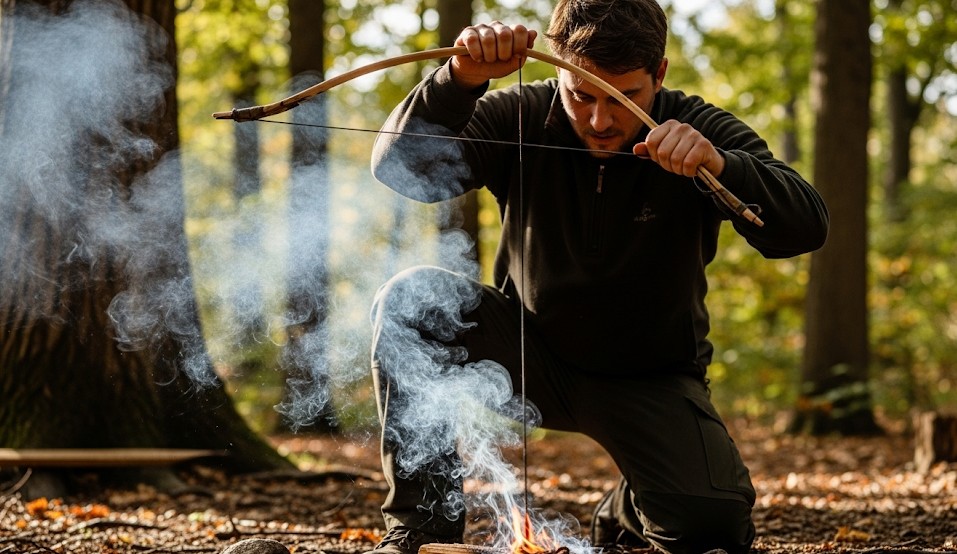
Method C — Bow Drill (Practice Required)
The bow drill is one of the most famous primitive fire methods and one of the most frustrating for beginners. Success depends heavily on wood selection, dryness, and technique.
- Use a dry softwood fireboard and spindle.
- Create a notch to collect ember dust.
- Use a hardwood bearing block with lubrication.
- Apply steady downward pressure with fast, smooth strokes.
- When smoke thickens and dark dust piles up, continue briefly before stopping.
- Allow the ember to grow before transferring it carefully to tinder.
Primitive friction fire is a skill, not a backup plan you improvise under stress for the first time. Practice on dry afternoons, not during your first cold rainstorm.
Method D — Sun Magnification
Magnified sunlight can ignite dark tinder in dry, sunny conditions.
- Use a magnifying lens, glasses lens, camera lens, or polished bottle bottom.
- Focus sunlight onto a tiny point on dark tinder.
- Hold perfectly steady until smoke and ember form.
- Transfer ember to tinder bundle and blow gently.
This method is lightweight and silent but depends entirely on weather and available sunlight.
Method E — 9V Battery + Steel Wool
Fine steel wool ignites rapidly when electrical current passes through it. This is one of the easiest improvised emergency ignition methods.
- Use extra-fine 0000 steel wool if possible.
- Stretch the wool slightly to increase airflow.
- Touch both battery terminals to the wool.
- Once glowing begins, place the wool into your tinder bundle.
- Blow gently to transition from ember to flame.
Store batteries carefully. Loose batteries against metal objects can create accidental heat or sparks inside gear.
Wet-Wood Technique
Wet conditions require different thinking. The outside of dead wood may be soaked while the interior remains dry.
- Use dead standing wood instead of groundfall whenever possible.
- Split wood to expose dry cores.
- Create large numbers of feather sticks.
- Keep tinder protected under clothing or tarp cover.
- Start extremely small and build slowly.
- Do not smother the flame with oversized wood.
Many people fail because they rush. Wet-weather fires often start tiny and ugly before becoming stable.
Fire Lay Options
Teepee
Fast ignition and strong airflow. Good for quick starts but can collapse quickly.
Log Cabin
Stable structure with even heat and good coal development. Excellent for cooking fires.
Lean-To
Useful in wind or rain because it shields the flame while maintaining airflow.
Keyhole Fire
Creates a dedicated coal area for cooking and simmering. Especially useful for campfire cooking.
For cooking-focused setups, see Cooking Over an Open Fire: Campfire Techniques .
Wind Management
Wind is both friend and enemy. Small airflow feeds fire. Excess wind destroys tinder and strips heat away.
- Use your body as a windbreak.
- Build near natural barriers when safe.
- Pitch tarp edges low but leave ventilation.
- Feed fuel from the windward side carefully.
- Protect your ember during transfer.
Real Example
A hiking team caught in cold rain split standing spruce into dry cores under a tarp edge and used a ferro rod with feather sticks to create a small lean-to fire. They fed only pencil-sized splits for several minutes before adding larger wood. Once a coal bed formed, they boiled water and dried gloves while heavier rain continued outside the tarp line.
Common Errors
- Using oversized sticks too early.
- Ignoring tinder quality.
- Attempting ignition before staging fuel.
- Striking sparks directly into the tinder pile and scattering it.
- Moving embers before they stabilize.
- Trying primitive methods for the first time during emergencies.
- Standing in wind instead of shielding the flame.
Checklist
- Ferro rod and striker
- Backup lighter
- Tinder kit in waterproof container
- Knife or multitool
- Dry cordage and tarp
- Steel wool and spare battery
- Cotton balls with petroleum jelly
- Small saw or hatchet if appropriate
For shelter-building that pairs well with wet-weather firecraft, review Building a Shelter from Natural Materials .
Contingencies
- No dry tinder: shave inner wood cores aggressively and create more feather sticks.
- High wind: switch to a lean-to or trench-style fire lay.
- Cold hands: warm fingers inside clothing before delicate ignition attempts.
- Persistent rain: extend tarp coverage and keep reserve wood dry.
- No ignition success: stop wasting energy and rebuild the fuel ladder properly.
5-Minute Drill
With damp sticks and limited tinder, build a splitwood fire using only a ferro rod. Target spark-to-sustained flame in under five minutes. Time yourself honestly and practice in different weather conditions.
After-Action
After each trip or practice session, record which tinder worked best, which woods split dry inside, and how long ignition took in actual weather conditions. Build a dedicated fire kit instead of scattering fire gear across multiple bags and pockets.
Fire-making is less about dramatic sparks and more about preparation, patience, and fuel management. A small protected flame fed carefully will outperform rushed “survival show” techniques almost every time. In bad weather, the calm person with dry tinder and staged kindling usually wins.
← Previous | All Articles | Next →