Multi-Day Trek Planning: Pace, Food, Fuel, Margin
Objective
A multi-day trek is not just a longer day hike. Once you are carrying shelter, sleep gear, food, cooking equipment, water treatment, spare clothing, and emergency supplies, every mile takes more effort and every small planning mistake compounds. The goal is to plan 2–5 day movements without surprises by sizing your daily legs, calories, water, fuel, and time margins before you step onto the trail.
Good trekking plans are realistic, not heroic. A route that looks easy on a map may become slow and draining when the trail is rocky, the weather turns, water sources are farther apart than expected, or one person in the group develops a hot spot, knee pain, or fatigue. The safest plan gives you enough structure to stay on schedule, but enough margin to slow down, change plans, or stop early without turning the trip into an emergency.
Route & Pace
Start by breaking the route into daily legs. Look at distance, elevation gain, elevation loss, terrain type, water access, campsite availability, and bailout options. A flat 12 km trail and a steep 12 km mountain route are not the same trip. Heavy packs, heat, cold, mud, snow, altitude, and off-trail travel can all reduce pace dramatically.
- Use Naismith’s Rule as a baseline: approximately 5 km of distance plus 600 m of ascent per hour.
- Adjust downward for heavy packs, rough trail, poor visibility, loose rock, snow, heat, or inexperienced hikers.
- Plan short breaks of about 10 minutes each hour to manage fatigue, hydration, and foot checks.
- Schedule a longer midday stop for food, water treatment, map review, and weather assessment.
Do not plan your day around your best possible pace. Plan around the pace you can maintain while tired, carrying a pack, and still making good decisions. For many groups, especially with mixed experience levels, 10–15 km per day with meaningful elevation gain is already a full day. It is better to arrive at camp early with energy left than to stumble in after dark because the plan was built on wishful math.
Daily Leg Planning
Each day should have a primary destination, one or two earlier stopping options, and a clear “do not continue past this time” decision point. This is especially important in areas where campsites are limited, water is seasonal, or weather can make exposed ridges dangerous. Mark these points on your map or route card before the trip.
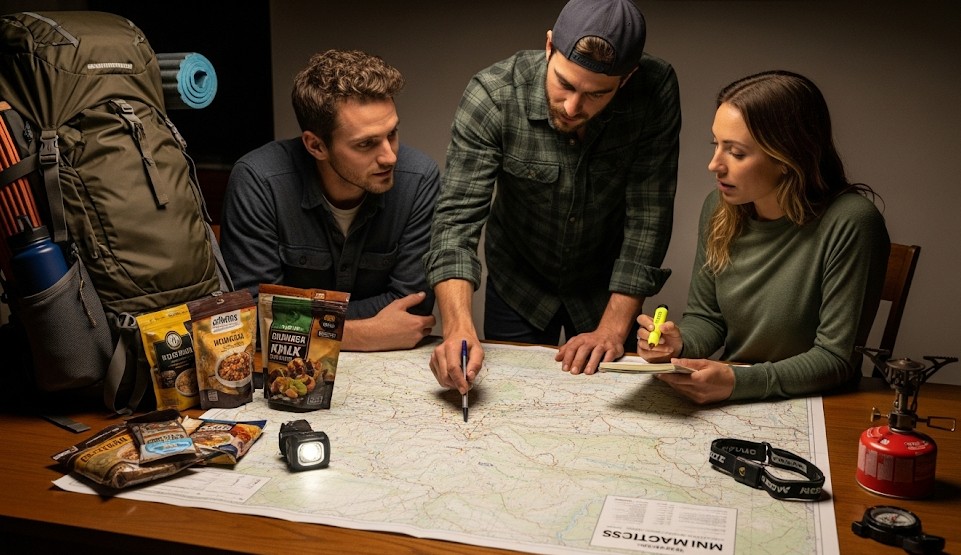
For each leg, write down the expected distance, estimated time, elevation change, water sources, hazards, and bailout routes. This does not need to be fancy. A simple printed route card or notebook page is enough. The value is that you have already made calm decisions before fatigue and weather start arguing with you.
Food & Fuel
Food planning should match the work being performed. Trekking with a loaded pack burns a lot of energy, and under-eating can lead to fatigue, poor temperature regulation, low morale, and bad decision-making. Most adults on a multi-day trek need roughly 2,800–3,500 calories per day depending on body size, pack weight, temperature, mileage, and elevation gain.
- Pack calorie-dense foods such as nuts, nut butter, tortillas, cheese, dried fruit, energy bars, jerky, instant potatoes, rice, couscous, ramen, oatmeal, and protein packets.
- Use quick-cook meals to save fuel and reduce time spent cooking in bad weather.
- Separate food by day so you can track whether you are eating on schedule.
- Carry at least one spare meal or an extra high-calorie emergency food block.
Stove fuel depends on stove type, wind, temperature, altitude, pot size, water temperature, and how much boiling you do. As a starting point, estimate 15–25 grams of canister fuel per person per hot meal. Add more if you expect cold weather, strong wind, snow melting, or long boil times. A small windscreen, efficient pot, and lid can make a noticeable difference. Never use a full wraparound windscreen with a canister stove unless the stove manufacturer allows it, because overheating a fuel canister is dangerous.
Water
Water planning is one of the biggest differences between a comfortable trek and a miserable one. Carrying too little creates risk; carrying too much creates fatigue. A common starting point is to carry 2–3 liters, then adjust based on heat, exertion, distance between refills, and personal needs.
- Identify reliable refill points before the trip, not after your bottles are empty.
- Confirm whether water sources are seasonal, especially in dry regions.
- Carry treatment redundancy, such as a filter plus tablets or drops.
- Refill before long climbs, exposed sections, dry camps, or uncertain terrain.
Do not assume every blue line on a map will have flowing water. Creeks dry up, springs fail, and water can be contaminated by livestock, flood debris, algae, or heavy sediment. Treat all questionable backcountry water. If a campsite has no water, build that into the plan so the group knows when to fill up and how much to carry into camp.
Risk & Margin
Margin is what keeps small problems from becoming big ones. Add 10–20% extra time per day for rough terrain, route finding, weather, photo stops, foot care, and normal human slowness. Add even more if the route is remote, exposed, technical, or unfamiliar. A plan with no margin is not efficient; it is fragile.
- Set turn-back times before committing to exposed ridges, passes, river crossings, or long dry sections.
- Use a PACE plan for shelter, heat, communications, water treatment, and navigation.
- Check feet early and often. Hot spots are easier to fix before they become blisters.
- Watch group morale, pace, and decision quality. Fatigue sneaks in wearing hiking boots.
PACE stands for Primary, Alternate, Contingency, and Emergency. For example, your primary navigation may be a GPS app, your alternate may be a paper map and compass, your contingency may be a backup phone or GPS unit, and your emergency option may be staying put and signaling for help. Apply that same thinking to fire, shelter, communication, water, and first aid.
Weather & Exposure
Weather can change the entire character of a trek. Rain slows movement, cold increases calorie needs, heat increases water demand, and wind can make ridgelines unsafe. Check the forecast before leaving, but also plan for the forecast to be incomplete. Mountain and wilderness weather can shift quickly.
Pack layers that allow you to manage sweat, wind, rain, and temperature changes. Avoid hiking hard in cold weather until your base layers are soaked, then stopping and getting chilled. In hot environments, plan earlier starts, longer shade breaks, and more frequent water checks. In storm-prone areas, avoid being the tallest object on an exposed ridge when thunder starts doing its drum solo.
Real Example
A three-day loop used 12–14 km legs with 500–700 m of ascent per day. The group planned two reliable water refills daily, packed quick-cook meals, and estimated 18 g of canister fuel per person per meal. They also built in a half-day margin on the final day in case of weather or slow travel. They finished with one spare meal, a half canister of fuel, and enough time to complete the final descent before dark. That is what good planning looks like: not overloaded, not underprepared, and not depending on luck to make the schedule work.
Checklist
- Route card with daily legs, mileage, ascent, hazards, refill points, and turn-back times
- Map, compass, GPS/app, and backup power
- Meal plan with daily calorie targets and one spare meal
- Fuel estimate based on stove type, group size, and expected conditions
- Water treatment redundancy, such as filter plus tablets
- Layering system for heat, cold, wind, and rain
- First aid kit with blister care, pain relief, and any personal medications
- Emergency communication plan and check-in schedule
Contingencies
- Storm delay: identify safe shelter options and know whether you can take a zero-day without running out of food.
- Injury: shorten legs, redistribute weight, and use pre-identified bailout points.
- Water source dry: carry enough reserve to reach the next confirmed source.
- Behind schedule: stop early rather than pushing into darkness on unfamiliar terrain.
- Gear failure: carry repair basics such as tape, cordage, needle, thread, and spare buckles or straps.
After-Action
After the trek, compare the plan against what actually happened. Record actual distances, ascent, start times, arrival times, water use, food remaining, fuel remaining, weather issues, gear problems, and any points where the group slowed down. This information is gold for future trips because it tells you your real pace, not your fantasy pace.
Over time, you will develop a personal planning factor. You may learn that your group moves well on flat trails but slows dramatically above 500 m of ascent, or that you consistently pack too much food but not enough snacks. Adjust your next plan using those lessons. The best trekkers are not the ones who never make mistakes; they are the ones who capture the lesson before the trail charges them for it twice.
← Previous | All Articles