Scanner Listening & Local Frequencies (Legal & Safe)
Why Scanner Listening Matters
During emergencies, information becomes one of the most valuable survival tools available. When internet service fails, cell towers overload, or television stations go offline, radio communication often continues working long after other systems collapse.
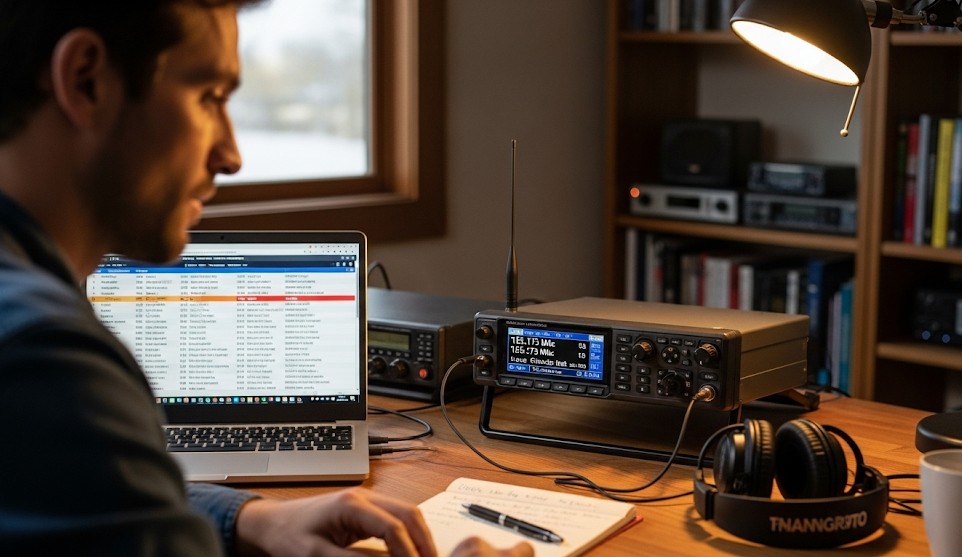
Scanner listening allows you to monitor weather alerts, emergency management broadcasts, transportation disruptions, community radio traffic, and other public information sources in real time. A small portable scanner or software-defined radio (SDR) setup can dramatically improve your situational awareness during storms, blackouts, wildfires, floods, winter emergencies, or large-scale infrastructure failures.
The goal is not spying or interfering. The goal is awareness. Knowing what is happening nearby can help you make safer and faster decisions for your household or group.
Objective
Monitor useful emergency radio traffic legally and safely in order to improve situational awareness, disaster readiness, and communication planning during emergencies.
What You Can Listen To
Different areas use different radio systems, but several categories are especially useful during emergencies.
Weather Radio
In the United States, NOAA Weather Radio is one of the best preparedness tools available.
- Continuous weather broadcasts
- Storm warnings and watches
- Tornado alerts
- Flood information
- Wildfire and evacuation notices
Many emergency radios can automatically alert when warnings are issued for your area.
AM/FM Radio Stations
Traditional radio stations remain important during disasters.
- Local evacuation instructions
- Road closure information
- Shelter locations
- Public health announcements
- Fuel and supply updates
AM radio can travel long distances at night and sometimes provides useful regional information during widespread outages.
Ham Radio Nets
Amateur radio operators often provide communication support during disasters.
Many communities organize emergency nets where licensed operators share weather reports, damage assessments, road conditions, and community updates.
Listening is usually legal. Transmitting requires proper licensing and training.
Public Service Channels
Depending on local laws and technology, some public service channels may still be monitorable.
- Public works
- Transit systems
- Utilities
- Road crews
- Airport operations
These channels can provide indirect clues about infrastructure problems or recovery operations.
Important Legal Considerations
Laws vary widely by country, state, and region.
Some areas fully allow scanner ownership and listening. Other areas restrict mobile scanner use in vehicles or prohibit monitoring certain encrypted or protected communications.
Always research your local laws before purchasing or operating scanner equipment.
Several important rules apply almost everywhere:
- Do not interfere with communications.
- Do not transmit on restricted frequencies.
- Do not use information for criminal activity.
- Do not rebroadcast sensitive information irresponsibly.
- Respect privacy and emergency operations.
Ethical listening means using information for safety and preparedness only.
Basic Scanner Equipment
Portable Scanner Radios
Portable scanners are simple and reliable for beginners.
- Battery powered
- Easy to carry
- Good for weather and local monitoring
- Useful during power outages
Many modern scanners can store hundreds of channels and scanning groups.
Software Defined Radios (SDR)
SDR setups use a USB radio receiver connected to a computer or smartphone.
Advantages include:
- Low cost
- Wide frequency coverage
- Recording capability
- Visual spectrum displays
- Flexible software options
SDR systems can become extremely powerful learning tools for preparedness-minded people.
Emergency Radios
A basic emergency weather radio is one of the best preparedness purchases available.
Good features include:
- Hand crank charging
- Solar charging
- USB charging
- Weather alerts
- Flashlight
- Power bank capability
Improving Reception
Radio performance depends heavily on antenna quality and placement.
Simple Improvements
- Move near windows.
- Get higher elevation if possible.
- Reduce electronic interference nearby.
- Rotate the antenna direction.
- Use external antennas when practical.
Even moving a radio a few feet can dramatically improve reception.
Interference Problems
Homes contain many sources of radio noise:
- LED lights
- Cheap USB chargers
- Solar inverters
- Wi-Fi equipment
- Power supplies
Turning off nearby electronics sometimes improves weak signals immediately.
Build a Listening Plan
Do not wait until disaster strikes to figure out local frequencies.
Create a simple monitoring plan now.
Suggested Listening Categories
- Primary weather frequency
- Backup weather frequency
- Local AM station
- Regional FM station
- Ham emergency net
- Transportation updates
- Utility restoration channels
Print the list and keep it inside the radio case or emergency binder.
Logging Information
During emergencies, information becomes confusing quickly.
Keep a simple notebook with:
- Time
- Frequency
- Source
- Short summary
Written logs help prevent rumor confusion and allow you to track changing conditions over time.
Listening Discipline
Scanner listening becomes more useful when done calmly and methodically.
- Avoid panic listening.
- Focus on actionable information.
- Compare multiple sources.
- Do not spread unverified rumors.
- Monitor at scheduled intervals.
Constantly listening to chaotic traffic can increase stress and fatigue. Structured listening works better.
Family and Neighborhood Use
One person can act as the “information coordinator” during an emergency.
That person listens, summarizes updates, and shares important information with others.
This prevents confusion, duplicated effort, and misinformation inside the household or group.
Real Example
During a severe storm outage, one neighborhood used a portable weather radio and ham radio monitoring setup to stay informed about road closures, incoming weather bands, and utility restoration zones.
Instead of relying on unreliable social media rumors, they posted verified updates twice daily for nearby households. The system reduced panic and improved coordination significantly.
Common Mistakes
- Buying equipment without learning how to use it.
- Depending entirely on internet-based scanner apps.
- Ignoring local scanner laws.
- Failing to test batteries regularly.
- Using poor antenna placement.
- Believing rumors without confirmation.
Scanner Preparedness Checklist
- Portable scanner or SDR setup
- Emergency weather radio
- Spare batteries
- External antenna
- Printed frequency list
- Notebook and pen
- Headphones
- Power bank or solar charger
10-Minute Preparedness Drill
- Find your nearest NOAA or weather radio frequency.
- Program local emergency channels into your scanner.
- Test radio reception in different rooms.
- Create a printed frequency reference sheet.
- Practice logging updates for 10 minutes.
Small practice sessions now make emergency monitoring far easier later.
Final Thoughts
Information saves time, reduces panic, and improves decision-making during disasters. Scanner listening gives you another layer of awareness when normal communication systems fail.
You do not need expensive gear to begin. A basic weather radio and a simple listening plan already place you ahead of most people during emergencies.
Learn the legal boundaries, practice responsibly, and focus on preparedness rather than paranoia. Calm, accurate information is one of the strongest tools any prepared household can have.
← Previous | All Articles | Next →