
Food Procurement: Snares, Traps, and Legal Reality
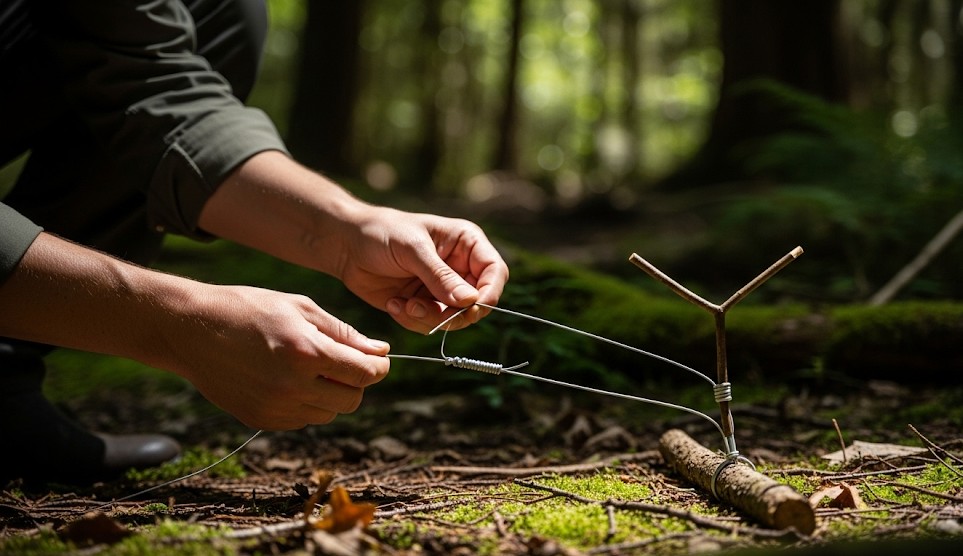
Objective
Food procurement in a wilderness emergency is about balancing calories, energy, legality, ethics, and survival priorities. The objective is to understand the basic concepts behind emergency trapping and passive food collection while recognizing the legal and moral responsibilities that come with it.
In most real-world survival situations, shelter, water, warmth, signaling, and navigation matter more than trying to live entirely off the land. Many people burn huge amounts of energy attempting advanced trapping methods only to end up tired, dehydrated, and still hungry. Passive food gathering can help in longer emergencies, but it should support the overall survival plan—not replace it.
Legal & Ethical Reality
Many regions tightly regulate or prohibit trapping methods, snares, unattended sets, and improvised game procurement outside true emergencies. Local laws vary widely by state, province, country, season, species, and land ownership.
This article is educational and focused on genuine wilderness survival emergencies where life and safety are at risk. In normal conditions:
- Follow all hunting and trapping laws.
- Respect private property and protected land.
- Avoid methods that risk unnecessary suffering.
- Never leave traps unattended in public areas.
- Avoid any setup that could injure pets, livestock, or non-target wildlife.
Survival skills should encourage responsibility and preparedness—not reckless behavior disguised as “outdoorsmanship.”
Scenario (Example)
Example: A stranded hiker is weathered in for several days near mixed forest and brush habitat. They have water, basic shelter, signaling tools, and limited food remaining. Tracks, droppings, and small-game trails are visible near dense cover. The hiker decides to focus first on warmth, signaling, and water while considering low-energy food procurement methods as a secondary support plan.
If rescue is likely, signaling may be more important than hunting or trapping. Review Signaling from Remote Locations Without Electronics before spending major energy on food collection.
Survival Priorities Come First
People often overestimate how urgently they need food during the first few days of a survival situation. Dehydration, exposure, injury, panic, and navigation mistakes become dangerous far faster than calorie shortage.
Before attempting any food procurement:
- Secure safe drinking water.
- Build shelter appropriate for weather conditions.
- Maintain body temperature.
- Create visible rescue signals.
- Plan movement and navigation carefully.
If you are cold, wet, lost, or exhausted, chasing calories through the woods is usually a bad trade. The rabbit does not care that you skipped lunch.
Principles of Passive Food Procurement
Passive methods work while you conserve energy for other survival tasks. Unlike active hunting, they may continue functioning while you rest, gather firewood, purify water, or maintain shelter.
- Location matters more than equipment. Animal movement corridors are more important than complicated gear.
- Energy conservation matters. Avoid burning huge amounts of calories building elaborate systems.
- Redundancy helps. Several simple opportunities are often more realistic than one perfect setup.
- Observation matters. Trails, tracks, droppings, feeding signs, and bedding areas provide clues.
- Respect non-target risk. Avoid areas used by pets, livestock, or protected species.
Reading Animal Sign
Understanding movement patterns is more important than improvising complicated devices. Animals tend to follow routes that conserve energy and provide cover.
- Look for narrow game trails through brush or grass.
- Check for droppings, fur, tracks, chewed plants, or browse marks.
- Observe crossings under logs, fence gaps, and trail pinch points.
- Watch for repeated pathways near water sources.
- Notice feeding areas where vegetation is disturbed or stripped.
Fresh sign matters more than old sign. A trail that looked active weeks ago may now be abandoned.
Simple Emergency Concepts
In genuine survival situations, improvised food procurement usually focuses on basic concepts rather than complex engineered systems.
- Guiding: Using natural terrain or brush to encourage movement through a predictable area.
- Funnels: Identifying natural narrow points where animals already pass.
- Passive collection: Allowing a food source to come to the setup rather than actively chasing it.
- Observation: Watching behavior patterns before wasting time and energy.
Complex trigger mechanisms, heavy deadfalls, or dangerous improvised devices are risky, legally problematic in many areas, and easy to misuse. Simpler and safer approaches are usually more realistic.
Fishing Often Makes More Sense
In many wilderness situations, fishing can be a lower-risk and more legally straightforward way to supplement calories than attempting land trapping methods. Water sources naturally concentrate life and often require less energy to work effectively.
For emergency fishing concepts, see Improvised Fishing: Lines, Hooks, and Traps .
Foraging and Food Diversity
Many survival situations benefit more from combining multiple small food sources than depending entirely on one method. Nuts, berries, edible plants, fish, insects, and emergency rations may all play a role.
However, plant identification mistakes can be dangerous. Never eat wild foods unless identification is certain. Review Foraging Wild Edibles Without Getting Sick for safety-focused guidelines.
Energy vs. Reward
One of the biggest survival mistakes is spending more calories obtaining food than the food provides in return. Long pursuits, oversized shelters for traps, or constant movement through rough terrain can drain strength quickly.
- Work near camp when possible.
- Avoid repeated long-distance checking trips.
- Prioritize low-effort methods.
- Keep expectations realistic.
- Continue focusing on rescue and safety.
Passive methods are most useful when they support other priorities instead of replacing them.
Humane and Responsible Practices
Any emergency food procurement should minimize suffering and waste as much as possible. In a true survival situation, respect for the animal still matters.
- Check any passive setup frequently.
- Use only what you need.
- Avoid abandoning equipment or debris.
- Keep camps clean to avoid attracting predators.
- Dispose of remains responsibly and away from camp.
Wildlife pressure, local ecosystems, and protected species laws exist for a reason. “Survival expert” should not become code for “person banned from three state parks.”
Real Example
During an extended weather delay, two stranded hikers focused first on shelter, water purification, and signaling. After stabilizing camp, they observed several narrow rabbit runs through dense brush and signs of feeding nearby. Instead of wandering constantly through the forest, they concentrated activity near camp and combined careful observation with fishing attempts at a nearby stream. One overnight success came from a constricted game path, while other efforts produced nothing—reinforcing the importance of location and energy conservation.
Common Mistakes
- Prioritizing food before shelter and water.
- Burning excessive calories on complicated setups.
- Ignoring local laws outside genuine emergencies.
- Setting passive systems where pets or livestock may travel.
- Using old or inactive animal sign.
- Failing to continue signaling for rescue.
- Expecting immediate success.
Checklist
- Gloves
- Compact cordage or repair wire
- Knife or multi-tool
- Small emergency fishing kit
- Water purification method
- Shelter materials
- Notebook for tracking sign and movement
- Signal mirror and whistle
Many of these items fit naturally into a compact emergency setup. For broader preparedness ideas, see Top 10 Items for Your First Bug-Out Bag .
Contingencies
- No fresh sign: Stop wasting energy and reassess priorities.
- Bad weather: Focus on warmth and shelter first.
- Predator activity: Move food scraps and remains far from sleeping areas.
- Rescue likely: Stay visible and avoid wandering too far from known routes.
- Injury or exhaustion: Passive survival and signaling become more important than food gathering.
After-Action
After any survival training or wilderness trip, review how much energy was actually spent compared to the food gained. Did the effort make sense? Did you stay hydrated and warm? Did signaling remain a priority? Were legal and ethical boundaries respected?
The most valuable lesson in survival food procurement is often restraint. Staying alive is usually less about mastering movie-style wilderness tricks and more about making calm decisions, conserving energy, and knowing when rescue—not self-sufficiency—is the smarter goal.
← Previous | All Articles | Next →