
Solar Chargers for Emergency Power
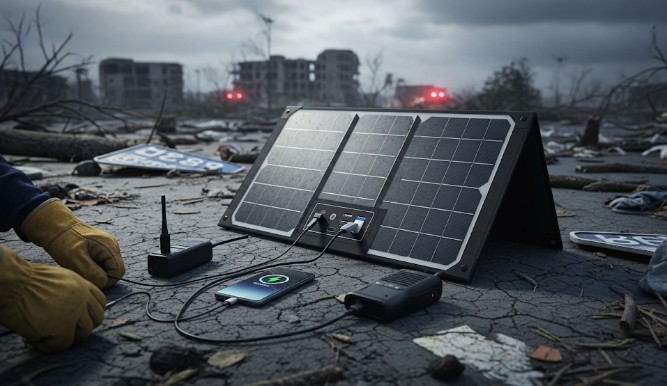
Why Solar Charging Matters During Emergencies
Power outages are no longer rare events. Storms, hurricanes, ice, heatwaves, overloaded electrical grids, wildfires, and infrastructure failures can leave homes without electricity for hours or even days.
During long outages, people quickly realize how dependent modern life is on electricity. Phones, flashlights, radios, power banks, GPS devices, medical equipment, rechargeable lanterns, and emergency communication systems all require power eventually.
Portable solar charging systems offer one major advantage over fuel-based generators: sunlight does not run out after a weekend. Small solar systems can quietly recharge essential devices without fuel, noise, fumes, or constant maintenance.
A properly planned solar charging setup can keep communication and lighting alive long enough to ride out many emergency situations safely.
Objective
Learn how to build and operate a practical emergency solar charging setup for phones, radios, lights, and power banks using portable panels, safe charging practices, and realistic expectations.
What Solar Chargers Are Good For
Portable solar chargers work best for low- to medium-power emergency electronics.
Excellent Solar Uses
- Phones
- Rechargeable flashlights
- Headlamps
- FRS/GMRS radios
- Power banks
- Tablets
- Small USB fans
- Emergency weather radios
Poor Solar Uses
- Space heaters
- Air conditioners
- Microwaves
- Large refrigerators
- Electric stoves
- Hair dryers
Small portable solar systems are for communication, lighting, and low-power survival electronics—not running an entire modern house.
Understanding Solar Panel Ratings
Solar panel labels can be misleading for beginners.
A “20-watt” folding solar panel does not usually produce 20 watts continuously in real-world conditions.
Actual output depends on:
- Sun angle
- Cloud cover
- Panel temperature
- Shade
- Cable quality
- Time of day
Real-world output is often closer to 30–70% of the advertised maximum.
Recommended Emergency Setup
A simple and highly practical emergency setup includes:
- 10–30 watt folding solar panel
- 10,000–20,000 mAh power bank
- Short charging cables
- USB-powered emergency devices
This type of setup is lightweight, affordable, quiet, and easy to use during outages or evacuations.
Why Power Banks Matter
Many people try to connect phones directly to solar panels and become frustrated when charging constantly disconnects due to clouds or changing sunlight.
The better method is:
- Solar panel charges the power bank.
- Power bank charges the devices.
This creates a stable charging buffer and prevents interruptions during weak sunlight conditions.
Setup Basics
Panel Position
Solar panels work best when directly facing the sun.
- Tilt panels toward the sun.
- Avoid partial shade completely.
- Adjust panel angle every hour if possible.
- Keep the panel surface clean.
Even small shadows from branches or wires can dramatically reduce output.
Cable Management
Use short, quality charging cables whenever possible.
Cheap or very long cables reduce charging efficiency and can cause unstable charging behavior.
Heat Management
Heat damages batteries over time.
- Keep power banks shaded.
- Do not leave electronics baking in direct sunlight.
- Allow airflow around charging equipment.
The panel should be in the sun. The batteries should not.
Cloudy Weather Reality
Portable solar systems still work during cloudy weather, but output drops sharply.
During cloudy conditions:
- Prioritize charging power banks.
- Reduce non-essential device use.
- Use low-power modes aggressively.
- Charge during the brightest daylight hours.
Expect slower charging and plan accordingly.
Energy Conservation Matters
Solar charging works best when combined with careful energy use.
Phone Power Saving Tips
- Enable battery saver mode.
- Lower screen brightness.
- Disable unnecessary apps.
- Use airplane mode when possible.
- Download maps and documents offline ahead of time.
Conserving power is often more important than generating more power.
Vehicle + Solar Combination
One of the best emergency setups combines:
- Solar panel
- Power bank
- Vehicle charging backup
Solar handles daytime charging while the vehicle becomes a backup charging option during poor weather or heavy use periods.
This layered approach is far more reliable than depending on only one power source.
Camping vs Emergency Use
Emergency solar charging differs from recreational camping.
During emergencies:
- Reliability matters more than convenience.
- Communication devices become priority equipment.
- Charging schedules matter.
- Power budgeting becomes important.
Test your setup before depending on it during an actual outage.
Common Solar Charging Mistakes
- Buying extremely cheap panels with unrealistic ratings.
- Charging devices directly instead of using a power bank buffer.
- Allowing partial shade on panels.
- Using poor-quality cables.
- Leaving batteries in direct sun.
- Expecting solar to run high-power appliances.
Most solar charging failures come from unrealistic expectations rather than bad sunlight.
Real Example
During a three-day summer blackout, one family used a folding 20-watt solar panel and two power banks to keep phones, radios, rechargeable lanterns, and small USB fans operating continuously.
Devices were charged from the power banks at night while the solar panel recharged the banks during the day. By limiting unnecessary screen time and prioritizing communication equipment, the family avoided dead devices throughout the outage.
Field Testing Drill
Before relying on solar during an emergency, run a real-world test.
- Fully discharge a power bank partially.
- Set up your solar panel outside.
- Track charging performance over 4–6 hours.
- Adjust angle every hour.
- Record actual charging percentages gained.
Real testing teaches far more than manufacturer advertisements.
Emergency Solar Checklist
- Portable folding solar panel
- Power bank(s)
- Short charging cables
- USB flashlight or lantern
- Emergency weather radio
- Phone charging cables
- Zip bags for rain protection
- Notebook for power budgeting
Affiliate Gear Link
Looking for emergency solar charging gear?
Shop Emergency Solar Chargers & Power Banks on Amazon
Final Thoughts
Portable solar charging is one of the most practical and sustainable emergency power options available for everyday households.
A small, reliable solar setup can keep critical communication and lighting equipment running long after disposable batteries fail or fuel becomes difficult to obtain.
The key is realism. Portable solar systems are not magic power plants. They are steady, renewable trickle-power systems that reward planning, discipline, and efficient energy use.
Test your equipment now, learn its limits, and build a system that matches your actual emergency needs rather than marketing hype.
← Previous | All Articles | Next →