
Lost at Sea: First 24 Hours
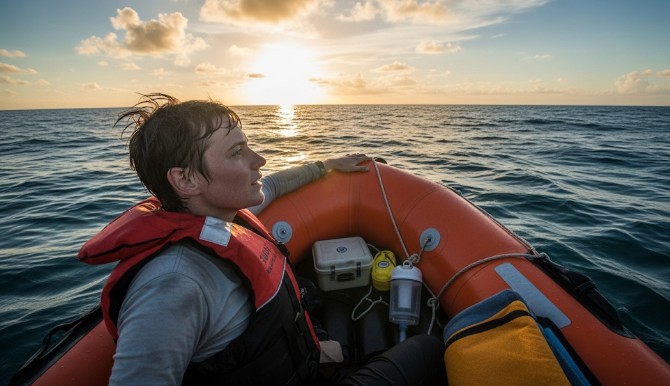
Objective
Survive until rescue by prioritizing flotation, exposure control, signaling, and smart drift management while avoiding the panic decisions that kill people offshore.
The first 24 hours after a boating emergency are usually not about heroic navigation or swimming to land. They are about staying visible, conserving body heat, preventing dehydration, and remaining attached to the largest floating object available.
Most successful offshore survivors follow the same pattern: stay calm, stay together, stay afloat, and stay visible.
Scenario (Example)
Example: Two adults in a 16-ft center-console lose power 3 nautical miles offshore on a rising afternoon sea. Batteries sag, cell service flickers, and weather radar shows a late squall line moving in. The boat still floats but drifts beam-to-wave. Onboard gear includes two PFDs, a throw cushion, a whistle, a flashlight, flares, and a small cooler.
Immediate Priorities
- Stay with the boat. A floating hull is easier to spot than a swimmer.
- Put on flotation immediately. Do not wait until conditions worsen.
- Prevent capsize. Shift weight carefully and keep movement controlled.
- Signal early. Do not “wait until it gets serious.” Offshore conditions change fast.
- Control exposure. Sun, wind, spray, and cold water are all survival threats.
Step-by-Step Survival Plan
1. Stabilize the Platform
Distribute weight evenly to prevent rolling or swamping. If the vessel is flooded but still floating, remain attached to it. Tie short safety lines if waves or exhaustion are a concern.
- Keep the heaviest people low and centered.
- Secure loose gear before waves throw it overboard.
- If possible, keep the bow facing incoming waves.
- Avoid standing unless absolutely necessary.
If you abandon a floating boat too early, rescuers lose the largest and brightest target in the area.
2. Manage Exposure Immediately
Open water kills through exposure faster than many people realize. Even warm water drains body heat over time, and sun exposure offshore becomes brutal because of reflection from the water surface.
- Cover your head and neck.
- Use towels, ponchos, or spare shirts for shade.
- Stay as dry as possible.
- Get as much of your body out of the water as you safely can.
- If multiple survivors are present, huddle together for warmth and morale.
For cold-weather exposure concepts that also apply offshore, see Cold Weather Survival Basics.
3. Signal Early and Repeatedly
Rescuers cannot help if they cannot find you. Begin signaling as soon as the situation becomes unstable.
- Activate EPIRB or PLB immediately if available.
- Use VHF Channel 16 for distress calls.
- Give position, number of people, vessel description, and condition.
- Use mirrors during daylight and strobes or flashlights at night.
- Conserve flares until aircraft or boats are close enough to notice them.
Three repeated signals remain the international distress standard:
- Three whistle blasts
- Three flashes
- Three fires or bright objects
For additional low-tech rescue methods, see Signaling for Rescue: Be Seen, Be Heard.
4. Understand Drift
Wind, waves, and current can move a disabled vessel surprisingly fast. Knowing your approximate drift direction helps rescuers predict your position.
- Watch wave direction and whitecaps.
- Track the sun's movement relative to your heading.
- Throw a floating object occasionally to compare drift speed.
- If safe, deploy a bucket or improvised drogue from the bow to reduce sideways drift.
Even rough estimates are useful. A written note on a cooler lid or hull with time and drift direction may help later.
Water and Hydration
Dehydration destroys judgment offshore. Heat, salt spray, fear, and sun exposure accelerate water loss.
- Drink small amounts consistently.
- Protect water from contamination by fuel or salt spray.
- Do not drink seawater.
- If rain begins, collect it immediately with tarps, shirts, or plastic.
Shade matters almost as much as water. Lowering heat exposure slows dehydration dramatically.
For additional water discipline concepts, review Rain Catchment & Water Discipline.
Night Survival
Night changes everything offshore. Visibility drops, temperatures fall, and orientation becomes difficult.
- Secure loose gear before darkness fully sets in.
- Assign simple watch rotations.
- Keep one signaling light immediately accessible.
- Preserve night vision by shielding flashlights when not signaling.
- Stay clipped or tied to the craft if waves increase.
Panic often spikes after sunset. Keep conversations calm, direct, and task-focused.
Common Mistakes
- Trying to swim for shore without knowing distance or current.
- Removing PFDs because they feel uncomfortable.
- Using all flares too early.
- Ignoring sun exposure until dehydration becomes severe.
- Separating from the main floating debris or vessel.
- Failing to signal early because “it might still work out.”
Real Example
Three kayakers blown offshore by afternoon thermal winds linked their boats together with tow lines and rafted beam-to-beam to create a wider visual target. They stayed with the boats, rationed water, and used a signal mirror at sunset to attract a distant fishing vessel. Rescue crews later stated the grouped kayaks were dramatically easier to spot than separated paddlers would have been.
Emergency Checklist
- PFD secured properly
- Boat or flotation platform stabilized
- EPIRB/PLB activated
- VHF distress call transmitted
- Signal gear staged and ready
- Water protected and rationed
- Sun and exposure protection improvised
- Drift direction monitored
- Night plan established
Contingencies
If a Storm Arrives
- Secure all gear immediately.
- Keep weight low and centered.
- Face waves with the bow if possible.
- Avoid touching exposed metal during lightning activity.
- Ride the conditions out instead of making sudden moves.
If the Boat Capsizes
- Stay together.
- Remain attached to the hull.
- Do not waste energy trying to upright a vessel that cannot realistically be recovered.
- Conserve heat by limiting unnecessary swimming.
If You Have No Signaling Gear
- Use reflective foil, mirrors, watches, or polished metal.
- Wave bright clothing slowly and deliberately.
- Create contrast with floating debris or tied gear.
- Use whistle blasts instead of shouting to conserve energy.
Psychological Survival
Mental control matters offshore. Fear leads to bad decisions, wasted energy, and separation from the group.
- Focus on small tasks.
- Keep communication calm and simple.
- Rotate responsibilities.
- Celebrate small wins like successful signaling or collected rainwater.
For more on staying functional under stress, see Mindset & Decision-Making Under Stress.
Final Thoughts
Most open-water survival situations are won or lost in the first hour. People who remain calm, stay attached to flotation, manage exposure, and signal intelligently dramatically improve their rescue odds.
The ocean is brutally efficient at punishing panic and rewarding preparation. A basic offshore kit with PFDs, signaling tools, shade material, water, and a handheld radio turns a disaster into a survivable delay instead of a fatal chain reaction.
After-Action
Once ashore, document what failed: maintenance issues, communication gaps, missing gear, or poor weather planning. Replace used flares, recharge electronics, and consider adding a PLB, handheld VHF in a dry bag, reflective panel, and proper sea anchor or drogue before the next trip.
← Previous | All Articles | Next →