
Bleeding Control: Tourniquets, Packing, Pressure
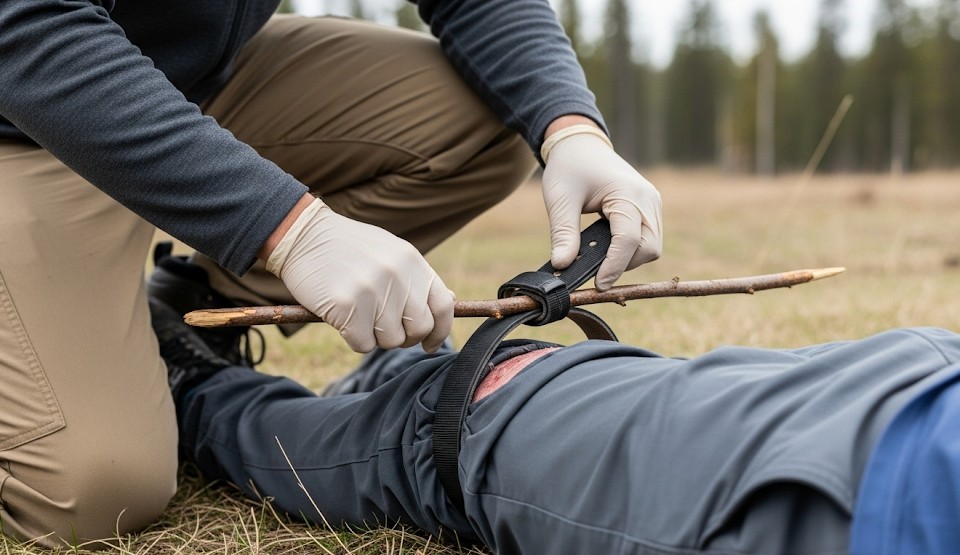
Why Bleeding Control Matters
Severe bleeding can become life-threatening in only a few minutes. In many emergencies, the first person on scene is not a paramedic or doctor — it is a family member, coworker, bystander, or teammate.
Basic bleeding control skills can dramatically improve survival chances while waiting for emergency services.
You do not need advanced medical training to apply direct pressure, use a tourniquet correctly, or pack a wound. Calm action and simple tools save lives.
Objective
Recognize dangerous bleeding quickly and use pressure, tourniquets, and wound packing to slow or stop hemorrhage until professional medical care arrives.
Personal Safety First
Before helping anyone, check for immediate danger.
- Traffic
- Fire
- Weapons
- Electrical hazards
- Unsafe structures
If possible, wear gloves before contacting blood.
A rescuer who becomes injured creates a second emergency.
Recognizing Dangerous Bleeding
Severe bleeding often includes:
- Blood pooling rapidly
- Soaked clothing or bandages
- Bright red spurting blood
- Blood that will not stop with light pressure
- Signs of shock
Shock symptoms may include:
- Pale skin
- Cold sweating
- Confusion
- Weakness
- Rapid breathing
- Loss of consciousness
MARCH Priorities
Many trauma responders use the MARCH sequence:
- Massive bleeding
- Airway
- Respiration
- Circulation
- Hypothermia / Head injury
Massive bleeding comes first because uncontrolled hemorrhage can kill rapidly.
Direct Pressure
Direct pressure is the first step for many bleeding injuries.
- Expose the wound if possible.
- Apply firm pressure directly over the bleeding area.
- Use gauze, cloth, or clean fabric if available.
- Maintain steady pressure without constantly checking.
If blood soaks through, add more material on top instead of removing the original dressing.
Tourniquet (TQ) Use
Tourniquets are used for severe bleeding on arms or legs when direct pressure is not enough or when bleeding is immediately life-threatening.
Tourniquet Placement
- Place the tourniquet 5–7 cm above the wound.
- Do not place directly over joints.
- Tighten until bleeding stops completely.
- Secure the windlass.
- Record the application time if possible.
Proper tourniquet application is painful. Pain does not mean it is being used incorrectly.
Common Tourniquet Mistakes
- Too loose to stop bleeding
- Placed over clothing folds or bulky items
- Placed directly over joints
- Removed too early
- Failing to apply a second tourniquet if needed
If bleeding continues, apply a second tourniquet above the first one.
Wound Packing
Wound packing is used for deep wounds where a tourniquet cannot be applied effectively, such as the groin, shoulder, armpit, or neck area.
Basic Wound Packing Steps
- Expose the wound.
- Locate the source of bleeding if possible.
- Pack gauze firmly into the wound cavity.
- Continue packing until full.
- Apply strong pressure for several minutes.
- Secure with a pressure dressing.
Hemostatic gauze is helpful when available, but regular gauze is still useful.
Pressure Bandages
Pressure dressings help maintain constant pressure after packing or direct pressure.
- Wrap firmly but not so tight that circulation is completely cut off unless using a tourniquet intentionally.
- Check for continued bleeding.
- Monitor the patient closely.
Chest Wounds
Penetrating chest injuries can affect breathing and may require chest seals.
- Use vented chest seals if available.
- Monitor breathing continuously.
- Seek emergency medical care immediately.
Chest trauma can become critical very quickly.
Preventing Hypothermia
Trauma patients lose body heat rapidly, even in warm weather.
- Use blankets or jackets.
- Keep the patient off cold ground.
- Protect from wind and rain.
Hypothermia worsens bleeding and shock.
Trauma Kit Essentials
- Tourniquet (CAT or SOF-T style)
- Hemostatic gauze
- Compressed gauze
- Pressure bandage
- Chest seals
- Medical gloves
- Trauma shears
- Marker for noting TQ time
- Emergency blanket
Real Example
During a roadside accident, bystanders used a commercial tourniquet on a severe thigh injury before EMS arrived. Bleeding stopped within seconds, and responders later credited the early intervention with preventing a fatal blood loss situation.
Training Matters
Reading about bleeding control helps, but hands-on practice builds confidence.
- Practice applying tourniquets one-handed and two-handed.
- Learn proper wound-packing pressure.
- Take Stop The Bleed or first-aid training if available.
- Review your trauma kit regularly.
Stress changes performance. Familiarity matters.
Common Mistakes
- Waiting too long to apply a tourniquet.
- Using weak pressure.
- Panicking and forgetting priorities.
- Failing to monitor the patient after treatment.
- Ignoring signs of shock.
Final Thoughts
Severe bleeding emergencies develop fast, but basic intervention can make a major difference.
Direct pressure, wound packing, and tourniquet use are practical skills that ordinary people can learn. A small trauma kit and regular practice may one day save a life.
← Previous | All Articles | Next →