Sanitation When the Water Stops (Urban)
Why Sanitation Becomes Critical During Outages
When water systems fail during blackouts, storms, earthquakes, or infrastructure problems, sanitation quickly becomes one of the biggest health threats in urban environments.
Most people prepare for food and flashlights first, but poor sanitation creates disease problems surprisingly fast. Overflowing toilets, dirty hands, contaminated food prep areas, and unmanaged trash can spread illness through an apartment building or neighborhood in only a few days.
Good sanitation is not glamorous, but it is one of the most important survival skills during any prolonged emergency.
Objective
Prevent illness and maintain a safe living environment during water outages by managing waste, hand hygiene, food safety, and cleaning with limited resources.
First Priority: Protect Drinking Water
Before dealing with toilets or cleaning, separate your drinking water from sanitation water immediately.
- Label drinking water clearly.
- Store sanitation water separately.
- Never dip dirty containers into clean water supplies.
- Use dedicated containers for washing and waste cleanup.
Cross-contamination is one of the fastest ways to create illness during emergencies.
Emergency Toilet Options
The Two-Bag System
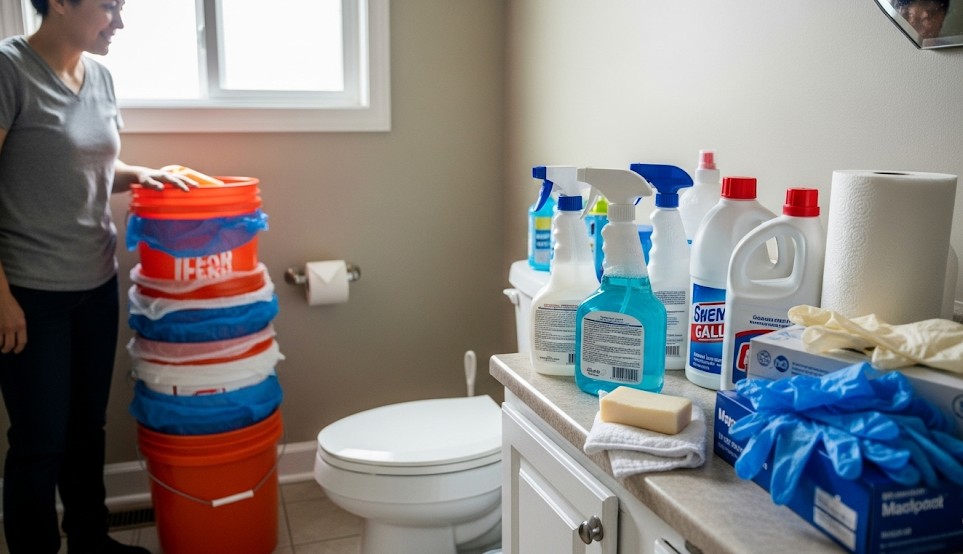
One of the simplest emergency toilet setups uses two heavy-duty trash bags inside a bucket or toilet bowl.
- Place one liner bag inside the container.
- Add a second bag for extra leak protection.
- Add absorbent material after use.
- Tie and seal carefully before disposal.
Useful absorbent materials include:
- Kitty litter
- Sawdust
- Shredded paper
- Wood pellets
Bucket Toilet Setup
A 5-gallon bucket with a toilet seat lid attachment works surprisingly well during outages.
Keep the sanitation area:
- Ventilated
- Separated from food prep areas
- Clearly marked
- Stocked with gloves and disinfectant
Bleach solution or disinfectant spray nearby helps control contamination and odor.
Can You Still Flush?
Sometimes city sewer systems still function even when water service stops.
If sewage systems are operational:
- Pour non-drinking water directly into the toilet bowl to force a flush.
- Use bathtub water, rainwater, or gray water if available.
- Avoid wasting treated drinking water for flushing.
If sewer systems are backing up or authorities advise against flushing, stop immediately.
Hand Hygiene Matters More Than Almost Anything
Dirty hands spread disease faster than almost any other sanitation failure.
Critical Hand-Washing Times
- After toilet use
- Before preparing food
- Before eating
- After handling trash
- After cleaning contaminated surfaces
Simple Hand-Washing Station
Create a low-water wash station using:
- A water jug with spigot
- Catch basin or bucket underneath
- Soap
- Paper towels or clean cloths
Soap and small amounts of water are often more effective than sanitizer alone, especially when hands are visibly dirty.
Cleaning and Surface Safety
During outages, kitchens and bathrooms become high-risk contamination zones.
Priority Cleaning Areas
- Toilet handles and lids
- Door handles
- Kitchen counters
- Food prep areas
- Water containers
- Shared tools and flashlights
Disinfect high-touch areas daily during prolonged outages.
Bleach Safety
Household bleach is useful for sanitation, but only when used properly.
- Use unscented regular bleach.
- Label diluted spray bottles clearly.
- Never mix bleach with ammonia or cleaners.
- Store away from children and pets.
Bleach loses strength over time, especially in heat.
Trash Management
Trash becomes a major issue in apartments and dense neighborhoods during outages.
Best Practices
- Separate food waste from dry trash.
- Seal waste bags tightly.
- Move trash away from living areas when possible.
- Prevent rodent access.
- Rotate disposal responsibility if working with neighbors.
Unmanaged trash attracts insects, rodents, and bacteria quickly.
Laundry During Water Shortages
Clothing hygiene still matters during emergencies.
- Prioritize socks, underwear, towels, and baby items.
- Use small-batch washing with minimal water.
- Air dry whenever possible.
- Rotate clothing carefully to reduce washing frequency.
Even basic cleaning helps prevent skin infections and illness.
Apartment and High-Rise Challenges
Urban buildings create unique sanitation problems during outages.
- Elevators may stop working.
- Water pressure may disappear entirely.
- Shared bathrooms become contamination risks.
- Trash removal may slow down.
- Odors and humidity increase quickly.
Good ventilation and disciplined cleaning become even more important in shared buildings.
Real Example
During a five-day urban outage, one apartment household used a bucket toilet with double liners, sawdust absorbent material, and a dedicated bleach spray bottle. A small hand-washing station near the kitchen sink reduced unnecessary water waste.
By separating sanitation areas from food prep areas and maintaining strict hand-washing habits, the household avoided gastrointestinal illness entirely despite limited running water.
Common Mistakes
- Using drinking water for unnecessary cleaning.
- Ignoring hand hygiene.
- Allowing trash to pile indoors.
- Using weak or unlabeled bleach mixtures.
- Cross-contaminating food prep surfaces.
- Failing to ventilate sanitation areas.
Sanitation Checklist
- 5-gallon buckets
- Heavy-duty trash bags
- Kitty litter or sawdust
- Unscented bleach
- Spray bottles
- Soap
- Paper towels
- Gloves
- Hand sanitizer
- Water containers with spigots
- Cleaning cloths
- Toilet paper
10-Minute Preparedness Drill
- Identify how your household would handle toilet use if water stopped tonight.
- Locate trash bags, bleach, gloves, and soap.
- Check how much water you have available.
- Create a temporary hand-washing station.
- Separate drinking water from cleaning water.
Most people discover sanitation becomes complicated much faster than expected.
Final Thoughts
Sanitation failures create real health dangers during emergencies. Illness spreads quickly when water systems fail, especially in crowded urban environments.
Fortunately, basic preparation goes a long way. Buckets, liners, soap, bleach, gloves, and a clear routine can keep households safe through surprisingly long outages.
Food, water, and flashlights matter — but good sanitation is what keeps a difficult situation from becoming a medical emergency.
← Previous | All Articles | Next →