
Car as a Power Plant: Inverters & Safety
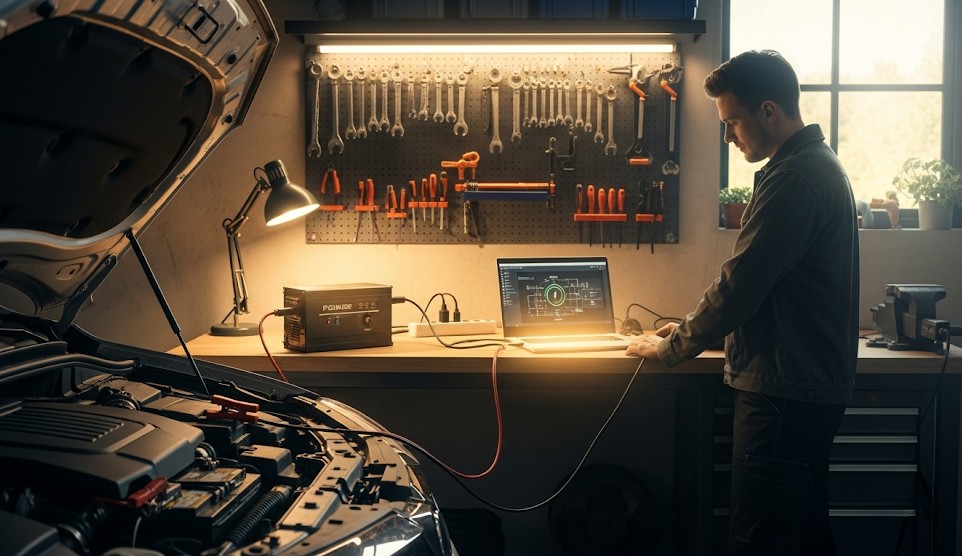
Why Your Vehicle Can Be an Emergency Power Source
During a blackout, storm, evacuation, roadside delay, or communication outage, your vehicle can become a useful emergency power source. A car, truck, or SUV can help charge phones, radios, flashlights, laptops, small medical devices, battery banks, and other essential electronics.
Used correctly, a vehicle power setup can keep communication and lighting available when wall outlets are unavailable. Used carelessly, it can drain your battery, waste fuel, damage electronics, or create carbon monoxide hazards.
The goal is not to run your whole house from your car. The goal is to safely power small critical devices while preserving the vehicle’s ability to start and move.
Objective
Use your vehicle as a short-term emergency power source without killing the battery, overloading an inverter, damaging electronics, wasting fuel, or creating exhaust-related danger.
What a Car Can Realistically Power
Vehicle power is best for small and moderate loads.
- Phones
- Tablets
- Two-way radios
- Rechargeable flashlights
- Battery banks
- Small laptops
- Portable fans
- Small medical devices, if compatible
It is not ideal for large appliances, space heaters, microwaves, refrigerators, power tools, or anything with a heavy startup surge unless you have a properly designed system.
Understand Watts Before You Plug In
Every device uses power measured in watts. Your inverter must be sized for the total load you plan to run.
Examples:
- Phone charger: usually low draw
- Tablet charger: moderate draw
- Laptop charger: higher draw
- Small fan: varies widely
- Medical device: check manufacturer rating
Add up the devices you plan to run at the same time and stay below the inverter’s continuous rating. Do not rely only on peak rating.
Choosing an Inverter
A power inverter converts vehicle DC power into household-style AC power. For emergency preparedness, many households do well with a modest inverter rather than an oversized one.
Small Plug-In Inverters
Small 12-volt socket inverters are useful for phones, radios, laptops, and battery banks. They are simple and convenient, but limited by the vehicle outlet and wiring.
Larger Battery-Clamp Inverters
Larger inverters may connect directly to the vehicle battery with clamps or dedicated wiring. These can support bigger loads, but they require more caution, proper fusing, ventilation, and load management.
For most beginner emergency setups, a 150–300 watt inverter is enough for small electronics.
Modified Sine Wave vs Pure Sine Wave
Some cheaper inverters produce modified sine wave power. Many simple chargers work fine with them, but sensitive electronics, some medical devices, and certain chargers may require pure sine wave power.
If you plan to run medical equipment or expensive electronics, check the device manual and consider a quality pure sine wave inverter.
Battery Protection
The most common mistake is draining the vehicle battery so far that the car will not start.
Follow these rules:
- Run the engine during heavier charging sessions.
- Do not leave loads connected unattended for long periods.
- Charge devices in batches instead of continuously.
- Keep a jump starter in the vehicle.
- Monitor battery condition if your vehicle displays voltage.
Preserving mobility is more important than charging every device to 100 percent.
Carbon Monoxide Safety
Any time an engine runs, carbon monoxide risk must be taken seriously. Carbon monoxide is odorless, invisible, and deadly.
- Never run a vehicle in a closed garage.
- Do not idle near open windows or doors.
- Keep the tailpipe clear of snow, mud, or debris.
- Point exhaust away from occupied areas.
- Use a battery-powered carbon monoxide alarm when appropriate.
During winter storms, always check the tailpipe before running the engine for heat or power.
Fuel Planning
A vehicle power plan depends on fuel. During widespread outages, gas stations may lose power or run out of fuel quickly.
Good habits include:
- Keeping the tank at least half full when possible.
- Using short charging windows instead of constant idling.
- Prioritizing critical devices first.
- Tracking how much fuel charging sessions consume.
Fuel is emergency mobility. Do not waste it casually.
Safe Charging Routine
A simple routine reduces risk:
- Park outdoors with exhaust clear.
- Start the vehicle if running moderate loads.
- Plug in the inverter.
- Connect only priority devices.
- Charge in timed sessions.
- Unplug equipment before leaving the setup unattended.
Keep cords organized so people do not trip over them.
Common Mistakes
- Trying to power large appliances from a small inverter.
- Ignoring inverter continuous watt rating.
- Running the car in a garage.
- Letting the battery drain too low.
- Using cheap damaged cords.
- Charging non-essential devices first.
- Forgetting the tailpipe can become blocked in snow.
Vehicle Power Kit Checklist
- Quality inverter
- USB charging cables
- Power bank
- 12-volt car charger
- Small extension cord
- Jump starter
- Flashlight or headlamp
- Carbon monoxide alarm
- Printed list of critical devices and watt ratings
Real Example
During a regional power outage, one household used a 200-watt inverter to charge phones, radios, flashlights, and battery banks from a vehicle parked outdoors. They charged in short timed sessions, kept the vehicle exhaust clear, and preserved fuel by rotating devices instead of running the engine continuously.
When Solar or Power Banks Are Better
If fuel is limited or the vehicle must remain ready for evacuation, smaller power solutions may be better for phones and radios.
Power banks, solar chargers, and rechargeable lanterns reduce the need to idle a vehicle for small loads.
A vehicle should be part of your emergency power plan, not the only part.
Final Thoughts
Your vehicle can be a valuable emergency power source, but it must be used with discipline. Focus on critical electronics, protect the battery, manage fuel, and never ignore carbon monoxide safety.
A modest inverter, a jump starter, power banks, and a simple charging routine can keep your household connected and functional during short-term outages without turning your car into a liability.
← Previous | All Articles | Next →