Using FRS/GMRS Radios: Setup & Etiquette
Why Radios Matter During Emergencies
Phones are excellent until the network is overloaded, batteries die, towers lose power, or internet access disappears. During blackouts, storms, evacuations, neighborhood emergencies, and outdoor trips, simple handheld radios can keep families and small teams coordinated when phones become unreliable.
FRS and GMRS radios are popular because they are affordable, portable, easy to learn, and useful for short-range communication. They are not magic long-distance devices, but when used correctly they can be one of the most practical preparedness tools in a household.
The key is not just owning radios. The key is setting them up before an emergency and practicing enough that everyone knows what to do.
Objective
Set up simple, reliable family or neighborhood radio communications with clear channel plans, realistic range expectations, battery discipline, and good radio etiquette.
FRS vs GMRS: The Simple Difference
FRS radios are generally lower-power, license-free handheld radios designed for short-range use. GMRS radios can support higher power, better antennas, and repeaters, but may require licensing depending on how they are used.
For many families, basic FRS radios are enough for neighborhood, campsite, road-trip, and short-range emergency use. GMRS becomes more useful when you want better range, family-group communication, or access to repeaters where available.
Check current local rules before transmitting, especially if using higher-powered GMRS equipment or repeaters.
Range Reality
Radio packaging often claims very long ranges under perfect conditions. Real-world range is usually much shorter.
- Urban areas: buildings, concrete, and interference reduce range.
- Suburbs: range improves but trees and houses still matter.
- Open terrain: line-of-sight can extend range significantly.
- Hills and elevation: higher ground often improves communication.
A realistic expectation for handheld radios may be less than a mile in dense areas and several miles in better terrain. Test your own neighborhood instead of trusting box claims.
Build a Simple Channel Plan
A radio plan should be written down before an emergency. Do not wait until power is out to decide what channel everyone should use.
- Primary channel: the first place everyone checks in.
- Backup channel: used if the primary is busy.
- Check-in times: scheduled times to save battery.
- Emergency phrase: a simple way to indicate urgent help is needed.
Keep the plan simple enough for children, older relatives, and stressed adults to follow.
Privacy Codes Are Not Privacy
Many radios include CTCSS or DCS codes, often marketed as “privacy codes.” These do not encrypt your communication. They simply reduce what you hear by filtering out transmissions that do not use the same code.
Other people can still hear you if their radios are set differently or if they monitor the channel without the code.
Do not transmit sensitive information such as full addresses, financial details, medical information, or security plans unless absolutely necessary.
Basic Radio Etiquette
Good radio habits make communication faster and less chaotic.
- Listen before transmitting.
- Press the push-to-talk button, pause half a second, then speak.
- Use short messages.
- Speak clearly and slowly.
- Release the button when finished.
- Avoid talking over other users.
Long rambling transmissions waste battery and block the channel for everyone else.
Use a Simple Message Format
In emergencies, structured messages reduce confusion.
Use this format:
- Who: who is calling
- Where: current location
- Status: okay, delayed, injured, stuck, moving
- Needs: water, pickup, medical help, directions
- Next: what you are doing next
Example: “Willie to Home Base. At north parking lot. Status okay. Need pickup in 20 minutes. Staying put.”
Battery Planning
Radios are only useful if they have power.
- Store spare batteries with each radio.
- Use rechargeable radios only if you have backup charging.
- Turn radios off between scheduled check-ins if battery is limited.
- Keep one radio on monitoring duty if security or safety requires it.
Consider pairing radios with your broader power plan: Power Budgeting for a 72-Hour Device Plan.
Family and Neighborhood Use
Radios are useful for:
- Family evacuation coordination
- Neighborhood blackout updates
- Road trips with multiple vehicles
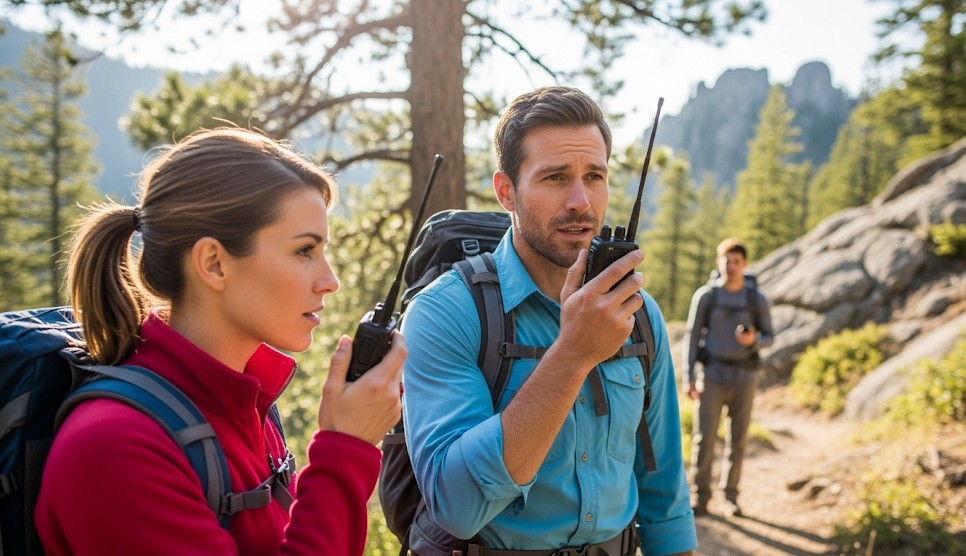
- Camping and hiking groups
- Checking on nearby relatives
- Communicating when cell service is weak
For neighborhood use, agree on limited check-in windows so the channel does not become constant noise.
Common Radio Mistakes
- Buying radios but never practicing.
- Forgetting batteries.
- Assuming “privacy codes” make conversations private.
- Using long unclear transmissions.
- Standing in a poor location instead of moving to higher ground.
- Failing to write down the channel plan.
Real Example
During a neighborhood outage, several families used a simple radio plan with one primary channel, one backup channel, and two scheduled check-in times per day. Messages were kept short: status, needs, and next action. This helped share updates about water pressure, store openings, and safety concerns without relying on overloaded cell service.
Radio Kit Checklist
- Two or more FRS/GMRS radios
- Spare batteries or charging cables
- Printed channel plan
- Headsets for noisy environments
- Waterproof bag or case
- Marker labels for each radio
- Power bank or solar charger
10-Minute Radio Drill
Give each household member a radio. Send one person outside or down the street. Practice a short check-in using the message format: who, where, status, needs, next. Then switch to the backup channel and repeat.
Run this drill monthly until the process feels normal.
Final Thoughts
FRS and GMRS radios are simple tools, but they become powerful when paired with a plan. A written channel plan, spare batteries, scheduled check-ins, and short disciplined messages can dramatically improve communication during outages and local emergencies.
Do not wait for a crisis to learn the buttons. Practice now, label everything, and make radio communication part of your household preparedness routine.
← Previous | All Articles | Next →