
Cooking Over an Open Fire: Campfire Techniques
Objective
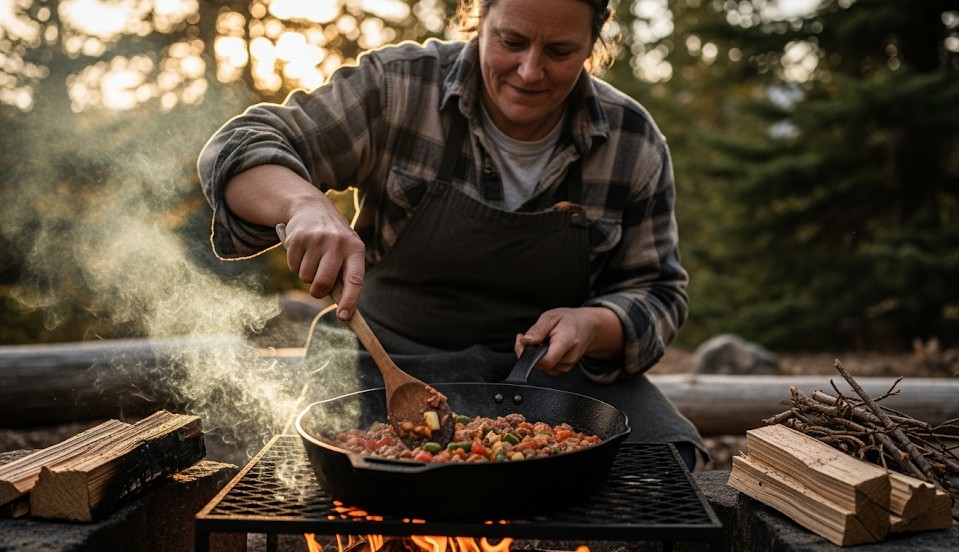
Cooking over an open fire is one of the oldest outdoor skills, but it is also one of the easiest to do poorly. A roaring flame may look impressive, but it usually burns food, blackens pots, wastes wood, and creates unnecessary risk around camp. The goal is to cook safely and efficiently over a wood fire by creating predictable heat zones, managing coals instead of flames, and keeping the cooking area controlled from start to finish.
Good fire cooking is really heat management. You are not trying to build the biggest fire in the woods. You are trying to create a reliable bed of coals, a safe support system for your cookware, and enough flexibility to boil, simmer, roast, or warm food without constantly fighting smoke and flare-ups. Done correctly, an open fire can boil water, cook meals, dry damp gear nearby, and provide morale in a survival or backcountry situation.
Scenario Example
Example: Rain fell the day before, and most of the wood near camp feels damp under the bark. You need to boil water quickly, cook rice, and simmer a small stew without using all your best dry tinder. This is a common situation where fire structure matters. Damp wood can still be useful, but you need to split it, expose the dry inner core, build a small hot starter fire, and gradually create coals for cooking.
The mistake many people make is placing a pot directly over tall flames. That creates soot, uneven heat, and burned food. A better approach is to build the fire slightly to one side, let it generate coals, then rake those coals into a separate cooking zone. Flames are for creating coals. Coals are for cooking. That one idea solves a lot of campfire problems.
Fire Lays for Cooking
- Log Cabin: A stable square structure that allows airflow and creates an even coal bed. This is a good choice when you want a dependable cooking fire with room for a pot or small grate.
- Keyhole: A round fire area with a narrow channel extending from it. The main fire burns in the round section, while coals are raked into the channel for controlled simmering.
- Trench: A shallow trench fire works well in windy areas because it channels airflow and helps protect the flame. It can also support pots across the trench if built safely.
- Lean-To Fire: A quick-starting option when kindling is limited. It is useful for getting a small flame going before transitioning to a better cooking structure.
Preparing the Fire Area
Before lighting anything, choose a safe location. Use an existing fire ring when available. If there is no established fire area and fires are permitted, clear the site down to mineral soil and remove dry leaves, grass, needles, and other fuels from the surrounding area. Keep the fire away from tents, tarps, low branches, roots, and gear. Sparks have a talent for finding the one expensive thing you left too close.
Have water, sand, or dirt ready before the fire is lit. Do not wait until something goes wrong to start looking for a way to extinguish it. A cooking fire should be small enough to control and close enough to manage, but not so close to your shelter that smoke, sparks, or heat become a hazard.
Steps
- Split damp wood to expose the dry inner core. Feather sticks, shavings, and small splits ignite faster than whole wet branches.
- Build a small, hot fire first using tinder, kindling, and pencil-thin sticks before adding larger cooking wood.
- Let the fire burn down enough to create coals. Do not rush the cooking stage.
- Use a small grill, flat rocks, or two sturdy green sticks as pot supports, making sure they are stable before placing cookware on them.
- Rake coals into a simmer zone and keep active flames away from pot sides when possible.
- Use a pot lid to reduce boil time, save fuel, and keep ash out of the food.
- Rotate cookware as needed to prevent hot spots, especially when cooking thicker meals like stew, beans, oatmeal, or rice.
Boiling, Simmering, and Frying
Boiling water is the easiest open-fire cooking task because it can tolerate higher heat. Place the pot over strong coals or a modest flame, use a lid, and shield the fire from wind. Once water reaches a boil, remove the pot carefully and keep the fire controlled.
Simmering takes more finesse. Rice, pasta, soups, and stews need steady heat, not flame blasting the bottom of the pot. Rake a small bed of coals away from the main fire and place the pot over that lower heat zone. Add or remove coals to adjust temperature. If food starts sticking or scorching, the heat is too aggressive. Stir more often and move the pot slightly off center.
Frying requires the most attention because grease can flare. Use a stable pan, moderate coals, and keep the pan level. Never leave hot oil unattended near an open flame. In a survival situation, simple boiling and simmering are usually more efficient than frying because they waste less food and require less cleanup.
Cookware and Tools
Open-fire cooking is rougher on gear than stove cooking. Thin ultralight pots can warp or develop hot spots if placed directly over intense flame. Stainless steel, cast iron, and thicker camp cookware tolerate fire better, though cast iron is heavy for backpacking. A pot with a lid is one of the most useful pieces of camp cookware because it saves time, fuel, and effort.
- Use leather gloves or a pot lifter when handling hot cookware.
- Keep a long spoon or utensil so your hands stay away from heat and steam.
- Use a small grill grate when possible for better stability.
- Keep cookware handles turned away from traffic areas so nobody kicks or bumps them.
Managing Smoke and Soot
Smoke usually means poor combustion, damp fuel, or restricted airflow. Use smaller splits, create more air space, and avoid smothering the fire with large wet logs. Hardwoods generally create better cooking coals than softwoods, but in the field you may have to use what is available. Resin-heavy woods can produce more soot and popping sparks.
To reduce soot on pots, cook over coals rather than flames and avoid letting flames wrap around the sides of the cookware. Some campers rub a thin layer of biodegradable soap on the outside of pots before cooking to make soot easier to clean, but avoid getting soap inside cookware or near water sources. Cleanup should happen away from streams, lakes, and springs.
Real Example
A keyhole fire was used after a damp night in camp. The main fire was built with split wood and small dry cores from larger branches. Once the fire produced a steady coal bed, coals were raked into the keyhole channel. One liter of water boiled in about six minutes, and the same coal channel held a steady simmer for rice and stew. Because the group cooked with coals instead of open flame, they used less wood, reduced soot, and avoided scorching the meal.
Checklist
- Pot with lid
- Long spoon or camp utensil
- Gloves or pot lifter
- Small grill, grate, or stable pot support
- Knife or hatchet for splitting damp wood safely
- Tinder, kindling, and pencil-sized sticks
- Water, sand, or dirt for extinguishing the fire
- Clear mineral soil or established fire ring
- Food stored away from sparks, animals, and dirty cookware
Contingencies
- Smoky wood: Increase airflow, use smaller splits, and remove overly wet or rotten pieces.
- Fire restrictions: Do not build a fire. Use an approved stove if permitted, or switch to no-cook meals.
- High wind: Move to a safer sheltered area if allowed, reduce fire size, or avoid open flame entirely.
- Rain: Split wood, protect tinder, and build a small hot starter fire before adding larger fuel.
- Unstable cookware: Stop and rebuild the support system before cooking. A spilled pot can burn skin and waste critical food.
Fire Safety and Cleanup
Never walk away from an active cooking fire. When finished, spread the coals, drown them with water, stir, and feel for heat with the back of your hand near the ashes. If it is too hot to touch, it is too hot to leave. Repeat the process until the fire is completely out.
Pack out food scraps and trash. Do not bury leftovers near camp, because animals can dig them up and begin associating campsites with food. Strain dishwater if needed, pack out the solids, and scatter wastewater well away from natural water sources. A clean camp is safer for people, wildlife, and the next group that uses the area.
After-Action
After the meal, note what worked and what did not. Track how long it took to boil water, how much wood was used, which fire lay performed best, and what wood types produced less soot. Also note whether your cookware setup felt stable and whether the group had enough water ready for extinguishing the fire.
Open-fire cooking improves quickly with practice. The biggest lesson is to stop thinking like a bonfire builder and start thinking like a heat manager. Build small, burn clean, cook over coals, and leave the site cold. Your food will taste better, your pots will suffer less, and your campsite will not look like a dragon sneezed on it.
← Previous | All Articles | Next →