
Avoiding Dangerous Wildlife Encounters
Objective
Most dangerous wildlife encounters are not random attacks. They usually happen because an animal is surprised, attracted to food, defending young, defending a carcass, or pressured into feeling trapped. The objective is to prevent dangerous encounters by understanding animal behavior, securing camp properly, traveling with awareness, and knowing how to respond when an animal is nearby.
Wild animals are not villains, and they are not pets. They are simply trying to eat, protect themselves, protect their young, and avoid unnecessary conflict. Your job is to make yourself predictable, keep food smells controlled, avoid surprise meetings, and give animals an easy way to leave. In the wilderness, the best wildlife encounter is usually the one that never becomes close enough for a dramatic story.
Scenario (Example)
Example: You are camping in an area with reported black bear activity near established campsites. Coyotes are vocal at night, deer are moving through camp at dawn, and snakes have been seen warming on trails in the morning. Food odors, careless trash storage, and poor campsite layout could quickly turn a normal trip into a risky one.
In this situation, prevention matters more than reaction. Before cooking, sleeping, or storing gear, the group should separate food areas from sleeping areas, secure scented items, keep a clean camp, and travel carefully during low-light periods. If you are also cooking outdoors, review Cooking Over an Open Fire: Campfire Techniques because food handling, smoke, grease, and scraps can all attract wildlife.
Why Wildlife Encounters Happen
Animals are often drawn to easy calories. Food scraps, trash, cooking oil, toothpaste, sunscreen, scented wipes, pet food, and dirty cookware can all create odors that carry much farther than people expect. Once wildlife learns that campsites provide food, the risk increases for both humans and animals.
Surprise is another major trigger. Moving quietly through dense brush, hiking with wind at your back, or rounding a blind corner quickly can put you too close before either side has time to react. Dawn and dusk are especially active times for many animals, so visibility and awareness matter.
Defensive situations can also be dangerous. A bear with cubs, a moose with calves, a snake on a warm trail, or a predator feeding on a carcass may react aggressively if it feels threatened. The goal is to recognize warning signs early and back out before the situation escalates.
Prevention
- Cook and store food well away from the sleeping area when possible.
- Use bear cans, approved food lockers, or proper hangs in areas where they are recommended or required.
- Store trash, toothpaste, sunscreen, wipes, cookware, and scented items with food.
- Make noise in dense brush, near streams, or when visibility is limited.
- Avoid running at dawn or dusk in wildlife-heavy areas.
- Check wind direction when traveling; animals may not hear or smell you if wind is at your back.
- Keep pets controlled, leashed, or at home depending on the area.
- Never feed wildlife, even “harmless” animals near camp.
Camp hygiene is one of the strongest wildlife safety tools. Clean up immediately after meals, strain food particles from dishwater, pack out scraps, and keep sleeping areas free of food smells. A messy camp is basically a buffet with nylon walls.
Camp Layout
In bear country or any area with food-conditioned wildlife, separate your camp into zones. A simple triangle layout works well: sleeping area, cooking area, and food storage area should be separated when space allows. This keeps food odors away from where people sleep.
Do not sleep in clothing heavily contaminated with food, fish, grease, or strong cooking smells. Keep snacks out of tents and hammocks. Even small items like candy wrappers, lip balm, and flavored drink packets can attract curious animals.
If you need to build or adjust shelter placement, review Building a Shelter from Natural Materials for site selection, drainage, and safe positioning. Wildlife safety starts with choosing a smart camp location.
Behavior Cues to Watch
Animals often give warning signs before a situation becomes dangerous. These cues vary by species, but the message is usually the same: you are too close, back away.
- Bears: huffing, jaw popping, swaying, bluff charging, or standing to investigate.
- Cougars: focused staring, low stalking posture, following behavior, or refusal to leave.
- Moose: ears pinned back, raised hackles, lip licking, head tossing, or stomping.
- Snakes: coiling, rattling, flattening, or remaining still in a defensive position.
- Coyotes: bold approach, circling, following, or lack of fear around people.
Respect distance. A phone photo is not worth turning a calm animal into a cornered one. Use binoculars or a zoom lens if you want to observe wildlife safely.
Encounters
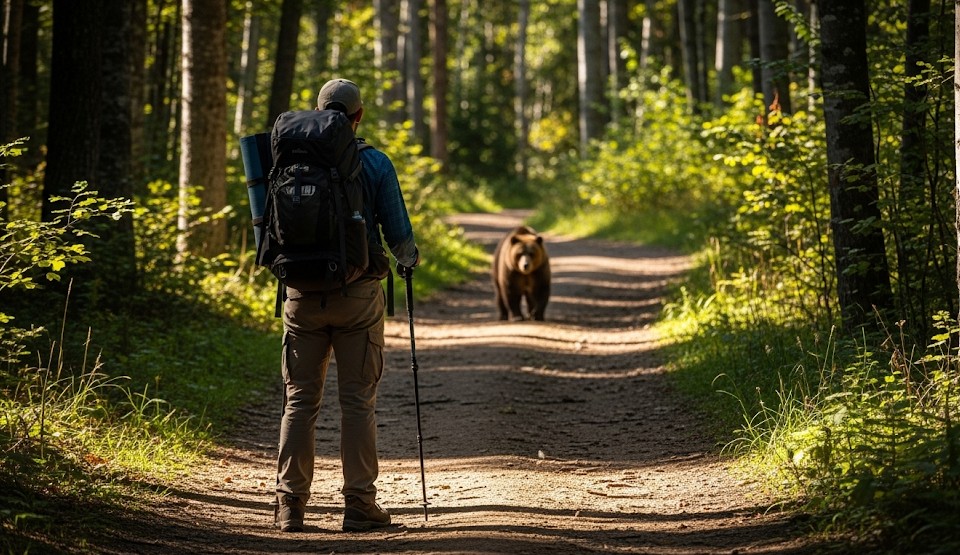
- Bear: Stay calm, speak in a firm voice, and back away slowly. Do not run. Make yourself look larger. If the bear approaches, group up, shout, and prepare deterrent if carried. Follow local guidance for black bear and grizzly country because response recommendations can differ by species and situation.
- Cougar: Maintain eye contact, raise your arms, pick up small children, and back away slowly. Do not crouch, run, or turn your back. Make yourself look large and assertive.
- Snake: Stop, locate the snake, and give it space. Step on logs rather than blindly over them. Do not handle snakes, including ones that appear dead.
- Moose: Give extreme distance. If it approaches or acts aggressive, get behind a tree, large rock, or other solid barrier. Moose can be surprisingly fast and deeply unimpressed by your hiking résumé.
- Coyote: Do not run. Stand tall, shout, wave arms, and make yourself look large. Keep children and pets close.
Deterrents and Tools
In some regions, bear spray is an important safety tool. Carry it where it is legal and appropriate, keep it accessible, and learn how to use it before the trip. A deterrent buried in a backpack is not a deterrent; it is just expensive luggage.
- Carry a whistle for alerting your group or signaling distress.
- Use a headlamp at night to avoid surprising animals near camp.
- Carry trekking poles for stability and to create space when moving through brush.
- Use odor-resistant bags as a secondary layer, not as a replacement for proper storage.
- Know local rules for bear cans, food lockers, and camping restrictions.
If you need help with route awareness in low light, see Night Navigation by Stars and Moon . Night travel increases the chance of surprising wildlife, so move slower and stay alert.
Real Example
A group camping in an area with recent black bear activity noticed fresh tracks near a previous cooking spot. They moved the cook area farther from the tents, stored trash and scented items in a bear can, cleaned cookware immediately, and avoided eating inside shelters. After two nights of prior animal activity nearby, the camp had no visits. The biggest change was not luck; it was removing the reward that had been attracting wildlife.
Common Mistakes
- Keeping snacks in tents or backpacks overnight.
- Leaving dirty cookware near the sleeping area.
- Approaching wildlife for photos.
- Letting pets roam off leash in wildlife habitat.
- Running from predators or large animals.
- Ignoring fresh tracks, scat, carcasses, or strong animal odors.
- Assuming small animals cannot create serious problems.
Checklist
- Bear can, approved food storage, or proper hanging system
- Odor-resistant bags for extra organization
- Headlamp with spare batteries
- Whistle or emergency signal device
- Bear spray where legal and appropriate
- Long pants and boots in snake country
- Clean cooking kit and trash bags
- Basic first aid supplies for bites, scratches, and wound cleaning
- Map notes showing known wildlife closures or hazard areas
Contingencies
- Animal persists near camp: retreat as a group, secure food, and change campsite if needed.
- Food storage fails: inspect supplies, remove contaminated items, and relocate if wildlife has been rewarded.
- Bite or scratch: clean thoroughly, cover the wound, and seek medical help due to infection and disease risk.
- Snakebite: keep the person calm, limit movement, remove tight items near swelling, and seek emergency medical care.
- Lost after avoiding wildlife: stop, regroup, and recheck navigation before wandering farther.
For home and field medical readiness, review Home Medical Kit: Beyond Band-Aids . Animal-related injuries may require more than a bandage and a brave face.
After-Action
After each trip, note what wildlife signs were present, what food smells drew attention, whether your camp layout worked, and whether your group followed storage rules consistently. If animals approached, identify what may have attracted them and correct the system before the next outing.
Wildlife safety is mostly about respect, distance, and discipline. Keep food secured, travel predictably, pay attention to behavior cues, and give animals room to leave. Do that well, and your best wildlife stories can stay the kind that end with “we saw it from far away,” which is exactly where the good stories should stay.
← Previous | All Articles | Next →