
Emergency Heat Without Power: Safe, Smart, Warm
Why Winter Blackouts Become Dangerous Fast
Cold-weather outages are uncomfortable at first, but they can become dangerous surprisingly quickly. Once indoor temperatures begin dropping, poor decisions made out of stress and desperation often create bigger risks than the cold itself.
Every winter, people are injured or killed by carbon monoxide poisoning, house fires, unsafe heaters, indoor charcoal use, and poor ventilation during extended outages.
The goal during a winter blackout is not to heat the entire house perfectly. The goal is to preserve body heat safely while protecting the household from preventable hazards.
Objective
Keep people warm during a winter outage using safe room selection, insulation, layered clothing, controlled heat sources, and proper carbon monoxide awareness.
First Priority: Protect Body Heat
Most emergency heating plans work better when you focus first on retaining heat instead of generating huge amounts of new heat.
Human bodies, blankets, insulated clothing, sleeping bags, and smaller enclosed spaces can dramatically improve survivability even when indoor temperatures fall.
Conserving heat is often easier and safer than producing heat.
Choose One “Heat Room”
During a major outage, heating the entire home is often unrealistic. Instead, concentrate people and resources into one smaller room.
The best heat room is usually:
- Small
- Interior if possible
- Minimal windows
- Low ceilings
- Easy to seal from drafts
Bedrooms, offices, and interior living rooms often work well.
Reduce Heat Loss
Small improvements in insulation can make a major difference over time.
- Place towels at door gaps.
- Cover windows with blankets or thermal material.
- Close unused rooms.
- Hang blankets across open doorways.
- Use rugs or extra layers on cold floors.
Reflective insulation materials such as Reflectix can help reduce radiant heat loss around windows.
Layer Clothing Properly
Staying warm indoors during a blackout depends heavily on clothing discipline.
Use layers:
- Base layer: dry moisture-wicking layer
- Middle layer: insulation such as fleece or wool
- Outer layer: wind-resistant shell if drafts exist
Do not overlook:
- Warm socks
- Hats
- Light gloves
- Neck coverage
Wet clothing dramatically increases heat loss. Stay dry whenever possible.
Sleeping Warm Safely
Nights are usually the hardest part of a winter outage.
- Use sleeping bags if available.
- Layer blankets above and below the body.
- Sleep closer together to conserve heat.
- Use foam pads or mattresses to insulate from cold floors.
- Wear dry clothing to bed.
Much body heat is lost into cold surfaces beneath you. Floor insulation matters more than many people realize.
Safe Emergency Heat Sources
Some emergency heat methods are far safer than others.
Body Heat
Multiple people and pets in one insulated room naturally raise temperature levels.
Hot Water Bottles
Carefully filled hot water bottles wrapped in towels provide several hours of localized warmth.
Indoor-Rated Heaters
Only use heaters specifically rated and certified for indoor use, and always follow manufacturer safety instructions.
Vehicle Heat
In severe situations, a vehicle may provide short warming periods if used correctly.
- Keep the exhaust pipe completely clear.
- Never run the vehicle in an enclosed garage.
- Use short warming cycles instead of constant idling.
- Maintain carbon monoxide awareness.
Never Use These Indoors
Some heating methods become extremely dangerous indoors.
- Charcoal grills
- Outdoor propane heaters not rated for indoor use
- Camping stoves used continuously for heat
- Generators
- Open flame heating setups
If a device burns fuel, assume it can create carbon monoxide unless clearly certified otherwise.
Carbon Monoxide Safety
Carbon monoxide is one of the deadliest risks during winter outages because it is invisible and odorless.
Keep battery-powered carbon monoxide alarms available even during power outages.
Warning signs may include:
- Headache
- Dizziness
- Nausea
- Confusion
- Extreme fatigue
If carbon monoxide is suspected, move everyone outside immediately.
Food and Warm Drinks
Calories help maintain body temperature.
- Eat regular meals.
- Drink warm fluids when possible.
- Avoid dehydration.
- Use warm soups and simple carbohydrates for quick energy.
Warm drinks improve morale as much as temperature.
Condensation and Ventilation
Sealed rooms trap moisture from breathing, cooking, and wet clothing.
Excess moisture can:
- Increase discomfort
- Damage walls
- Create mold issues
- Reduce insulation effectiveness
Brief controlled ventilation periods may help reduce heavy condensation.
Common Winter Outage Mistakes
- Trying to heat the entire house.
- Using unsafe indoor heating methods.
- Ignoring carbon monoxide alarms.
- Wearing damp clothing.
- Sleeping directly on cold floors.
- Failing to prepare one insulated room.
Real Example
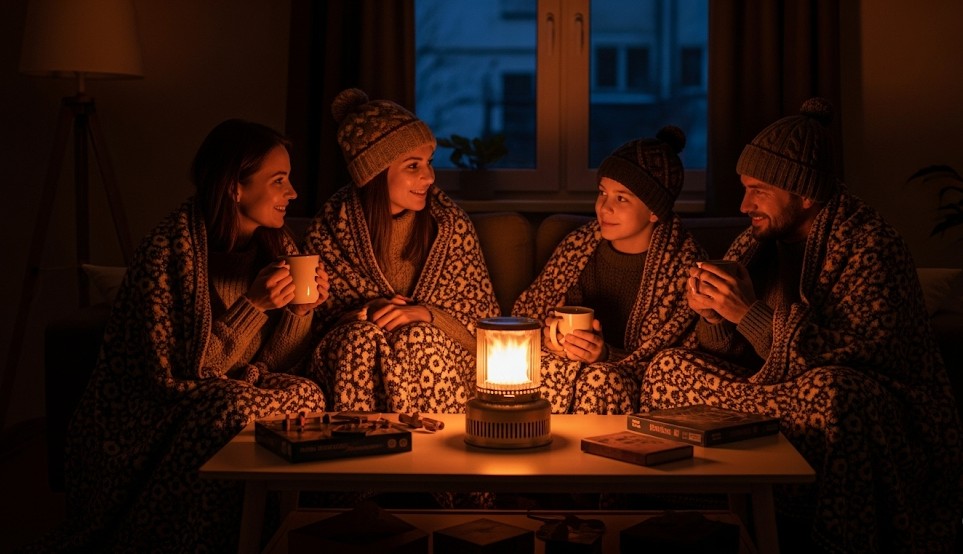
During a multi-day winter outage, one family moved into a small interior office, sealed drafts with towels and blankets, layered bedding on the floor, and used carefully managed hot water bottles for nighttime warmth. Instead of attempting to heat the entire home, they concentrated insulation and body heat into one protected space while monitoring carbon monoxide alarms continuously.
Emergency Heat Checklist
- Battery-powered CO alarm
- Sleeping bags and blankets
- Warm layered clothing
- Flashlights and batteries
- Window insulation materials
- Hot water bottles
- Indoor-safe heater if available
- Warm drinks and food supplies
Practice Before Winter
Do not wait for a blizzard to test your emergency heating plan.
- Choose your heat room now.
- Stage blankets and insulation supplies.
- Test CO alarms.
- Review safe heating rules with the household.
- Build a winter outage checklist before cold weather arrives.
Final Thoughts
Winter survival during a blackout is mostly about discipline and decision-making. Smaller spaces, layered clothing, insulation, controlled heat use, and carbon monoxide awareness matter far more than trying to recreate full household comfort.
Focus on preserving warmth safely, avoid desperation shortcuts, and prepare before winter arrives.
← Previous | All Articles | Next →