
Field Repairs: Tape, Cord, Needle, Heat
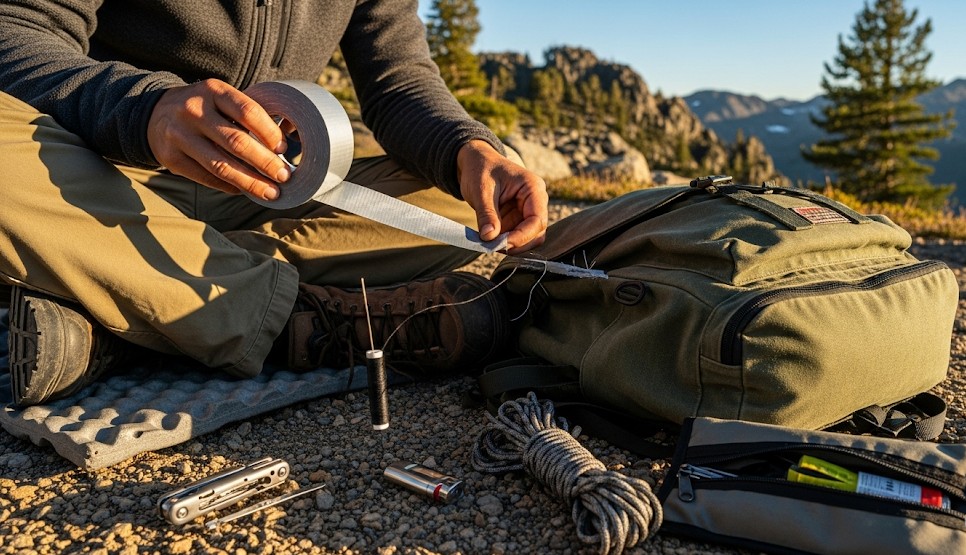
Why Field Repairs Matter
Gear rarely fails at convenient times. Backpack straps tear during long hikes, boots separate in wet terrain, tent poles crack in high winds, and stoves clog when you need hot food most.
A small repair kit and a few practical repair skills can keep essential equipment functioning long enough to finish the trip, complete the evacuation, or safely return home.
In many situations, temporary repairs are all you need to prevent a small problem from becoming a serious emergency.
Objective
Keep critical gear operational in the field using simple tools, basic repair techniques, and improvised fixes that work under real-world conditions.
The Four Core Repair Tools
Most emergency gear repairs can be handled with four categories of tools:
- Tape
- Cordage
- Needle and thread
- Heat
Small repair kits weigh very little but solve a surprising number of problems.
Tape Repairs
Tape is one of the fastest temporary repair tools available.
Duct Tape
- Boot sole stabilization
- Pack reinforcement
- Temporary shelter patching
- Water bottle repairs
- Splint reinforcement
Wrap several feet around a lighter, water bottle, trekking pole, or pencil to save space.
Fabric Repair Tape
Tenacious Tape or similar repair tape works better than duct tape on tents, jackets, sleeping bags, and technical fabrics.
Clean and dry surfaces as much as possible before applying patches.
Boot and Footwear Repairs
Footwear failure can become dangerous quickly, especially in cold or wet environments.
Boot Sole Delamination
- Dry the boot if possible.
- Press the sole back into position.
- Wrap tightly heel-to-toe using tape.
- Add cordage or straps for reinforcement.
This repair is ugly but often effective enough to finish a hike or evacuation.
Laces and Eyelets
Paracord can replace broken boot laces temporarily. Damaged eyelets may require rerouting the lace pattern to maintain support.
Backpack Repairs
Packs fail most often at stress points:
- Shoulder straps
- Buckles
- Zippers
- Compression straps
Temporary Strap Repair
- Align torn material carefully.
- Use heavy thread and whip stitching.
- Reinforce with tape or spare webbing.
- Reduce carried weight if possible.
Zip ties and cordage can also replace broken buckles in emergencies.
Tent and Shelter Repairs
Shelter failure becomes serious fast during storms, cold weather, or high winds.
Tent Pole Splints
- Use repair sleeves if available.
- Metal tubing or cut aluminum cans can work as improvised splints.
- Tape tightly around the damaged section.
Torn Fabric
Dry the fabric if possible, then apply repair tape to both sides of the tear for better strength.
Sewing may help larger tears, but stitching alone often weakens waterproof materials unless patched properly afterward.
Needle and Thread Repairs
A strong sewing needle and heavy thread are extremely valuable in the field.
They can repair:
- Clothing tears
- Pack seams
- Gloves
- Shelter fabric
- Sleeping bags
Whip Stitch Basics
A whip stitch is simple, strong, and effective for many emergency repairs.
- Pull damaged edges together.
- Loop thread repeatedly around the edge.
- Keep stitches tight and evenly spaced.
- Tie secure knots at both ends.
Heavy upholstery thread performs better than thin sewing thread for gear repair.
Heat as a Repair Tool
Heat improves many repair materials.
- Warm tape adheres better.
- Adhesives bond more effectively when warm.
- Frozen fabric becomes easier to work with after warming.
- Plastic components may become flexible enough for temporary reshaping.
Keep repair tape and adhesives inside a jacket pocket during cold weather.
Stove and Fire Tool Repairs
Small stoves often fail from clogged fuel jets or dirty components.
- Use fine needles carefully for cleaning.
- Carry spare O-rings if possible.
- Protect fuel lines from crushing.
- Inspect seals regularly.
Never improvise unsafe fuel system repairs around open flame.
Improvised Repair Materials
Field repairs often depend on creativity.
Useful improvised materials include:
- Zip ties
- Paracord
- Wire
- Safety pins
- Can tabs
- Webbing scraps
- Inner tube rubber
- Bicycle repair patches
What Most People Forget
- Spare buckles
- Heavy-duty needles
- Extra cordage
- Repair patches for inflatable gear
- Gloves for cold-weather repairs
- Small scissors or cutting tool
Common Repair Mistakes
- Applying tape to wet surfaces.
- Ignoring small damage until it spreads.
- Over-tightening repairs and tearing fabric further.
- Using weak thread for load-bearing gear.
- Failing to reduce weight after repairs.
Real Example
During a long backcountry exit, a hiker tore a shoulder strap on a loaded backpack. Using heavy thread, a whip stitch, duct tape reinforcement, and spare webbing, the pack remained functional for the remaining 20 kilometers. The repair was ugly, but it prevented a much more serious problem.
Basic Field Repair Kit
- Duct tape
- Fabric repair tape
- Heavy sewing needle
- Strong thread
- Zip ties
- Paracord
- Spare buckles
- Multi-tool
- Small scissors
- Repair sleeves for tent poles
Practice Before You Need It
Repair skills improve quickly with practice.
- Practice stitching old fabric.
- Patch torn gear at home.
- Test repair tape on outdoor equipment.
- Learn how your gear actually fails.
Simple practice builds confidence during real emergencies.
Final Thoughts
Gear failure is normal. Prepared people expect it and carry simple tools to manage it.
Tape, cordage, sewing supplies, and a little creativity can extend the life of essential equipment long enough to finish the job and get home safely.
← Previous | All Articles | Next →