
Portable Generators: Setup, Fuel, CO Safety
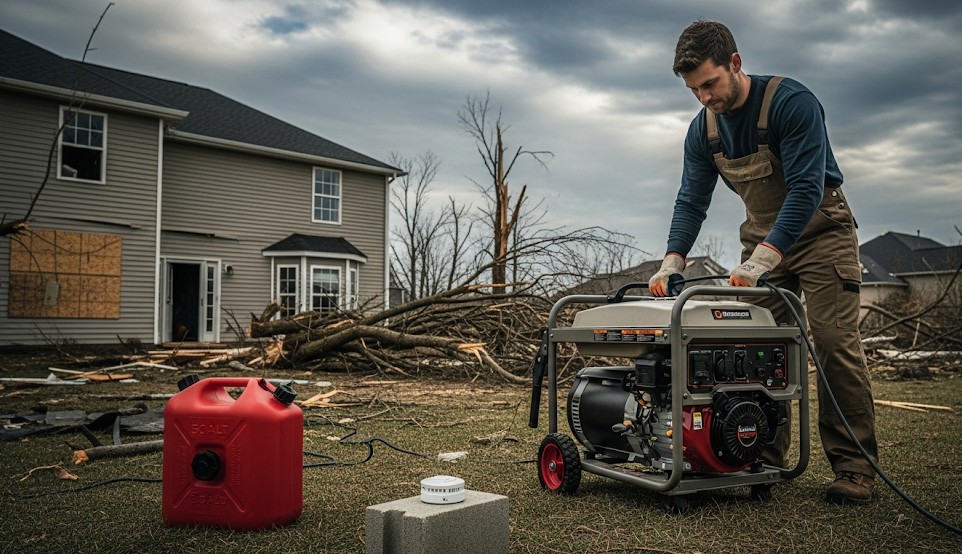
Why Generator Safety Matters
A portable generator can make a power outage far easier to manage. It can keep a refrigerator cold, charge phones, run medical equipment, power lights, and support basic communication. Used incorrectly, however, a generator can become one of the most dangerous tools in an emergency.
The biggest risks are carbon monoxide poisoning, fire, electrical shock, fuel accidents, and improper connection to home wiring. Many generator injuries happen because people are tired, stressed, cold, rushed, or trying to keep the house comfortable during a blackout.
The goal is simple: get useful emergency power without creating a new emergency.
Objective
Operate a portable generator safely during an outage by controlling placement, exhaust direction, fuel storage, electrical loads, extension cords, and carbon monoxide risk.
The Most Important Rule: Keep It Outside
A portable generator must be operated outdoors only. Never run a generator inside a house, garage, basement, shed, crawlspace, enclosed porch, or balcony. Opening a door or window is not enough.
Carbon monoxide is invisible and odorless. You may not notice the danger until symptoms appear, and by then judgment may already be impaired.
- Place the generator outside and away from doors, windows, vents, and air intakes.
- Point exhaust away from the home and neighboring structures.
- Keep the generator out of garages, even with the door open.
- Use battery-powered carbon monoxide alarms inside the home.
Carbon Monoxide Warning Signs
Carbon monoxide exposure can feel like fatigue or flu symptoms. During an outage, people may dismiss symptoms because they are already stressed or sleep deprived.
- Headache
- Dizziness
- Nausea
- Confusion
- Weakness
- Shortness of breath
If carbon monoxide is suspected, leave the area immediately and call emergency services from outside.
Safe Placement Checklist
- Generator is outdoors.
- Exhaust points away from openings.
- Unit is protected from rain without enclosing it.
- Generator sits on a stable, level surface.
- Children and pets are kept away.
- CO alarms are active inside the home.
A generator canopy or open-sided shelter may help protect the unit from weather, but it must not trap exhaust.
Connecting Power Safely
There are two common safe approaches: using properly rated extension cords for individual appliances or using a professionally installed transfer switch or interlock system.
Do not connect a generator directly to a wall outlet. This dangerous practice can backfeed power into utility lines and injure or kill utility workers. It can also damage appliances or start fires.
- Use heavy-duty outdoor-rated extension cords.
- Inspect cords for damage before use.
- Keep cords out of standing water.
- Do not overload power strips.
- Use a transfer switch or interlock for home circuits.
Load Planning: What Should You Power First?
During an outage, the generator should power priorities, not convenience.
- Medical equipment and critical devices
- Refrigerator or freezer
- Communication devices
- Lighting
- Heating or cooling support if safe and within capacity
Avoid running everything at once. Many appliances draw a larger surge when starting than they do while running. Keep total load below the generator’s rated output and leave headroom.
Fuel Planning
A generator is only useful as long as you can fuel it safely. Fuel planning should happen before the outage, not during one.
- Store fuel in approved containers only.
- Keep fuel outside living areas.
- Rotate gasoline regularly.
- Use fuel stabilizer when appropriate.
- Allow the generator to cool before refueling.
- Keep a fire extinguisher nearby.
Track runtime per gallon under real loads. This tells you how long your stored fuel actually lasts instead of guessing.
Refueling Safety
Refueling is one of the most overlooked generator hazards. Hot engine parts and spilled fuel are a dangerous combination.
- Turn off the generator.
- Let it cool before opening the fuel cap.
- Refuel slowly and avoid spills.
- Wipe up any spilled fuel.
- Move fuel containers away before restarting.
Weather and Rain Protection
Generators should not be exposed to unsafe electrical conditions, but they also cannot be enclosed. This creates a challenge during storms.
Use a purpose-built generator tent or open-sided cover if available. The cover should protect from rain while allowing exhaust and heat to escape freely.
Common Generator Mistakes
- Running a generator in a garage.
- Placing it too close to windows or doors.
- Using undersized extension cords.
- Refueling while hot.
- Ignoring carbon monoxide alarms.
- Backfeeding through a wall outlet.
- Trying to power too many appliances at once.
Example Outage Setup
A household uses a 3,500-watt generator with a properly installed transfer switch. During a blackout, they power the refrigerator, a few LED lights, phone chargers, and a router. The generator sits outdoors, exhaust facing away from the house, with battery CO alarms active indoors.
Instead of running constantly, they operate the generator in scheduled blocks to conserve fuel: morning, late afternoon, and evening. This keeps cold food safe, charges devices, and reduces noise and fuel use.
Generator Checklist
- Portable generator
- Battery-powered CO alarms
- Outdoor-rated heavy-gauge extension cords
- Fuel containers
- Fuel stabilizer
- Fire extinguisher
- Transfer switch or interlock if powering home circuits
- Generator manual
- Runtime and maintenance log
Practice Before the Outage
A generator should not be used for the first time during a storm at night. Practice during calm conditions.
- Set up the generator outdoors.
- Connect only the appliances you plan to power.
- Record fuel use and runtime.
- Test CO alarms.
- Store cords, fuel, and instructions together.
Final Thoughts
A portable generator can be one of the most useful emergency tools in a blackout, but only if used with discipline. Placement, exhaust direction, fuel handling, and electrical safety matter every single time.
Treat the generator like a serious tool, not a convenience appliance. Practice safely before the outage, keep your loads realistic, and never compromise on carbon monoxide safety.
← Previous | All Articles | Next →