
Keeping Cool Without Air Conditioning
Why Cooling Matters During Emergencies
Heat can become dangerous quickly when air conditioning fails. During heatwaves, blackouts, grid strain, storms, or equipment failures, indoor temperatures can climb to unsafe levels, especially in apartments, upper floors, mobile homes, and poorly insulated buildings.
Staying cool without air conditioning is not just about comfort. Heat stress can cause dehydration, dizziness, confusion, fainting, heat exhaustion, and heat stroke. Older adults, children, people with medical conditions, outdoor workers, and pets are especially vulnerable.
A good cooling plan uses shade, airflow, hydration, timing, and body-cooling techniques to reduce heat load until normal cooling returns.
Objective
Reduce heat stress during air-conditioning failures by using passive cooling, smart ventilation, hydration planning, safe sleep setups, and early recognition of heat illness.
Start by Blocking Heat
The easiest heat to manage is heat that never enters the home.
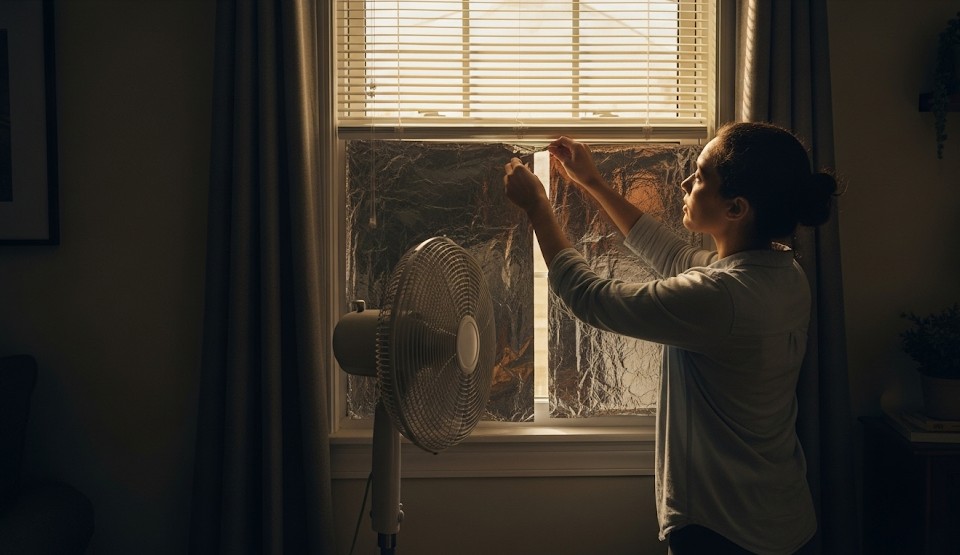
During hot weather, sun-facing windows can turn rooms into ovens. Block direct sunlight as early as possible.
- Close blinds and curtains on sunny windows.
- Use blackout curtains if available.
- Add reflective foil or emergency blankets to problem windows.
- Close doors to rooms that heat up fastest.
- Move people and pets into the coolest part of the home.
South- and west-facing windows are often the worst heat sources during afternoon hours.
Use Night Cooling
If outdoor temperatures drop at night, use that cooler air while you can.
- Open windows when outdoor air becomes cooler than indoor air.
- Create cross-ventilation with windows on opposite sides.
- Use fans to pull cool air in and push hot air out.
- Close windows, curtains, and blinds again in the morning.
In many climates, the best window management strategy is simple: open late, close early.
Fan Strategy
Fans do not lower room temperature by themselves, but they help sweat evaporate and make people feel cooler.
Use fans carefully:
- Point fans across the body, not directly into faces for long periods.
- Use window fans to move cooler outdoor air inside at night.
- Place one fan exhausting hot air from an upper window if possible.
- Do not rely on fans alone during extreme heat if indoor air becomes dangerously hot.
Fans work best when combined with hydration, shade, and reduced activity.
Evaporative Cooling
Evaporative cooling works best in dry climates. It works poorly in humid conditions.
Simple methods include:
- Wet towel near airflow
- Damp bandana around the neck
- Bowl of cool water with fan airflow
- Lightly misting skin in dry air
In high humidity, evaporation slows down. In those conditions, focus on shade, airflow, cool showers, and reducing activity.
Hydration and Electrolytes
Hot conditions increase fluid loss. Drinking water matters, but electrolytes also matter when sweating heavily.
- Drink steadily instead of waiting until very thirsty.
- Use electrolyte packets during heavy sweating.
- Avoid overdoing alcohol or excessive caffeine during heat stress.
- Monitor urine color as a rough hydration clue.
People doing physical work in heat may need significantly more fluids than usual.
Body Cooling Techniques
Cooling the body directly can help when rooms stay hot.
- Apply cool cloths to neck, wrists, armpits, and behind knees.
- Take cool showers before sleep.
- Soak feet in cool water.
- Wear loose, lightweight clothing.
- Rest during the hottest hours.
Avoid ice-cold shock if someone is elderly, frail, or medically vulnerable. Cool steadily and safely.
Create a Cool Room
Instead of trying to cool the entire home, pick one room and make it the household cooling zone.
Best room features include:
- North-facing or shaded windows
- Lowest floor available
- Good airflow
- Minimal direct sunlight
- Enough space for resting
Move water, medications, pets, fans, bedding, and power banks into that room.
Sleeping During Heatwaves
Sleep becomes difficult and unsafe when homes stay hot overnight.
- Sleep on lower floors if possible.
- Use lightweight sheets.
- Place bedding in the coolest room.
- Use damp cloths or cool showers before bed.
- Keep water near the sleeping area.
Heat stress is worse when people are exhausted. Protecting sleep protects decision-making.
Protect Pets
Pets overheat too, especially older animals and flat-faced breeds.
- Provide constant water.
- Move pets into shaded cool rooms.
- Avoid hot pavement walks.
- Use cool damp towels carefully.
- Watch for heavy panting, weakness, or confusion.
Never leave pets in vehicles during heat.
Recognizing Heat Illness
Heat Exhaustion Signs
- Heavy sweating
- Weakness
- Dizziness
- Nausea
- Headache
- Muscle cramps
Heat Stroke Warning Signs
- Confusion
- Fainting
- Loss of coordination
- Very high body temperature
- Hot skin
- Altered behavior
Heat stroke is a medical emergency. Move the person to a cooler place and cool aggressively while seeking emergency help.
When to Leave for a Cooling Center
Sometimes staying home is not safe.
Consider leaving for a cooling center, library, public building, shelter, or trusted friend’s home if:
- Indoor temperature remains dangerously high.
- Someone becomes confused or faint.
- Medical conditions worsen.
- You cannot sleep for multiple nights.
- Pets or vulnerable family members show distress.
Pride is not a cooling strategy. Use safer shelter when needed.
Real Example
During a multi-day summer outage, one family converted a north-facing room into a cooling room. They blocked west-facing windows, opened windows only at night, used fans for cross-ventilation, and slept on the lower floor with lightweight bedding.
The room stayed several degrees cooler than the rest of the house, and the family avoided heat illness despite uncomfortable conditions.
Common Mistakes
- Leaving sunny windows uncovered.
- Opening windows during the hottest part of the day.
- Relying only on fans during extreme heat.
- Forgetting electrolytes during heavy sweating.
- Doing chores during peak heat.
- Ignoring early signs of heat illness.
Cooling Checklist
- Fans
- Blackout curtains or reflective window covering
- Electrolyte packets
- Water containers
- Spray bottle
- Cooling towels or bandanas
- Power banks
- Lightweight bedding
- Pet water bowls
- List of local cooling centers
10-Minute Preparedness Drill
- Identify the coolest room in your home.
- Find which windows get the strongest afternoon sun.
- Test fan placement for nighttime airflow.
- Gather electrolyte packets and water containers.
- Write down the nearest cooling center or public building.
A short drill now can prevent dangerous improvisation during a heatwave.
Final Thoughts
Staying cool without air conditioning requires planning before the heat becomes dangerous. Shade, airflow, hydration, rest, and body cooling all work together.
The biggest mistake is waiting until heat illness begins. Prepare cooling routines early, protect vulnerable people and pets, and know when to leave for a safer location.
Heat emergencies are serious, but a calm plan can make a hot home much safer until power or air conditioning returns.
← Previous | All Articles | Next →