
Safe Indoor Lighting Solutions During Blackouts
Why Blackout Lighting Matters
When the power goes out, lighting becomes one of the first problems every household notices. Darkness increases the risk of falls, kitchen accidents, medication mistakes, stress, and confusion. It also makes simple tasks like checking breakers, finding supplies, helping children, and moving through the home much harder.
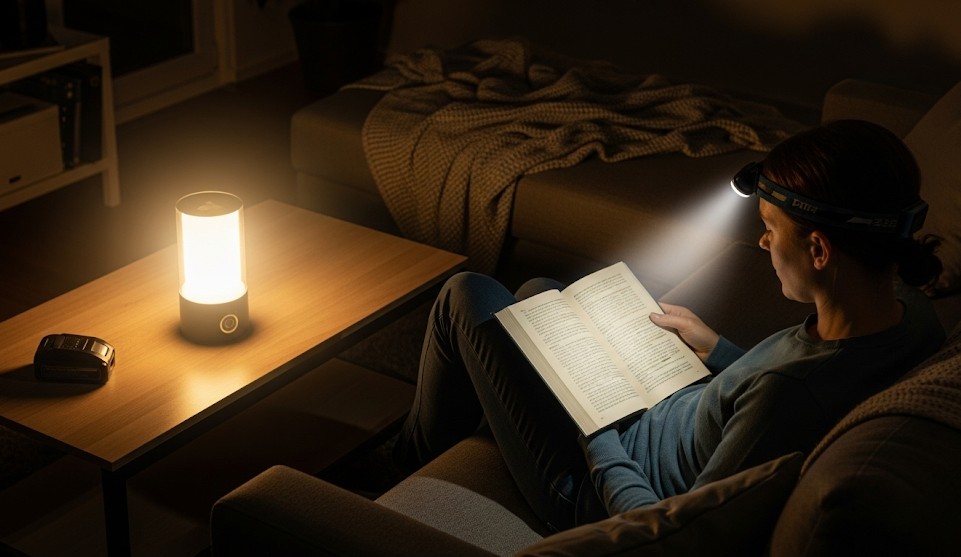
The safest blackout lighting plan uses battery-powered lights, thoughtful placement, and clear routines. The goal is not to light the house like normal. The goal is to provide enough safe light to move, cook, read labels, care for people, and avoid hazards.
Good lighting reduces panic. Bad lighting creates fire risk, battery waste, and unnecessary accidents.
Objective
Provide safe and effective indoor lighting during blackouts using LED lanterns, headlamps, rechargeable batteries, planned placement, and fire-safe habits.
Best Blackout Lighting Options
LED Lanterns
LED lanterns are one of the best options for room lighting. They spread light in multiple directions and are safer than open flames.
- Good for kitchens, bathrooms, bedrooms, and family rooms.
- Choose models with low and high settings.
- Use low mode whenever possible to conserve batteries.
- Place lanterns where they cannot be knocked over easily.
Headlamps
Headlamps are excellent for hands-free tasks.
- Cooking
- Checking breakers
- Carrying supplies
- Helping children or elderly relatives
- First aid tasks
Every household should have at least one headlamp. Ideally, each person has their own.
Flashlights
Flashlights are useful for quick checks and outdoor movement, but they are less ideal for lighting entire rooms.
- Keep one near each bed.
- Store one near the main electrical panel.
- Keep one in the kitchen or utility area.
Battery String Lights
Low-draw LED string lights can create safe pathway lighting without using much power.
They work well along:
- Hallways
- Stair rails
- Bathroom paths
- Kitchen counters
They are especially helpful for children and older adults who may wake during the night.
Lighting Placement Strategy
Where lights are placed matters as much as what type of light you use.
Room Lighting
Place one lantern in each primary room. Shoulder-height placement often works better than placing lights directly on the floor.
Good locations include:
- Tables
- Countertops
- Bookshelves
- Stable chairs
Avoid placing lanterns close to curtains, blankets, paper, or clutter.
Path Lighting
Trips and falls are common during blackouts.
Light the paths people actually use:
- Bedroom to bathroom
- Bedroom to kitchen
- Stairs
- Entryways
- Medication storage areas
Low light is enough for navigation. You do not need bright light everywhere.
Battery Planning
A lighting plan is only as strong as its battery plan.
- Standardize devices around common battery sizes.
- Use rechargeable batteries where practical.
- Keep backup disposable batteries sealed and labeled.
- Store batteries in a cool, dry location.
- Check battery condition before storm season.
Reducing the number of battery types makes restocking and emergency use much easier.
Rechargeable Lights
Rechargeable lanterns and headlamps are convenient, but they must be charged before an outage.
Pair rechargeable lighting with:
- Power banks
- Solar chargers
- Vehicle charging options
- USB wall chargers before the storm
For a complete charging strategy, read: Power Budgeting: 72-Hour Device Plan.
Candles: Use With Caution
Candles are common during blackouts, but they create fire risk.
If candles are used at all:
- Keep them away from curtains, bedding, paper, and pets.
- Use stable holders.
- Never leave them unattended.
- Never sleep with candles burning.
- Keep a fire extinguisher nearby.
Battery-powered lighting is safer for most households.
Fuel Lanterns and Carbon Monoxide
Fuel-burning lanterns can create fire and carbon monoxide hazards. Unless a device is specifically rated for indoor use and used exactly according to instructions, assume it belongs outdoors.
Carbon monoxide is odorless and deadly.
- Do not use camping lanterns indoors unless clearly rated safe for that use.
- Keep battery-powered carbon monoxide alarms active.
- Do not burn charcoal, grills, or outdoor stoves indoors for light or heat.
Lighting for Children and Older Adults
Blackouts are harder for children, elderly relatives, and anyone with mobility concerns.
- Use dim path lights at night.
- Place flashlights where they can be reached without standing.
- Keep bathrooms lightly marked.
- Label important supplies with reflective tape if needed.
A little planning prevents many nighttime accidents.
Real Example
During a two-night apartment blackout, one household placed one lantern in the kitchen, one in the bathroom, one in the main living area, and low-output LED markers along the bedroom-to-bathroom path. Headlamps were used for cooking and checking building notices.
Because lights were assigned to specific rooms and run mostly on low mode, battery changes were needed only once per day.
Common Mistakes
- Using candles as the primary light source.
- Keeping all flashlights in one drawer.
- Forgetting spare batteries.
- Running lights on high mode unnecessarily.
- Not lighting stairs or bathroom paths.
- Letting children carry open flames.
Blackout Lighting Checklist
- LED lanterns
- Headlamps
- Flashlights
- Rechargeable batteries
- Battery organizer
- Power banks
- USB charging cables
- Battery-powered CO alarm
- Small path lights
- Fire extinguisher
10-Minute Drill
Turn off the lights in your home for 10 minutes and test your blackout lighting plan.
- Can everyone find a flashlight quickly?
- Can you safely reach the bathroom?
- Can you light the kitchen enough to prepare food?
- Can you check the breaker panel?
- Are stairs and walkways safe?
Fix whatever failed before the next outage.
Final Thoughts
Safe lighting is one of the easiest preparedness upgrades a household can make. A few LED lanterns, headlamps, spare batteries, and planned placements can prevent injuries, reduce stress, and keep daily tasks manageable during blackouts.
Avoid relying on candles or fuel lanterns as your primary solution. Battery-powered lighting is safer, cleaner, and easier to manage during real emergencies.
Build the lighting plan now, test it once, and make darkness one less problem when the power goes out.
← Previous | All Articles | Next →