
Home Water Storage & Rotation
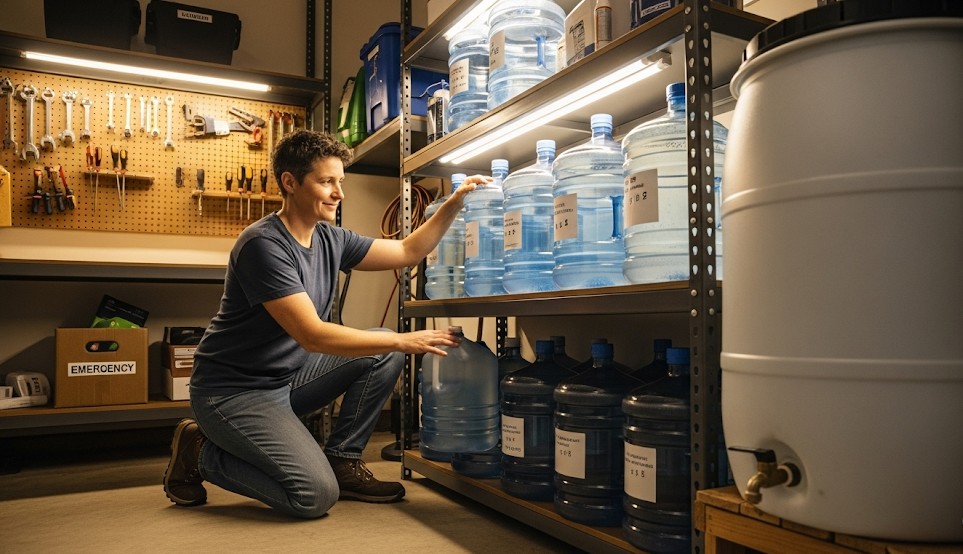
Why Home Water Storage Matters
Water is one of the first household essentials to become a problem during emergencies. A blackout, frozen pipe, flood, water main break, boil-water advisory, chemical spill, or severe storm can interrupt safe water access with little warning.
Many people assume tap water will always be available. That assumption can fail quickly when pumps lose power, pressure drops, pipes break, or local officials issue contamination warnings.
A simple home water storage plan gives your household time to think, respond, and avoid panic buying.
Objective
Store enough safe water for drinking, cooking, hygiene, pets, and basic sanitation while keeping the system simple enough to maintain.
How Much Water Should You Store?
A practical minimum is one gallon per person per day. That covers drinking and very basic needs, but it leaves little room for cooking, hand washing, pets, heat, medical needs, or cleanup.
A stronger home target is:
- Minimum: 1 gallon per person per day
- Better: 2–3 gallons per person per day
- Goal: At least 3 days stored, with 7–14 days preferred if space allows
For a family of four, three days at one gallon per person requires 12 gallons. A more comfortable seven-day supply at two gallons per person requires 56 gallons.
Do Not Forget Pets and Special Needs
Water planning should include everyone who depends on the household.
- Pets
- Infants
- Elderly family members
- People with medical needs
- Visitors or extended family who may shelter with you
Hot weather, illness, pregnancy, strenuous cleanup, and certain medications can increase water needs.
Best Containers for Home Water Storage
Use clean, food-grade containers designed for drinking water. Avoid containers that previously held chemicals, cleaners, fuels, pesticides, or non-food liquids.
- 1-gallon jugs are easy to move and rotate.
- 5-gallon containers are a good balance of capacity and portability.
- Stackable water bricks save space.
- Large drums work well for garages, basements, and utility areas.
- Collapsible containers are useful for short-term filling before storms.
Very large containers can be difficult to move once full. One gallon of water weighs about 8.3 pounds, so a 5-gallon container weighs more than 40 pounds.
Where to Store Emergency Water
Water lasts longer when stored in a cool, dark place away from sunlight, heat, fuel, chemicals, and strong odors.
- Closets
- Basements
- Pantries
- Under beds
- Garage shelves, if temperature swings are manageable
Do not store water directly on concrete for long periods if avoidable. Use shelving, cardboard, wood, or plastic spacing to protect containers.
Labeling and Organization
Label each container clearly so there is no confusion during stress.
- Drinking water
- Utility water
- Fill date
- Treatment method if used
- Rotation date
Keep drinking water separate from water intended only for flushing toilets, cleaning, or outdoor use.
Do You Need to Treat Stored Water?
If you fill clean food-grade containers with treated municipal tap water, additional treatment is often unnecessary. The key is starting with clean containers and sealing them properly.
If the water source is questionable, or if containers are not perfectly clean, use appropriate water treatment before storage. Unscented household bleach may be used for emergency disinfection when applied correctly, but always follow current safety guidance and product concentration instructions.
For field treatment and emergency purification methods, read: How to Purify Water in the Wild.
Water Rotation Schedule
Stored water should be inspected regularly. Many households choose a simple 6–12 month rotation schedule.
- Write the fill date on every container.
- Set a calendar reminder twice per year.
- Use older stored water for plants, cleaning, or normal household use.
- Refill containers with clean water.
- Inspect caps, seals, odor, leaks, and container condition.
The best rotation plan is one you will actually follow. Overcomplicated systems tend to get ignored.
Small-Space Water Storage
Apartment and small-home residents can still store meaningful water.
- Use slim containers under beds.
- Store jugs behind furniture or in closets.
- Use stackable containers in pantry corners.
- Keep collapsible containers ready to fill before storms.
- Store a case of bottled water as an easy starter option.
Even 10–20 gallons can make a major difference during a short outage or boil-water advisory.
Emergency Fill-Up Plan
If you receive warning before a storm, freeze, or outage, fill extra containers immediately.
- Bathtubs
- Pitchers
- Pots
- Clean buckets
- Collapsible water bags
Bathtub water is best treated as utility water unless stored in a dedicated bathtub water liner.
Common Mistakes
- Storing too little water for the household size.
- Forgetting pets.
- Using old chemical containers.
- Leaving containers in direct sunlight.
- Failing to label fill dates.
- Storing all water in one giant container that cannot be moved.
Real Example
A family of four stores six 5-gallon containers in a basement and keeps two cases of bottled water in a pantry. Twice per year, they rotate two containers into normal use, inspect the rest, and refill with fresh water. Before storms, they also fill two collapsible containers and one bathtub liner.
Home Water Storage Checklist
- Food-grade water containers
- Labels and permanent marker
- Calendar rotation reminder
- Backup water filter
- Unscented bleach or approved treatment method
- Spigot or pump for large containers
- Separate utility-water plan
Final Thoughts
Home water storage is one of the simplest and highest-value preparedness steps you can take. It does not require expensive gear or advanced survival skills. It requires containers, planning, labels, and consistency.
Start with enough water for three days, then build toward one or two weeks as space and budget allow. Once your water plan is in place, many other emergency plans become easier.
← Previous | All Articles | Next →