
Whiteout Navigation & Snow Travel Protocol
Objective
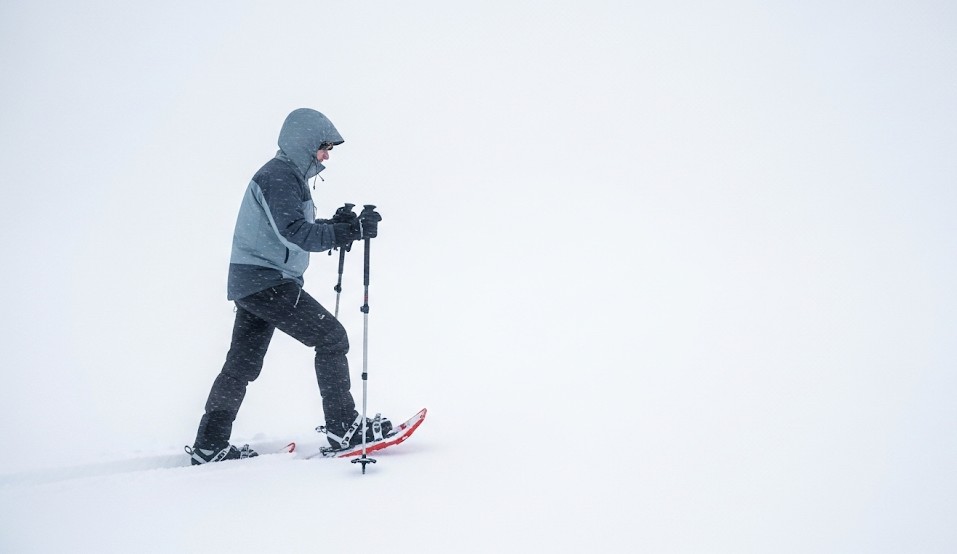
Whiteout conditions can erase terrain, depth perception, horizon lines, and directional awareness within minutes. The objective is to move safely through snow and low visibility using disciplined navigation, controlled spacing, short movement legs, terrain handrails, and cold-weather injury prevention.
In a whiteout, people often become disoriented long before they realize it. Distances become difficult to judge, slopes flatten visually, and even experienced hikers or skiers may drift far off course. The safest teams move slowly, communicate constantly, and avoid overconfidence. A whiteout does not care how expensive your jacket is.
Scenario (Example)
Example: A four-person team is crossing a ridge system in blowing snow with 30–50 meter visibility, 25–35 km/h wind, intermittent sleet, and freezing temperatures. They carry map, compass, GPS backup, layered cold-weather clothing, hot drink supplies, emergency shelter, and spare gloves.
The planned route follows a broad ridge toward a saddle before descending into protected forest. Cornices exist on the leeward side, visibility continues dropping, and wind drift is increasing.
Why Whiteouts Are Dangerous
Whiteouts remove the visual cues your brain normally uses to maintain balance and direction. Without contrast or horizon references, people may unknowingly drift sideways, walk in circles, misjudge slope angles, or move dangerously close to cliffs and cornices.
- Depth perception becomes unreliable.
- Snow and sky blend together visually.
- Distance estimates become inaccurate.
- Wind drift gradually pushes travelers off bearing.
- Fatigue and cold reduce decision-making quality.
- Stopping too long increases cold injury risk.
Many accidents occur because groups keep pushing after navigation discipline begins breaking down.
Movement Plan
Good whiteout movement is methodical and boring. That is a compliment. Fast, aggressive movement in low visibility often creates bigger problems later.
- Short legs: Travel 100–200 meters between checks in difficult conditions.
- Lead & Tail: Navigator leads while a strong, experienced member tails the group.
- Voice spacing: Everyone remains within visual or voice contact at all times.
- Controlled pace: Slow enough to maintain footing and navigation accuracy.
- Regular checks: Stop often for bearings, terrain confirmation, and buddy assessment.
If visibility worsens further, shorten movement legs even more. In severe conditions, moving only 20–50 meters between confirmations may be appropriate.
Navigation Tools and Backups
Whiteout navigation works best when multiple navigation methods support each other.
- Map and compass: Primary navigation foundation.
- GPS: Useful backup but vulnerable to battery failure, weather exposure, or overreliance.
- Pace count: Helps estimate distance traveled between checkpoints.
- Altimeter: Useful for elevation confirmation when terrain visibility disappears.
- Terrain handrails: Ridges, valleys, streams, tree lines, or marked poles help maintain orientation.
For broader navigation skills, review Navigation 101: Map & Compass Confidence and Navigating Without Map or Compass .
Bearings & Drift Control
Wind and uneven terrain constantly push travelers sideways during snow travel. Small navigation errors compound quickly when visibility is poor.
- Set a clear compass bearing before movement.
- Use a “human range marker” 10–15 meters ahead if visibility allows.
- Walk toward that person or marker while maintaining bearing.
- Correct drift every 20–30 steps.
- Counter strong sidewind drift with a deliberate crab angle.
- Verify position frequently instead of trusting instinct.
People naturally drift when tired or stressed. In whiteout conditions, “I think we’re still on course” is often the first sentence spoken shortly before becoming extremely not on course.
Terrain Handrails
Handrails are terrain features that help guide movement. In poor visibility, staying connected to a known terrain feature can dramatically reduce navigation errors.
- Broad ridges
- Stream gullies
- Forest edges
- Snow poles or marked routes
- Roads or packed trails
- Windward ridge lines away from cornices
Avoid traveling near the leeward edge of ridges where cornices may overhang hidden drop-offs. Snow can appear solid while hiding dangerous voids underneath.
Spacing & Communication
Groups traveling in whiteout conditions should operate as coordinated teams, not scattered individuals.
- Keep members within voice range.
- Use simple communication commands.
- Stop immediately if visual contact breaks.
- Assign clear leadership roles before movement.
- Rotate trail breaking when snow is deep.
- Watch for silent signs of fatigue or cold injury.
Wind and blowing snow reduce hearing quickly, so short repeated phrases work best. Nobody wants a survival situation caused by yelling “WHAT?” into the blizzard for thirty straight minutes.
Halt Discipline
Stops must be controlled carefully because cooling happens fast in wet wind and snow.
- Use 2–5 minute halts behind terrain or windbreaks.
- Add insulation layers before becoming chilled.
- Eat and hydrate regularly even if not hungry.
- Perform buddy checks on face, hands, speech, and coordination.
- Warm cold fingers against neck, belly, or armpits.
Do not wait until someone is visibly shivering hard or confused before responding.
Cold Injury Awareness
Whiteout conditions often combine cold, wind, moisture, and exhaustion. Hypothermia and frostbite become serious concerns during long exposure.
Hypothermia Warning Signs
- Persistent shivering
- Slurred speech
- Clumsy movement
- Poor decision-making
- Confusion or unusual quietness
- Loss of coordination
Frostnip & Frostbite Warning Signs
- Numb cheeks, nose, fingers, or toes
- Pale or waxy skin
- Tingling followed by numbness
- Loss of dexterity
For detailed cold injury management, review Cold Weather Survival Basics .
Emergency Box Procedure
If navigation becomes unreliable or conditions worsen significantly, stop and stabilize instead of blindly pushing forward.
- Pitch a low emergency shelter using skis, poles, tarp, or emergency bivy.
- Dig a boot trench or snow wall for wind protection.
- Get dry insulation layers on immediately.
- Prepare hot drinks and food.
- Reassess navigation and weather before continuing.
- Consider waiting for visibility improvement instead of gambling on movement.
Stopping early often prevents emergencies from escalating into rescue situations.
Snow Travel Efficiency
Deep snow movement burns energy quickly. Manage workload carefully to avoid exhaustion and sweat buildup.
- Rotate lead position during trail breaking.
- Vent layers early to avoid soaking clothing with sweat.
- Maintain steady moderate movement instead of sprint-stop cycles.
- Hydrate regularly even when cold suppresses thirst.
- Protect batteries and electronics from cold exposure.
Wet clothing in freezing wind can become dangerous fast, especially during rest stops.
Real Example
A four-person team crossing a broad alpine ridge encountered worsening whiteout conditions with strong crosswinds. Instead of continuing toward a barely visible corniced edge, they shifted to the windward side of the ridge and shortened movement legs to roughly 150 meters. The navigator used compass bearings while another member served as a forward visual marker. During scheduled halts, the group checked gloves, face exposure, hydration, and drift correction. They eventually located the target saddle within approximately 20 meters despite near-total loss of visual terrain detail.
Common Mistakes
- Traveling too fast for conditions.
- Ignoring drift caused by sidewind.
- Separating group members too far apart.
- Overreliance on GPS without map awareness.
- Waiting too long to add layers.
- Traveling near cornice edges.
- Pushing onward when navigation confidence is collapsing.
- Skipping food and hydration because of cold.
Checklist
- Map and compass
- GPS with protected spare batteries
- Goggles and face protection
- Spare dry gloves
- Hot drink kit and insulated bottle
- Emergency bivy or reflective shelter
- Layered waterproof clothing
- Headlamp with fresh batteries
- Whistle and emergency signaling gear
Many of these items also belong in a broader emergency loadout. For related preparedness planning, see Top 10 Items for Your First Bug-Out Bag .
Contingencies
- GPS failure: Use pace count, compass bearings, and terrain handrails.
- Visibility collapses completely: Stop movement and establish shelter.
- Frostnip develops: Stop and rewarm immediately before tissue damage progresses.
- Strong wind increases drift: Shorten movement legs and increase bearing checks.
- Team exhaustion: Rotate leadership and reduce pace before mistakes multiply.
After-Action
After any snow travel exercise or real expedition, record drift patterns, visibility limits, pacing rates, and what navigation methods worked best. Review where communication broke down, how clothing systems performed, and whether emergency shelter could have been deployed faster.
Whiteout travel rewards discipline more than toughness. The groups that stay calm, stay close together, and respect the weather usually make better decisions than the groups trying to “push through it.” Mountains are patient. Rescue helicopters are expensive. Your ego should not be doing the navigation.
← Previous | All Articles | Next →