
Storm-Grade Shelter in High Winds (Coastal/Plains)
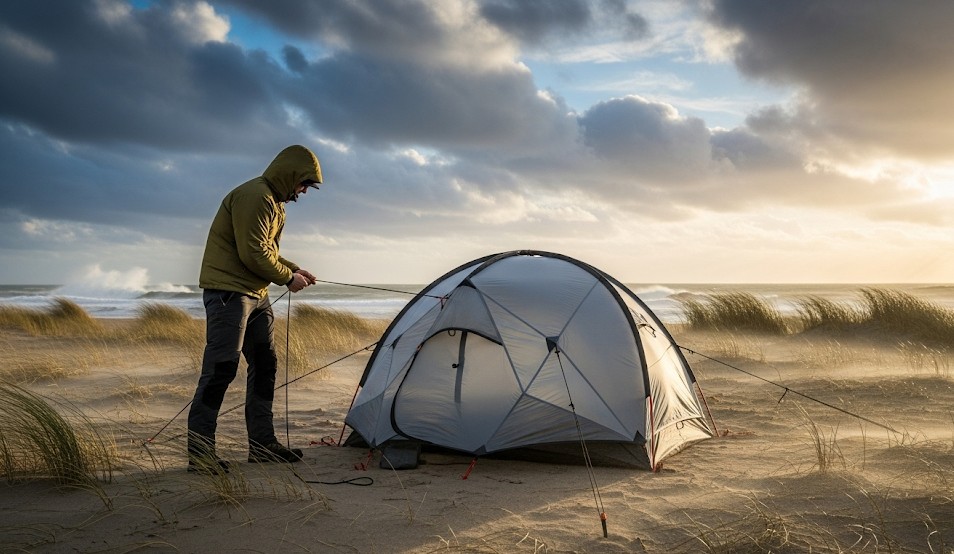
Why High-Wind Shelter Is Different
High winds expose every weakness in a shelter system. Loose fabric snaps, weak stakes pull out, tall walls catch gusts, and poor orientation can turn a tarp or tent into a sail.
Coastal areas, open plains, ridge lines, beaches, and exposed fields create special shelter challenges because there may be little natural wind protection. Gusts can shift direction quickly, rain often arrives sideways, and soil or sand may not hold normal stakes well.
Storm-grade shelter is not about building something fancy. It is about reducing wind profile, anchoring aggressively, choosing the right site, and creating redundancy before the weather peaks.
Objective
Build and maintain a shelter that can survive strong wind and heavy rain by using low-profile geometry, proper orientation, reinforced anchors, strong guyline angles, and conservative site selection.
Know When Shelter Is Not Enough
Field shelter has limits. If severe weather warnings, storm surge, tornado threats, lightning, flooding, or hurricane-force conditions are possible, evacuation or hardened indoor shelter is usually safer than attempting to ride it out under fabric.
Tarps, tents, and improvised shelters are emergency tools, not magic bunkers.
Use this guide for field conditions where temporary shelter is necessary and no stronger structure is available.
Site Selection Comes First
The best shelter pitch cannot overcome a terrible site.
Avoid These Locations
- Dead trees or hanging limbs
- Flood channels
- Beach areas exposed to surge or tide
- Low bowls that collect water
- Narrow gaps that funnel wind
- Open ridge crests
- Loose sand without anchoring options
Look For These Advantages
- Leeward side of terrain
- Natural windbreaks
- Slightly elevated ground
- Firm soil for anchors
- Drainage away from sleeping area
- Multiple anchor options
Even a small rise, dune, rock wall, shrub line, vehicle, or terrain fold can reduce wind exposure.
Reduce Wind Profile
Wind load increases dramatically when shelter walls are tall or broadside to gusts.
The basic rule:
Pitch low, tight, and narrow.
- Lower the windward edge close to the ground.
- Point the smallest surface into the wind.
- Avoid tall A-frame pitches during strong gusts.
- Keep fabric tight enough to prevent flapping.
- Use sloped surfaces so wind flows over the shelter.
A low shelter may feel cramped, but cramped is better than collapsed.
Best Shelter Shapes for High Wind
Storm Pyramid
A low pyramid-style tarp shelter performs well because it sheds wind from multiple directions and keeps edges close to the ground.
Low Plow Point
A plow point is fast and strong when one main wind direction is expected. Keep the high point lower than usual in severe gusts.
Low A-Frame
A-frame shelters can work if pitched very low and aligned correctly, but tall A-frames catch too much wind.
For related shelter practice, see: Tarp Shelter Mastery: Six Fast Pitches.
Orientation
Shelter orientation can determine success or failure.
- Face the narrowest profile into the wind.
- Lower the windward side.
- Overlap flaps like shingles so rain sheds outward.
- Keep entrances away from direct gusts when possible.
If wind shifts are expected, choose a more symmetrical shelter shape and prepare extra anchors.
Anchor Strategy
In high winds, normal stakes are often not enough.
Double Staking
Use two stakes at important corners in a V pattern. This spreads load and reduces pullout risk.
Deadman Anchors
In sand, snow, or loose soil, burying an anchor often works better than pounding a stake vertically.
Deadman anchors can be made from:
- Sticks
- Stuff sacks filled with sand
- Rocks
- Snow-packed bags
- Buried stakes placed sideways
Bury anchors deep enough to resist upward pull and pack material firmly over them.
Guyline Geometry
Guylines should pull against the direction of expected force.
- Use wide angles at corners.
- Avoid steep vertical pulls.
- Keep lines tensioned but not overstressed.
- Triangulate key points when possible.
A good guyline system spreads force across multiple anchors rather than trusting one overloaded point.
Shock Absorption
Gusts create sudden impacts on fabric and cordage.
Short sections of shock cord or elastic loops can absorb some gust force and reduce tearing.
Do not make the entire system stretchy. Use controlled shock absorption only where needed.
Interior Management
Interior weight can help stabilize shelter.
- Place heavy bags along the windward base.
- Keep gear low and centered.
- Do not lean hard against shelter walls.
- Keep sharp objects away from fabric.
In severe wind, loose gear becomes annoying fast and dangerous if the shelter fails.
Rain and Drainage
Wind-driven rain finds every gap.
- Pitch on ground that drains away.
- Avoid depressions.
- Angle fabric so water sheds cleanly.
- Keep sleeping gear away from edges.
- Use a groundsheet smaller than the shelter footprint.
A groundsheet sticking outside the tarp can collect water and funnel it underneath you.
Coastal Considerations
Coastal wind often brings salt spray, shifting sand, fast weather changes, and tide hazards.
- Camp above tide and surge zones.
- Use sand deadman anchors.
- Protect zippers and tools from salt and grit.
- Expect wind direction changes near squalls.
Plains Considerations
Open plains may offer little natural shelter.
- Use vehicles, terrain dips, or fence lines cautiously as wind breaks.
- Avoid isolated trees during lightning risk.
- Watch for fast-moving storms.
- Keep escape options available.
Real Example
During a coastal squall, one group lowered their tarp pyramid, buried sand-filled stuff sacks as deadman anchors, and placed heavy packs along the windward edge. Their shelter held through the night while nearby tall A-frame shelters collapsed when gusts shifted after midnight.
Common Mistakes
- Pitching too tall
- Ignoring wind direction
- Using weak stakes in sand
- Leaving guylines loose
- Camping in drainage paths
- Failing to prepare for wind shifts
- Trusting one anchor point too much
Storm Shelter Checklist
- Extra stakes
- Heavy cordage
- Shock cord loops
- Repair tape
- Groundsheet
- Sand or snow bags
- Headlamp
- Knife or multitool
- Gloves
- Waterproof pack liners
10-Minute Practice Drill
- Pitch your tarp low in a safe practice area.
- Double stake the windward corners.
- Create one deadman anchor.
- Adjust guyline angles.
- Shake or pull lightly on the shelter to identify weak points.
Practice before the storm. High wind is a terrible teacher with a short temper.
Final Thoughts
Storm-grade shelter depends on preparation, geometry, and humility. Wind does not care how expensive your shelter is. It only cares about surface area, weak anchors, poor angles, and bad site selection.
Pitch low, anchor deep, reduce flapping, manage drainage, and avoid exposed terrain when better options exist.
In high winds, simple and strong beats roomy and convenient every time.
← Previous | All Articles | Next →