Food Without a Fridge: 72-Hour Menu
Objective
A 72-hour food plan is one of the simplest preparedness upgrades a household can make. The objective is to feed a group for three days without refrigeration, complicated cooking, or constant trips to the store. During a blackout, storm, boil-water notice, evacuation delay, or supply disruption, a shelf-stable menu reduces stress and keeps people functional.
The best emergency menu is not a pile of random cans shoved into a closet and forgotten until the power goes out. It should be realistic, familiar, easy to prepare, and built around foods your household will actually eat. Calories matter, but morale matters too. A hot bowl of oats, soup, rice, or couscous can make a long outage feel manageable instead of miserable.
Scenario (Example)
Example: A multi-day blackout hits after a storm. The refrigerator is warming, the freezer is still partly cold, the gas stove can be lit with a match, and tap water is available on day one. Stores are crowded, traffic lights are out, and delivery options are unreliable. Your goal is to feed two people for 72 hours while using minimal fuel and avoiding food waste.
For broader outage planning, review Surviving a Blackout: Home Checklist . Food is only one part of the blackout plan; lighting, water, sanitation, communications, and medical needs all matter too.
Why Shelf-Stable Food Matters
Refrigerated food becomes a problem during extended outages. Some items may stay safe for a limited time if the refrigerator and freezer doors remain closed, but eventually you need a plan that does not depend on cold storage. Shelf-stable foods are safer, easier to portion, and more predictable during the first 72 hours of an emergency.
A good no-fridge menu should include carbohydrates for energy, protein for staying power, fats for calories, salt for electrolyte support, and comfort foods to keep morale up. It should also work with limited water and limited fuel. Quick-cook foods are better than meals requiring long simmer times because they conserve both water and stove fuel.
72-Hour Menu
This sample menu is designed for simplicity. Adjust portions for age, activity level, medical needs, and appetite. In cold weather or during heavy cleanup work, people may need more calories. In hot weather, hydration and electrolytes become even more important.
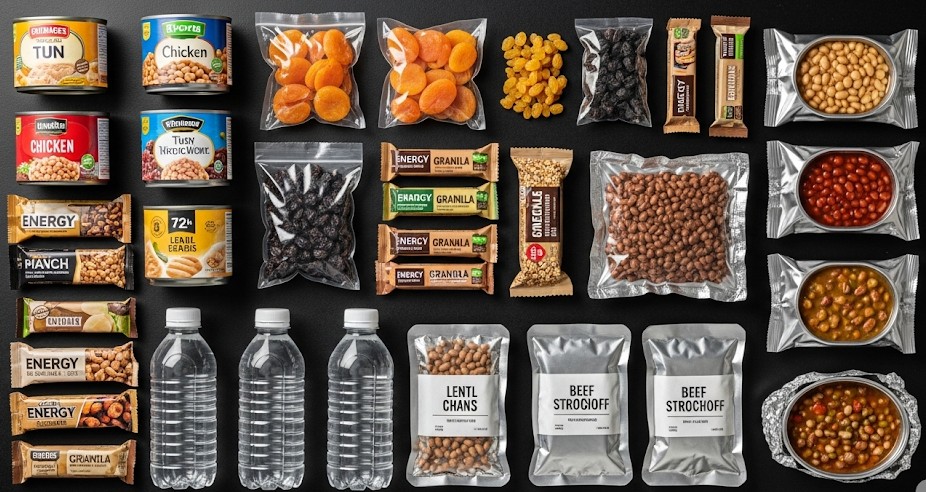
- Breakfast: oats with powdered milk, raisins, honey, cinnamon, or peanut butter. Oats can be soaked overnight or prepared with a quick boil.
- Lunch: crackers, tuna pouches, chicken pouches, peanut butter, shelf-stable cheese, pickles, olives, or ready-to-eat soup.
- Dinner: couscous, instant rice, ramen, canned beans, lentils, canned vegetables, olive oil, spices, and shelf-stable protein.
- Snacks: nuts, trail mix, granola bars, chocolate, dried fruit, jerky, peanut butter packets, and electrolyte drinks.
- Comfort items: tea, coffee, cocoa, hard candy, bouillon, hot sauce, or seasoning blends.
If you already maintain a bug-out bag, some of the same food principles apply. For portable emergency food ideas, see Top 10 Items for Your First Bug-Out Bag .
Day-by-Day Sample Plan
Day 1: Use the most perishable safe foods first. If the outage has just started, eat refrigerated leftovers, fresh fruit, bread, yogurt, or opened items while they are still safe. Avoid opening the refrigerator repeatedly. Plan the day around foods that would otherwise spoil.
Day 2: Shift to shelf-stable meals. Use oats, tuna packets, crackers, couscous, rice, beans, and canned vegetables. Save fuel by boiling water once and using a thermos for later meals or drinks.
Day 3: Use the easiest no-cook or low-cook foods. At this point, people may be tired of cleanup and fuel may be limited. Peanut butter, crackers, bars, ready-to-eat soup, tuna pouches, nuts, and dried fruit become valuable because they require little preparation.
One-Pot Method
One-pot cooking reduces fuel use, cleanup, and water waste. It also makes meal planning easier because starch, protein, fat, and seasoning can all be combined in one container.
- Boil water early and fill a thermos for later use.
- Cook the starch first, using couscous, instant rice, ramen, oats, or quick pasta.
- Use minimal drain water so calories and flavor stay in the pot.
- Add canned beans, tuna, chicken, lentils, or vegetables only long enough to heat through.
- Season aggressively with salt, pepper, bouillon, hot sauce, garlic, curry powder, or taco seasoning.
- Eat from the cooking pot or use disposable bowls if water is limited.
A thermos is one of the most underrated blackout tools. Boil water once, then use stored hot water later for oats, tea, coffee, instant soup, or rehydrating quick meals. That means fewer stove cycles and less fuel used.
Food Safety
Food safety becomes more important when refrigeration is unavailable. The basic rule is simple: when in doubt, throw it out. Food poisoning during a blackout is a disaster you absolutely do not need.
- Keep refrigerator and freezer doors closed as much as possible.
- Eat high-risk refrigerated foods early if they are still safe.
- Do not taste questionable food to “check” it.
- Transfer leftovers from opened cans into clean containers if they will be eaten soon.
- Eat opened shelf-stable foods within a reasonable time, especially in heat.
- Use separate utensils for raw and ready-to-eat foods.
- Wash hands or use sanitizer before food handling.
If a household member has a medical condition, food allergies, or special diet needs, build the emergency menu around that person first. A preparedness pantry full of food someone cannot safely eat is just a very organized decoration.
Water & Fuel
Plan at least 2–3 liters of water per person per day for drinking, plus extra for cooking and basic hygiene. Hot weather, illness, physical cleanup work, or certain medical needs can increase that number. Store water ahead of time when storms are forecast, and fill clean containers early if water service may be interrupted.
- Choose quick-cook grains to reduce fuel use.
- Soak foods before cooking when possible.
- Use a lid on pots to boil faster.
- Cook outdoors or in well-ventilated areas when using camping stoves.
- Keep a battery-powered carbon monoxide alarm active.
- Never use charcoal grills, camp stoves, or generators indoors.
For outdoor cooking safety, see Cooking Over an Open Fire: Campfire Techniques . Even during an urban outage, the same basic rules apply: control heat, ventilate properly, and keep flames away from anything that wants to become tomorrow’s insurance claim.
Real Example
During a two-day apartment blackout, one family used a small balcony stove, a kettle, and a thermos to reduce fuel use. They boiled water once in the morning, filled the thermos, and used it for oats, tea, and instant soup later in the day. Lunches were no-cook meals built from crackers, tuna pouches, peanut butter, and fruit. Dinners were couscous with canned beans, olive oil, and seasoning. They avoided opening the refrigerator repeatedly and finished the outage with extra shelf-stable food still available.
Shopping List (72 Hours, 2 People)
- Oats, raisins, powdered milk, honey, cinnamon
- Crackers, tortillas, peanut butter, tuna pouches, chicken pouches
- Couscous, instant rice, ramen, quick pasta, instant potatoes
- Canned beans, lentils, vegetables, soup, and fruit
- Olive oil, bouillon, salt, pepper, hot sauce, spice packets
- Nuts, granola bars, trail mix, dried fruit, chocolate
- Electrolyte packets, tea, coffee, cocoa, or drink mixes
- Manual can opener, matches, lighter, foil, trash bags, and paper towels
Checklist
- 72-hour shelf-stable food bin
- Manual can opener
- Water storage containers
- Camping stove or safe backup cooking method
- Fuel stored safely and legally
- Thermos for hot water
- Disposable plates or bowls if water is limited
- Hand sanitizer and cleaning wipes
- Battery-powered carbon monoxide alarm
Contingencies
- Water off: switch to no-cook meals, use disposable plates, and conserve stored water for drinking.
- No stove: eat shelf-stable ready-to-eat foods and prioritize hydration.
- Hot weather: eat opened foods quickly and avoid leaving cans or pouches in direct sun.
- Medical needs: keep diet-specific foods, glucose sources, and medications accessible.
- Extended outage: ration comfort items, simplify meals, and avoid wasting fuel on long-cook foods.
For medical preparedness during outages, review Home Medical Kit: Beyond Band-Aids . Food, hydration, medication, and sanitation all overlap during longer emergencies.
After-Action
After the outage or practice drill, record what was eaten, what was ignored, what required too much fuel, and what the household actually liked. Replace used items immediately and repack a dedicated 72-hour food bin so the next event does not start with a scavenger hunt through kitchen cabinets.
The best emergency food plan is simple, repeatable, and boring in the best possible way. You want meals that work when everyone is tired, the lights are out, and patience is running on fumes. Build the menu now, test it once, and let future-you take the victory lap.
← Previous | All Articles | Next →