Home Medical Kit: Beyond Band-Aids
Why a Real Home Medical Kit Matters
Most households own a few adhesive bandages, expired ointment, and scattered pain relievers, but very few have a true emergency-ready medical kit. During storms, blackouts, accidents, severe weather, or delayed emergency response, the first several minutes matter.
A well-built home medical kit helps stabilize injuries, control bleeding, manage common illnesses, and reduce panic until professional care becomes available.
The goal is not to replace doctors or emergency services. The goal is to bridge the gap between injury and advanced care safely and effectively.
Objective
Build a practical home medical kit that prioritizes life-threatening emergencies, common household injuries, medications, organization, and fast access during stressful situations.
Think in Layers: Trauma, Wounds, Illness, Tools
A good medical kit should be organized by function instead of randomly packed into one container.
- Life-threatening trauma supplies
- Wound care and infection control
- Medications and illness support
- Medical tools and protective equipment
Clear organization saves time when stress is high.
Trauma Supplies: The Highest Priority
Severe bleeding is one of the few emergencies where fast action can immediately save a life.
Your trauma section should include:
- Tourniquet (CAT or SOF-T style)
- Pressure bandage
- Hemostatic gauze
- Compressed gauze
- Chest seals
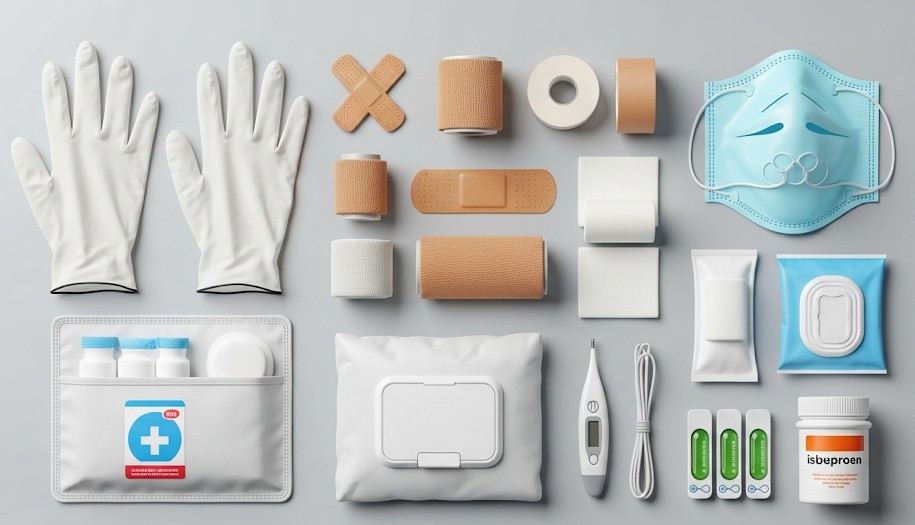
- Nitrile gloves
- Trauma shears
These items should remain easy to access without digging through the entire kit.
Basic Wound Care Supplies
Most household injuries are less dramatic but still require proper cleaning and dressing to prevent infection and complications.
- Adhesive bandages
- Sterile gauze pads
- Rolled gauze
- Medical tape
- Antiseptic wipes
- Saline or irrigation syringe
- Tweezers
- Burn gel or burn dressings
Cleaning wounds thoroughly matters more than applying large amounts of ointment.
Medication Section
A home medical kit should also help manage common illnesses and symptoms during emergencies.
- Pain relievers and fever reducers
- Antihistamines
- Anti-diarrheal medication
- Oral rehydration salts
- Cough and cold medication
- Electrolyte packets
- Prescription backup medications if possible
Include printed dosage information for adults and children.
Important Medical Tools
Small tools often become extremely valuable during stressful situations.
- Thermometer
- Flashlight or headlamp
- CPR barrier mask
- Instant cold packs
- Notebook and marker
- Emergency contact information
A dedicated flashlight inside the kit prevents searching for light during nighttime emergencies.
Medical Response Priorities
When responding to an injury, priorities matter more than perfect technique.
- Ensure the scene is safe.
- Put on gloves if available.
- Control severe bleeding first.
- Check airway and breathing.
- Treat for shock and keep the person warm.
- Clean and dress wounds once major threats are controlled.
During stressful situations, simple step-by-step thinking is more valuable than complicated medical theory.
Bleeding Control Basics
Severe bleeding requires immediate action.
- Apply direct pressure first.
- Pack deep wounds with gauze if needed.
- Use pressure dressings to maintain compression.
- Apply a tourniquet for life-threatening limb bleeding.
If a tourniquet is used, record the application time clearly.
Do Not Forget Hygiene and Infection Control
Minor injuries become much more dangerous when hygiene conditions deteriorate during emergencies.
- Wash hands when possible.
- Use gloves for wound care.
- Dispose of contaminated materials safely.
- Monitor wounds daily for redness, swelling, heat, or drainage.
Clean water matters heavily for medical care. Read: How to Purify Water in the Wild.
Where Should You Store the Kit?
Your main medical kit should be:
- Easy to access quickly
- Clearly labeled
- Protected from moisture and heat
- Known to everyone in the household
Many households benefit from multiple kits:
- Main home kit
- Vehicle medical kit
- Travel or bug-out bag kit
- Small everyday carry kit
Check and Restock Regularly
Medical kits quietly become outdated unless checked routinely.
- Inspect the kit every 3–6 months.
- Replace expired medications.
- Test flashlights and batteries.
- Replace damaged packaging.
- Restock used supplies immediately.
A half-empty medical kit is common after small injuries because people forget to replenish items.
Common Medical Kit Mistakes
- Only storing adhesive bandages.
- Buying equipment without training.
- Letting medications expire.
- Keeping the kit buried in storage.
- Ignoring trauma supplies entirely.
- Failing to label compartments clearly.
Real Example
During a kitchen accident, a household member suffered a deep hand laceration while cooking during a blackout. Because the medical kit was organized and accessible, gloves, gauze, irrigation supplies, and pressure dressings were applied quickly before transportation to urgent care. The prepared kit reduced confusion and response time significantly.
Recommended Medical Kit Checklist
- Tourniquet
- Pressure bandage
- Hemostatic gauze
- Compressed gauze
- Chest seals
- Bandages and tape
- Antiseptic wipes
- Gloves
- Trauma shears
- Thermometer
- Flashlight
- Pain relievers and antihistamines
- Electrolyte packets
- Medication list and emergency contacts
Practice Matters More Than Gear
A medical kit is only useful if people know how to use it. Even basic first aid and bleeding-control training dramatically improves confidence and response speed.
Practice locating supplies quickly and review emergency response steps periodically with the household.
Final Thoughts
Medical preparedness is one of the most practical forms of preparedness because accidents and illness happen regularly, even outside major disasters.
You do not need to build a hospital. Start with the basics: bleeding control, wound care, medications, organization, and regular maintenance. A well-planned home medical kit can reduce panic, improve response time, and support your household during emergencies large and small.
← Previous | All Articles | Next →