
How to Barricade a Door in a Pinch
Objective
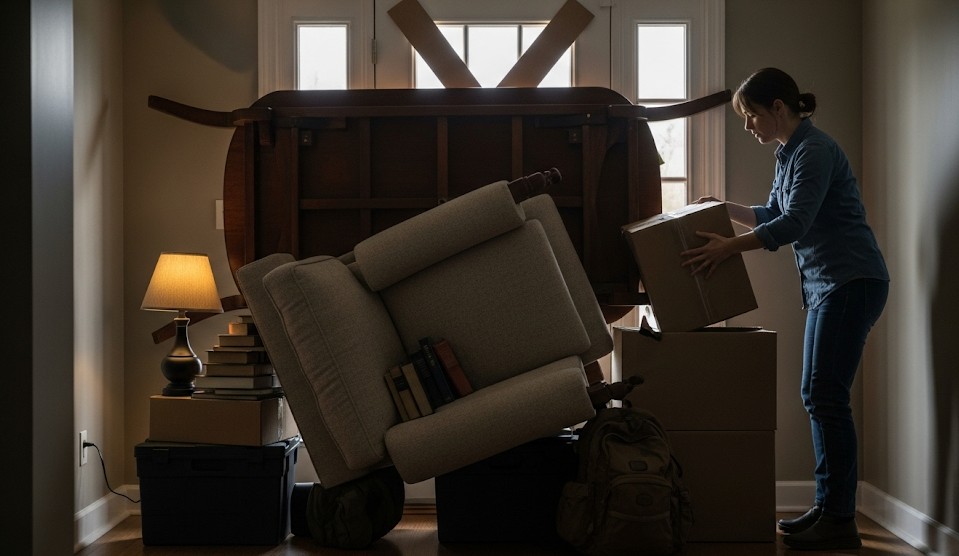
A barricade is not a permanent security solution. It is a temporary delay tool. The objective is to slow or prevent unwanted entry long enough to call for help, move to a safer exit, hide from view, or allow responders time to reach you. In an emergency, even a few extra seconds can matter.
The safest barricade plan begins before anything happens. Know which rooms have solid doors, working locks, alternate exits, phone signal, and enough furniture to create a delay. A room that locks well but has no escape route may be useful in one scenario and dangerous in another. The goal is controlled delay, not trapping yourself like a raccoon in a filing cabinet.
Scenario (Example)
Example: Civil unrest or a security threat develops outside your building. You are alone in an office with a solid-core interior door, a standard handle, a door closer arm, a sturdy chair, several wedges, a desk, and a charged phone. Your priority is to secure the door, reduce visibility, communicate your location, and preserve a safe exit plan.
If the situation involves a broader disruption, review Staying Safe in Civil Unrest and Power Outage Security Measures for wider planning around movement, lighting, communication, and household security.
First Decision: Barricade or Exit?
Before barricading, decide whether leaving is safer. If there is a clear, safe exit away from the threat, evacuation may be better than locking down. If the threat is outside the room, the hallway is unsafe, or you cannot safely move, barricading may be the right temporary action.
- Exit if you have a clear, safe route away from danger.
- Barricade if the threat is near the door or movement would expose you.
- Avoid barricading against smoke, fire, flooding, or hazardous air.
- Keep your escape path inside the room clear.
- Communicate your exact location as soon as possible.
A barricade should buy time, not remove options. Never pile items in a way that blocks your only safe exit if fire, smoke, or medical emergency becomes the greater threat.
Understand the Door
Different doors fail in different ways. Before using a room as a safe space, look at the door type, swing direction, hinges, handle, frame, and available anchor points.
- Inward-opening door: Can often be blocked with wedges, furniture, or weight against the door.
- Outward-opening door: Harder to block from inside unless you can secure the handle, closer arm, or hinge side.
- Solid-core door: Stronger and more useful for delay.
- Hollow-core door: Offers limited protection and may fail quickly.
- Door with window: Needs visibility control and glass hazard awareness.
Look for weak points. A strong door in a weak frame may still fail. A lock is helpful, but a lock plus wedges, furniture, and visibility control is better.
Fast Methods
- Wedge: Push or hammer a rubber or wooden wedge tightly under the door. On some doors, placing wedges near the latch side and hinge side can improve resistance.
- Chair jam: Place the back of a sturdy chair under the handle with the legs braced firmly against the floor. This works best on inward-opening doors with lever-style handles.
- Belt or loop: If there is a door closer arm, loop a belt, strap, or cord through the closer hardware to limit opening. Keep fingers clear of pinch points.
- Furniture brace: Slide a heavy desk, cabinet, or table against the door while keeping your own exit path clear.
- Handle tie-off: If a secure anchor point exists, a belt, extension cord, strap, or rope may help limit handle movement on some door types.
The best method depends on the door. Test these ideas safely in advance if allowed by your workplace, school, or home environment. Do not damage property during practice. Emergency skills are better when they have been rehearsed calmly instead of invented while adrenaline is doing jazz hands.
Reinforce the Room
Once the door is delayed, reduce visibility and improve communication. Do not stand directly in front of the door. Move to cover, stay low if appropriate, and keep your phone accessible.
- Stack heavy items behind the door, but do not block your escape route.
- Turn off lights if darkness helps conceal occupancy.
- Close blinds or curtains.
- Tape or cover interior windows if safe and time allows.
- Silence phones except for emergency communication.
- Keep people away from the door and line of sight.
If you are sheltering during a blackout, also review Surviving a Blackout: Home Checklist for lighting, communication, and household safety basics.
Call & Coordinate
Communication should happen early. Use phone, text, emergency app, radio, or building security systems if available. Keep messages short and specific.
- Give your exact location: building, floor, room number, and nearby landmarks.
- Describe the situation calmly and briefly.
- Stay off speakerphone if noise could reveal your position.
- If with others, assign roles: caller, barricader, lookout, first aid, and quiet control.
- Keep one person monitoring official instructions if safe.
If someone is injured, basic first aid may be needed while waiting. See Home Medical Kit: Beyond Band-Aids for supplies and planning ideas.
Visibility and Noise Control
A barricade is stronger when paired with concealment. If an intruder cannot easily tell whether a room is occupied, they may move on. This depends on the situation, but reducing obvious signs of occupancy is usually smart.
- Silence notifications, alarms, and vibration when possible.
- Keep voices low.
- Move away from windows and interior glass.
- Avoid unnecessary movement near the door.
- Do not argue through the door unless communicating with verified responders.
Fire, Smoke, and Medical Exceptions
A barricade becomes dangerous if conditions change. Smoke, fire, chemical fumes, flooding, or a medical emergency may require leaving quickly. Always reassess.
- If smoke enters, prioritize evacuation over barricade strength.
- If fire alarms sound, follow emergency procedures unless a direct threat prevents movement.
- If someone cannot breathe, has severe bleeding, or loses consciousness, communicate that immediately to responders.
- Do not create a barricade so heavy that you cannot move it if escape becomes necessary.
Security is important, but life safety comes first. A barricade should never turn a survivable situation into a locked-room hazard.
Real Example
An office worker heard a disturbance moving through a hallway and entered a small office with a solid-core door. They locked the door, looped a belt through the door closer arm, pushed wedges under the door, moved a heavy chair under the handle, and texted security with the room number. They closed blinds, silenced their phone, and waited away from the doorway. Attempts on the handle failed long enough for building security to clear the corridor.
Common Mistakes
- Blocking the only escape path completely.
- Standing directly behind the door after barricading it.
- Making noise while trying to stay hidden.
- Choosing a room with a weak hollow-core door when better options exist.
- Ignoring smoke, fire alarms, or hazardous air because the barricade is already built.
- Failing to communicate location early.
- Assuming one chair under a handle solves every door type.
Checklist
- Rubber or wooden door wedges
- Duct tape or strong tape
- Sturdy chair
- Belt, strap, cord, or short rope
- Phone charger or power bank
- Small flashlight or headlamp
- Basic first aid kit
- Room number or location information posted clearly inside
- Known secondary exit if available
Contingencies
- Hinges exposed outward: Consider moving to a secondary room with a better door if safe.
- Door opens outward: Use handle tie-offs, closer arm loops, or a better room if available.
- Smoke or fire: Barricade is secondary. Prioritize evacuation and breathable air.
- No phone signal: Move only if safe, use text if possible, or signal from a window.
- Multiple people present: Assign roles quickly and keep everyone quiet and away from the door.
After-Action
Identify the best barricade rooms in your home, workplace, school, or regular travel locations before an emergency. Look for solid doors, working locks, minimal glass, alternate exits, phone signal, and furniture that can be moved quickly. Stage simple wedges where appropriate and legal.
After any drill or real incident, review what worked. Was the door strong enough? Could you communicate? Did people know where to go? Was the escape route blocked? Good security planning is boring until it matters, which is exactly why it should be done before the hallway gets exciting.
← Previous | All Articles | Next →