Blackout Cooking with Common Household Items
Objective
Cooking during a blackout is not about making perfect meals. It is about feeding people safely, conserving fuel, protecting water, and avoiding carbon monoxide, fire, and foodborne illness. The objective is to cook or assemble simple meals using common household items while keeping the home safe during a power outage.
A blackout changes the kitchen fast. Electric stoves may not work. Refrigerators and freezers begin warming. Dishwashing becomes harder if hot water is unavailable. Lighting is limited. People get hungry, tired, and impatient. A simple cooking plan prevents the outage from turning into a three-day snack raid followed by the discovery that all the useful food required electricity to prepare.
For a broader outage plan, review Surviving a Blackout: Home Checklist . Cooking is only one part of the problem; lighting, water, medical needs, sanitation, communication, and security all matter during longer outages.
Scenario (Example)
Example: A storm causes a multi-day power outage. Your refrigerator is still cool early on, but the electric stove is out. You have a gas stove that can be lit with a match, a thermos, canned food, rice, couscous, peanut butter, crackers, oats, tuna packets, a few frozen items, and limited bottled water. The goal is to feed the household without wasting fuel or creating a safety hazard.
The first rule is to stay calm and organize. Check what cooking options are actually safe. Identify which foods must be eaten first. Decide how much water can be used for cooking and cleanup. Then build meals around low-fuel, one-pot, or no-cook options.
Quick Heat Sources
Not every heat source is safe during a blackout. Some options are useful, some are limited, and some should never be used indoors. Ventilation and carbon monoxide awareness are non-negotiable.
- Gas stove with match: May work if the gas supply is active. Use ventilation, keep a battery-powered carbon monoxide alarm nearby, and never use the stove as a room heater.
- Camping stove: Use outdoors only unless the manufacturer specifically states otherwise. Most portable fuel stoves are not safe for indoor use.
- Charcoal grill: Outdoors only. Never use charcoal indoors, in garages, on enclosed porches, or near open windows.
- Propane grill: Outdoors only and away from doors, windows, vents, and overhangs.
- Tea light warmer: Can gently warm small items but is not reliable for boiling water or safely cooking full meals.
- Thermos cooking: Uses hot water prepared once, then stores heat for later meals like oats, instant soup, or couscous.
If you are cooking outdoors with flame, the same basic fire discipline applies as it does in camp. See Cooking Over an Open Fire: Campfire Techniques for heat control, cookware stability, and cleanup principles.
Safety First: Carbon Monoxide and Fire
Carbon monoxide is invisible, odorless, and deadly. During outages, people sometimes bring grills or fuel-burning devices indoors because they are cold, tired, or desperate to cook. Do not do this. Outdoor cooking equipment belongs outside, away from living spaces.
- Keep a battery-powered carbon monoxide alarm in working order.
- Never use a gas oven or stove to heat the home.
- Keep curtains, towels, paper plates, and packaging away from flame.
- Have a fire extinguisher accessible.
- Use stable cookware on stable surfaces only.
- Keep children and pets away from cooking zones.
A blackout kitchen should be simple and controlled. Avoid elaborate meals, crowded counters, and open flames in cluttered spaces. This is not the time to discover that your emergency cooking setup has the structural confidence of a folding lawn chair in a windstorm.
One-Pot Meal Patterns
One-pot meals save fuel, water, time, and cleanup. Build meals around a simple pattern: starch plus protein plus fat plus flavor. This works with many shelf-stable foods and can be adjusted based on what is available.
- Rice or couscous + beans + oil + spices: Filling, cheap, and easy to portion.
- Ramen + canned vegetables + tuna or chicken: Fast, salty, and useful when people need calories.
- Instant potatoes + canned meat + gravy mix: High comfort value with minimal cooking.
- Oats + powdered milk + raisins + peanut butter: Breakfast with protein, fat, and carbohydrates.
- Soup + crackers + shelf-stable protein: Easy meal when energy is low.
For a complete three-day shelf-stable food plan, see Food Without a Fridge: 72-Hour Menu . A blackout pantry is much easier to use when the menu is already planned before the lights go out.
Fuel Discipline
Fuel discipline means using the fewest heating cycles possible. Every time you light a stove, boil water, or heat a pan, you are spending a limited resource. Plan cooking in batches instead of making one tiny hot item at a time.
- Boil water early and store it in a thermos for later use.
- Choose quick-cook foods such as couscous, oats, ramen, instant rice, and instant potatoes.
- Cut food into smaller pieces so it heats faster.
- Use lids on pots to reduce cooking time.
- Turn off heat early and let retained heat finish cooking when possible.
- Cook once and eat twice if food safety allows.
A thermos can handle breakfast oats, tea, instant soup, or rehydrating small meals without relighting the stove. This is especially helpful if you are trying to conserve fuel or avoid repeated indoor flame use.
Improvised Gear
Common household items can make blackout cooking safer and easier. The key is stability. Do not balance hot cookware on awkward stacks or unstable objects.
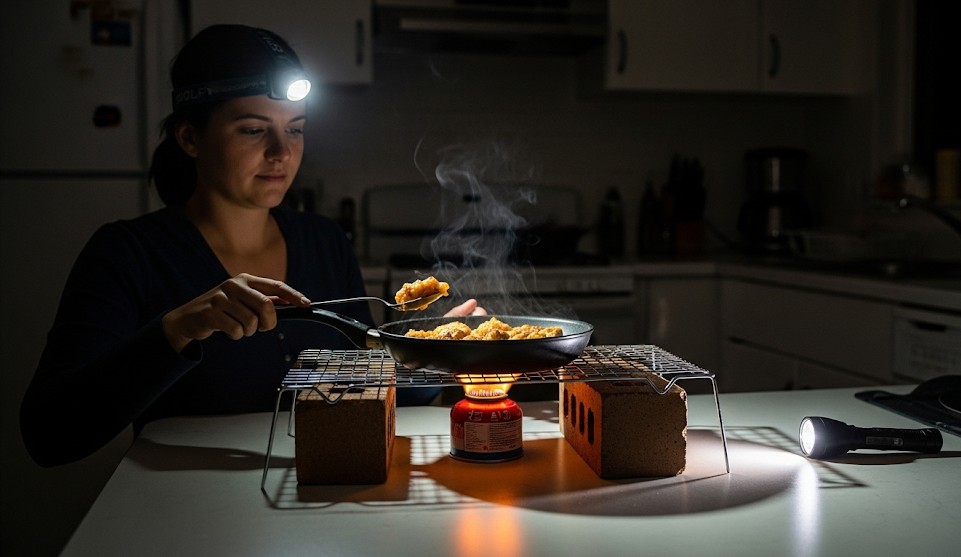
- A wire rack over two stable bricks can create a pan support outdoors.
- A pot lid speeds simmering and reduces fuel use.
- A thermos stores hot water for later meals.
- A manual can opener is essential for canned food.
- Foil can help cover pans, wrap food, or reduce cleanup.
- Disposable plates can save water when washing is difficult.
- Heavy oven mitts or gloves protect hands from hot cookware.
Improvised does not mean reckless. If a support wobbles when cold, it will not magically become safer with boiling water on top. Rebuild the setup before cooking.
Food Safety During a Blackout
Use refrigerated and frozen foods carefully. Keep refrigerator and freezer doors closed as much as possible. Eat high-risk foods early only if they are still safe. Do not taste questionable food to see if it is “probably okay.” Food poisoning during an outage is a terrible trade.
- Use perishable foods first if they are still cold and safe.
- Keep refrigerator doors closed between uses.
- Discard food that has been warm too long or smells questionable.
- Keep raw meat separate from ready-to-eat foods.
- Wash or sanitize hands before handling food.
- Avoid creating leftovers if refrigeration is unavailable.
If someone in the home has medical or dietary needs, prioritize safe foods for that person. For related preparedness planning, review Home Medical Kit: Beyond Band-Aids .
Water and Cleanup
Cooking consumes water, but cleanup can consume even more if you are not careful. During a blackout, use meals that require little washing and minimal draining. Keep a separate container for handwashing or sanitizing if possible.
- Use one-pot meals to reduce dishes.
- Wipe cookware with paper towels before washing.
- Use disposable plates when water is limited.
- Save clean water for drinking before washing dishes.
- Use no-cook meals if water service is interrupted.
If water becomes unreliable, see Finding Water in a City During Emergencies for urban water options and planning considerations.
Real Example
A family handled a two-day blackout with a window-adjacent gas flame, a battery-powered carbon monoxide alarm, and a thermos. They boiled water in the morning, filled the thermos, and used it for oats, tea, and instant soup. Dinner was couscous with chickpeas, olive oil, and seasoning because it cooked quickly and required almost no draining. By batching hot water early, they avoided relighting the stove for every meal and conserved fuel.
Checklist
- Thermos
- Manual can opener
- Quick-cook foods such as oats, couscous, ramen, instant rice, and instant potatoes
- Canned beans, tuna, chicken, soup, and vegetables
- Oil, salt, spices, bouillon, and hot sauce
- Battery-powered carbon monoxide alarm
- Fire extinguisher
- Matches, lighter, and safe fuel storage
- Paper towels, foil, trash bags, and sanitizer
- Disposable plates or bowls if water is limited
Contingencies
- No open-flame option: Use cold meals such as peanut butter, crackers, canned fish, bars, nuts, and dried fruit.
- Fridge thawing: Cook safe meats first, keep the fridge closed between uses, and avoid saving leftovers without refrigeration.
- Water off: Shift to ready-to-eat foods and conserve stored water for drinking.
- No safe ventilation: Do not burn fuel indoors. Use no-cook meals instead.
- Extended outage: Rotate through shelf-stable foods and avoid using all comfort items in the first day.
After-Action
After power returns, review what worked. Did you have enough quick-cook food? Was the manual can opener easy to find? Did the thermos save fuel? Were there enough no-cook meals? Did your carbon monoxide alarm have working batteries? Restock anything used and remove foods your household refused to eat.
Build a dedicated blackout pantry bin with quick-cook staples, no-cook meals, a can opener, seasonings, and written meal ideas. Rotate it quarterly. When the next outage happens, you want dinner to be a plan, not a flashlight-powered treasure hunt through the back of the cabinet.
← Previous | All Articles | Next →