
Tracking Animals for Food & Safety
Objective
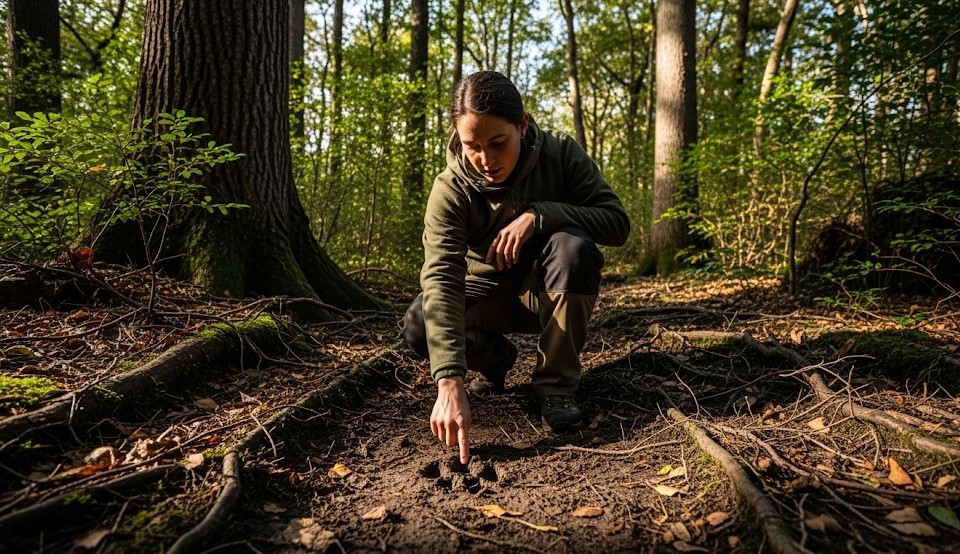
Animal tracking is not just about following footprints. It is a practical observation skill that helps you understand movement patterns, locate water, identify feeding areas, avoid surprise wildlife encounters, and make better decisions in the field. The objective is to read ground sign, trails, scat, browse, and terrain clues to improve food procurement awareness and wilderness safety.
In a survival situation, tracking can help answer important questions: What animals are nearby? Where are they traveling? Is there water close? Are predators using this corridor? Is this campsite too close to a game trail? The answers can help you find resources and avoid trouble. Tracking is basically reading the forest’s messy handwriting — and yes, some animals have terrible penmanship.
Scenario (Example)
Example: You are moving through mixed pine, scrub, and low hills. You need water and possible food options. Fresh sign suggests deer, raccoon, and small game are moving toward a creek at dawn. You also notice larger tracks along a shaded draw and want to avoid surprising anything dangerous in thick cover.
In this scenario, tracking is useful for both opportunity and caution. Fresh animal movement may lead you toward water or edible resources, but it can also warn you away from dense bedding areas, predator travel corridors, or feeding zones where close encounters are more likely.
Why Tracking Matters
Animals know the landscape in ways humans often miss. They follow efficient routes to water, shelter, food, and cover. Their trails frequently connect ridges, saddles, creek crossings, berry patches, bedding areas, and open feeding zones. Learning to recognize those routes can improve your understanding of the terrain.
Tracking also improves safety. If you see fresh bear, cougar, coyote, boar, or moose sign, you can adjust your route before stumbling into an animal at close range. For direct encounter prevention, review Avoiding Dangerous Wildlife Encounters .
Step-by-Step: Reading Sign
- Track shape: Identify whether the print is hoof, paw, clawed, webbed, or bird-like. Shape tells you the general animal group.
- Direction: Look at toe orientation, drag marks, mud displacement, and stride pattern to confirm travel direction.
- Gait: Track spacing can suggest walking, running, bounding, or cautious movement.
- Age: Crisp edges often mean fresher sign. Rounded, wind-softened, rain-damaged, or debris-filled tracks are usually older.
- Associated sign: Scat, hair, browse marks, rubs, feathers, digging, overturned stones, or disturbed leaf litter provide confirmation.
- Terrain relationship: Notice whether the sign follows water, saddles, ridgelines, brush edges, or game trails.
A single print can be misleading. A pattern of prints, trail use, scat, and terrain clues is much more reliable.
Age of Track
Estimating track age is part science and part local experience. Soil type, humidity, sun, wind, rain, and temperature all affect how long tracks look fresh.
- Fresh tracks often have sharp edges and clear compression.
- Older tracks may have debris inside them or softened edges.
- Tracks in shade may stay fresh-looking longer than tracks in sun.
- Rain can erase small details quickly.
- Wind can fill tracks with dust, sand, snow, or needles.
One simple comparison method is to press your own print nearby in similar soil and compare edge sharpness, moisture, and firmness. This does not give an exact time, but it improves judgment.
Track Traps
A track trap is any surface that records prints clearly. Search these areas when you want the freshest evidence of movement.
- Mud along creek edges
- Sand bars and riverbanks
- Soft snow
- Dusty trail sections
- Wet clay
- Loose soil near game trails
- Shallow water crossings
Dawn is often a good time to check track traps because many animals move overnight or early in the morning. If you are near water, track traps can reveal both animal movement and possible water access. For water-related route decisions, see How to Cross a River Safely .
For Food
Tracking can help locate food opportunities, but it should be approached legally, ethically, and realistically. In many places, hunting, trapping, and snares are tightly regulated outside true survival emergencies.
- Look for small-game trails near brush edges, clearings, and feeding areas.
- Watch for nut shells, chewed stems, browse lines, and digging.
- Notice repeated travel paths between cover and water.
- Use observation before wasting energy.
- Follow all laws in normal conditions.
For a deeper legal and ethical discussion, see Food Procurement: Snares, Traps, and Legal Reality . In many short survival events, signaling, water, and shelter are more urgent than trying to obtain game.
Finding Water Through Animal Movement
Animal trails often lead to water, especially in dry terrain. Tracks converging downhill, repeated paths through brush, and muddy crossings can all suggest water nearby.
- Follow well-used trails cautiously toward lower ground.
- Look for multiple species moving in the same direction.
- Watch for birds, insects, green vegetation, and damp soil.
- Be careful near water because predators and large animals may also use those routes.
Water found through animal sign should still be treated before drinking. Animals using a water source do not make it safe for humans.
Safety
Tracking is just as useful for avoiding animals as it is for finding them. Fresh predator sign, large hoofprints, strong odor, carcasses, bedding areas, or heavy trail use should change your behavior.
- Give dense cover a wide berth when fresh large-animal sign is present.
- Avoid moving quietly through brush where visibility is poor.
- Make moderate noise if you suspect animals are nearby.
- Do not follow predator tracks for curiosity.
- Avoid carcasses, kill sites, and heavily scavenged areas.
- Keep food and trash away from camp.
If you see fresh bear, cougar, boar, or moose sign near your campsite, consider relocating before dark. It is much easier to move camp at 4 p.m. than to negotiate with a surprised animal at 2 a.m.
Follow With Discipline
When following sign, move slowly and scan ahead. Beginners often stare at the ground so hard they forget to look around. That can lead to walking directly into an animal, a hazard, or terrain problem.
- Stop often and scan ahead.
- Move quietly only when safe; make noise in dangerous visibility.
- Use shade and cover, but avoid trapping yourself in dense brush.
- Mark your route if you leave established trails.
- Do not let tracking pull you farther from camp or known routes than planned.
If tracking begins affecting your route, keep navigation discipline. Review Navigation 101: Map, Compass, Confidence before relying on animal trails as travel routes.
Real Example
A small group searching for water noticed fresh raccoon tracks crossing a muddy trail and heading toward lower ground. They followed the general direction cautiously and found a creek crossing with clear animal use. Under flat rocks near the edge, they also found crayfish, creating a possible food source. The discovery solved two problems at once: water access and a low-effort protein option. The water was still treated before use.
Common Mistakes
- Assuming one footprint tells the whole story.
- Following fresh predator tracks out of curiosity.
- Ignoring wind direction and walking into dense cover silently.
- Confusing old sign with active movement.
- Letting tracking distract from navigation.
- Camping directly on a game trail.
- Assuming animal-used water is safe to drink untreated.
Checklist
- Notebook and pencil for sketches
- Tape measure or pace marks
- Binoculars
- Gloves
- Regional track guide
- Camera or phone for documentation if available
- Water treatment method
- Map and compass
Tracking often overlaps with foraging and field observation. For plant-food safety, review Foraging Wild Edibles Without Getting Sick .
Contingencies
- Rain erases sign: Shift attention to game trails, bedding terrain, broken vegetation, and fresh scat.
- Predator sign is fresh: Reroute upslope or into open terrain, increase spacing, and make moderate noise.
- No sign appears: Stop wasting energy and focus on water, shelter, or signaling.
- Tracks lead into unsafe terrain: Do not follow. Animals can travel places humans should not.
- You lose orientation: Stop tracking and reestablish your own route first.
After-Action
After each trip, log which substrates held tracks best and how long track edges stayed crisp in your climate. Note species, soil type, weather, time of day, and nearby food or water sources. Over time, these notes become a local field guide built from real observation.
Good tracking is patient, quiet, and humble. It teaches you where animals move, where water may be found, and where not to sleep. The goal is not to become a wilderness detective overnight. The goal is to notice more than you did yesterday and make better decisions because of it.
← Previous | All Articles | Next →