
Foraging Wild Edibles Without Getting Sick
Objective
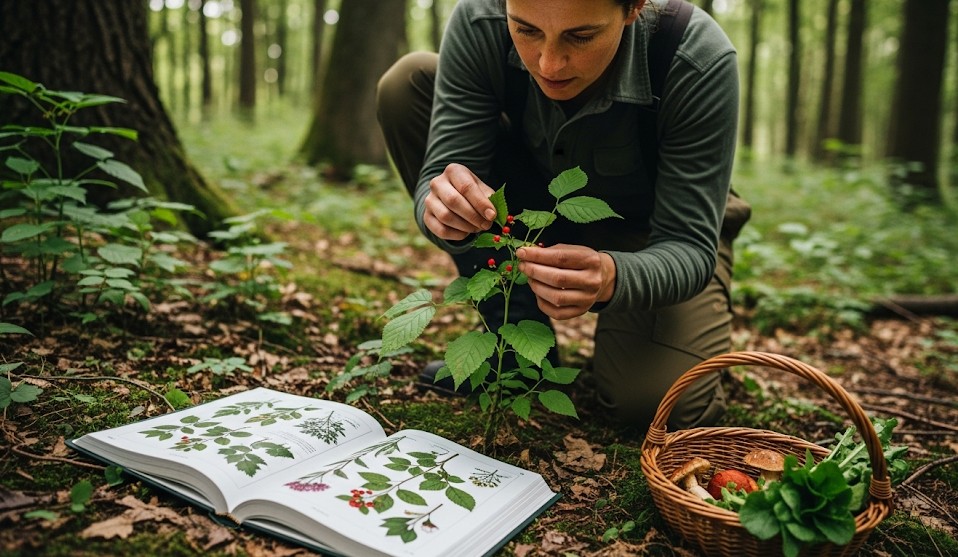
Foraging can supplement food in a survival situation, but it can also turn hunger into a medical emergency if done carelessly. The objective is to gather wild edibles safely by verifying identification, avoiding contaminated areas, preparing foods correctly, and knowing when not to eat something.
The most important rule is simple: if you are not completely sure what it is, do not eat it. Wild food is not worth poisoning yourself over. In many survival scenarios, shelter, water, warmth, navigation, and signaling matter more than collecting plants. Foraging should support your survival plan, not distract from it.
Scenario (Example)
Example: You are in spring foothills where nettles, dandelion, miner’s lettuce, acorns, and mushrooms may be present. You also know false morels and toxic carrot-family plants grow in the region. You have a regional field guide, gloves, clean water, a knife, and limited food remaining.
In this situation, the smart move is to focus only on plants you can positively identify and safely prepare. Avoid mushrooms unless you have expert-level confidence. If rescue is likely, review Signaling from Remote Locations Without Electronics before spending major energy gathering food.
Rules Before You Pick
- 100% ID or 0% eat. Confirm multiple features: leaf shape, stem, flower, growth pattern, habitat, season, and smell when appropriate.
- Use a regional guide. Plants vary by location. A generic online photo is not enough.
- Avoid dirty zones. Do not pick near roads, industrial sites, old dumps, flood debris, rail lines, polluted water, sprayed lawns, or agricultural runoff.
- Start small. Even edible plants can upset some stomachs. Try a small amount first and wait.
- Do not mix unknowns. Eat only one new wild food at a time so reactions are easier to identify.
- When tired, cold, or panicked, be extra cautious. Bad decisions love bad conditions.
Identification Basics
Good identification uses patterns, not guesses. One matching feature is not enough. Many dangerous plants look similar to edible ones at certain growth stages.
- Check leaf arrangement: opposite, alternate, basal, or whorled.
- Look at stem shape, hairs, color, sap, and branching.
- Confirm flowers or seed heads when available.
- Compare habitat: wetland, field, forest edge, disturbed soil, or shade.
- Use seasonality: some plants are only safe or useful at certain stages.
- Take photos and notes for later review if you are practicing, not surviving.
If you are also tracking animal movement or trying to understand the landscape, see Tracking Animals for Food and Safety . Good observation skills apply to both plants and animals.
Common, Safer Targets
These examples are commonly discussed as beginner-friendly wild foods in many regions, but you must still confirm local species and conditions before eating.
- Dandelion: Young leaves are less bitter, flowers can be used in small amounts, and roots are often roasted. Avoid sprayed lawns or roadsides.
- Nettles: Nutritious but must be handled with gloves and cooked to neutralize stinging hairs.
- Miner’s lettuce: Mild green often eaten raw or lightly cooked where correctly identified.
- Acorns: Require leaching to remove tannins before use. Different oak species vary in bitterness.
- Blackberries and raspberries: Easier to recognize when fruiting, but still avoid contaminated areas.
High-Risk Categories
Some wild foods are not beginner-friendly. In survival training, knowing what to avoid may be more important than knowing what to eat.
- Mushrooms: Many edible mushrooms have dangerous lookalikes. Avoid unless you have expert identification confidence.
- Carrot family plants: This group includes edible plants but also deadly species such as poison hemlock and water hemlock.
- Unknown berries: Bright fruit does not mean safe fruit.
- Plants with milky sap: Some are edible, but many are irritating or toxic. Do not use this as a simple rule either way.
- Old or wilted plants: Some plants become more dangerous or less digestible after wilting or aging.
Lookalike Red Flags
- Carrot family hazards: Be cautious with umbrella-shaped flower clusters, hollow stems, purple blotches, strong unpleasant odor, or plants growing near wet areas.
- False morels: Irregular lobed caps and chambered or cottony interiors can signal danger. Do not eat mushrooms unless identification is certain.
- Water plants: Aquatic plants may be contaminated or have toxic lookalikes.
- Young shoots: Early growth stages can be difficult to identify and easy to confuse.
Prep & Cooking
Preparation can reduce bitterness, improve digestibility, and remove surface contamination. It does not make a toxic plant safe. Cooking is not magic; it is just heat wearing a confident hat.
- Wash plants thoroughly with clean water.
- Cook nettles before eating.
- Boil questionable-but-known edible greens and discard the water if recommended for that plant.
- Leach acorns before eating to remove tannins.
- Roast nuts and seeds when appropriate.
- Avoid eating large amounts of any new wild food at once.
If you need safe fire or cooking methods in the field, review Cooking Over an Open Fire: Campfire Techniques and Building a Rainproof Fire After Days of Rain .
Contamination Risks
Correct identification is only half the job. A safe plant growing in a contaminated location may still be unsafe to eat.
- Avoid roadsides due to exhaust residue, oil, road salt, and debris.
- Avoid old industrial land, dumps, mines, railways, and treated utility corridors.
- Avoid flood debris and stagnant water edges after storms.
- Avoid areas sprayed with herbicides or pesticides.
- Avoid plants growing near sewage, livestock runoff, or questionable water sources.
If water sources are part of your survival situation, see Finding Water in a City During Emergencies for urban contamination thinking, and Desert Survival: Water and Shade Priorities for harsh-environment water priorities.
Real Example
A small team in spring foothills found nettles, dandelion, and miner’s lettuce near camp. They avoided a lush patch near an old culvert because runoff and debris made contamination likely. Instead, they collected nettles from a cleaner slope, handled them with gloves, boiled them with potatoes, and used the broth as a warm soup. They ignored mushrooms entirely because a false morel lookalike had been seen in the area.
Common Mistakes
- Eating a plant based on one photo match.
- Trusting taste as a safety test.
- Eating unknown mushrooms.
- Gathering from roadsides or polluted areas.
- Trying too many new foods at once.
- Skipping cooking steps for plants that require preparation.
- Foraging when rescue, shelter, or water should be the priority.
Checklist
- Regional field guide
- Knife or scissors
- Mesh bag or breathable container
- Gloves for nettles or thorny plants
- Clean water for rinsing
- Small pot for boiling
- Notebook or phone camera for practice identification
- Known-safe backup food
Contingencies
- Allergic response: Stop intake immediately and use antihistamine if available and appropriate.
- GI upset: Stop eating wild foods and switch to known-safe foods and fluids.
- Uncertain identification: Do not eat it. Mark the plant for later learning if safe.
- No clean water: Avoid foods that require heavy washing or boiling.
- Low energy: Stop foraging and focus on shelter, water, and signaling.
For longer-term food planning, also see Food Procurement: Snares, Traps, and Legal Reality and Improvised Fishing: Lines, Hooks, and Traps .
After-Action
Practice foraging as a learning skill before you ever need it. Map productive patches, record seasonality, photograph plants at different growth stages, and compare them against a trusted regional guide. Learn from local experts when possible.
The safest forager is not the person who eats the most wild plants. It is the person who confidently walks away from anything uncertain. In survival, “probably edible” is just “maybe poisonous” wearing a fake mustache.
← Previous | All Articles | Next →