
Improvised Fishing: Lines, Hooks, and Traps
Objective
Improvised fishing is a survival food skill built around patience, observation, and simple tools. The objective is to catch fish with field-expedient lines, hooks, bait, and passive traps while conserving energy. In a true survival situation, calories matter, but so does effort. A method that works while you rest, build shelter, signal, or collect water may be more valuable than one that requires constant attention.
This guide focuses on emergency and survival concepts, not sport fishing shortcuts or ignoring local laws. In normal conditions, always follow fishing regulations, seasons, size limits, gear restrictions, and property rules. Traps, unattended lines, and improvised hooks may be restricted or illegal outside genuine emergencies. Survival skills should make you more responsible, not turn you into the villain in a park ranger training video.
Scenario (Example)
Example: You are near a lake outflow with small trout, minnows, and crayfish visible in the shallows. You do not have a fishing rod, but you have cordage, paracord inner strands, safety pins, a knife, a plastic bottle, and small food scraps. Your goal is to create one active handline and one passive baited trap while preserving enough energy for shelter, water, and signaling.
If you are waiting for rescue, food may not be the first priority. Signaling and location discipline can matter more. Review Signaling from Remote Locations Without Electronics so food gathering does not distract from being found.
Legal and Ethical Reminder
Improvised fishing methods can harm fish populations if used carelessly. In non-emergency situations, use legal gear, follow local rules, and release unwanted catches properly. Do not set traps where they may continue catching animals after you leave. Remove all line, hooks, bottles, and debris from the site.
In a survival emergency, the goal is not to harvest everything available. The goal is to obtain enough food to support survival while minimizing waste and avoiding unnecessary suffering. Check traps frequently, dispatch fish humanely where appropriate, and use what you catch.
Finding Productive Water
Fishing success begins with location. Fish conserve energy and position themselves where food comes to them. Look for places where current, cover, depth, and food sources come together.
- Lake outlets and inlets where moving water carries insects and small fish.
- Eddies behind rocks where fish can rest out of the main current.
- Undercut banks, submerged logs, shade lines, and weed edges.
- Drop-offs where shallow water meets deeper water.
- Foam lines or current seams that collect food.
- Early morning and evening feeding areas near shore.
Avoid wasting energy in dead-looking water when signs of life are elsewhere. Watch for surface rises, minnows scattering, insect activity, birds feeding, or shadows moving along the bottom.
Handlines & Hooks
A handline is one of the simplest fishing tools. It can be made from paracord inner strands, bank line, dental floss, sewing thread doubled up, or other strong cordage. The line should be thin enough to avoid spooking fish but strong enough to handle the target species.
- Use paracord inner strands or bank line for the main line.
- Add a small sinker using a pebble tied in cloth, split shot if available, or a small piece of metal.
- Bend safety pins into hook shapes if no hooks are available.
- Carve wooden, bone, or thorn gorges only if you understand how they work and can use them responsibly.
- Use worms, grubs, insects, bread, fish scraps, or small bits of jerky as bait.
A gorge hook is different from a modern hook. It is usually a small sharpened piece that the fish swallows; tension turns it sideways. This can be effective but is less selective and harder on fish, so it is best viewed as an emergency method.
Improvised Bait
Bait should match what fish are already eating. Turning over rocks may reveal worms, larvae, or aquatic insects. Rotten logs may hold grubs. Shallow water may contain minnows or crayfish. Bread, rice, bits of meat, or fish scraps can work in some waters, especially for small fish.
- Use small baits for small fish rather than oversized chunks.
- Keep bait natural-looking and avoid heavy shadows over the water.
- Change bait if fish investigate but refuse to bite.
- Try different depths before abandoning a location.
Traps
Passive traps can work while you complete other survival tasks. They are especially useful for minnows, crayfish, and small fish. Traps should be checked often and removed when you leave.
- Fish weir: A V-shaped rock wall or stick fence that funnels fish toward a narrow opening or shallow catch area.
- Bottle trap: A plastic bottle with the top cut off and inverted into the body. Bait is placed inside to attract minnows or crayfish.
- Basket-style trap: A woven or improvised funnel trap made from flexible sticks, reeds, or mesh if available.
Place traps where fish already travel: current edges, shallow channels, near cover, or along natural funnels. Do not block an entire stream or create a hazard for wildlife. The goal is a small survival catch, not aquatic engineering with delusions of grandeur.
Presentation
Presentation matters even with improvised gear. Fish detect movement, vibration, shadow, and unnatural tension. Move slowly near the bank and keep your profile low.
- Fish early and late when many species feed more actively.
- Keep line as thin and natural as practical.
- Avoid casting heavy shadows across clear water.
- Change depth, bait, or location every 10–15 minutes if nothing happens.
- Focus on structure such as rocks, logs, eddies, and drop-offs.
In strong current, fish often hold behind rocks or along seams where fast and slow water meet. That lets them rest while food passes nearby. If you recently crossed or followed a river, review How to Cross a River Safely for reading water, current behavior, and hazard awareness.
Cooking and Food Safety
Fish should be cleaned and cooked safely. Keep raw fish away from ready-to-eat foods, wash hands if possible, and cook thoroughly. Small fish can often be cooked whole after cleaning, while larger fish may be filleted or cut into pieces.
If you have a fire or stove, simple cooking is best. Boiling, pan cooking, or roasting over coals can all work. For fire cooking basics, see Cooking Over an Open Fire: Campfire Techniques .
- Cook fish the same day when possible.
- Do not leave scraps near camp where they may attract wildlife.
- Dispose of remains away from sleeping areas and water sources.
- Clean knives and cookware after use.
Energy Management
Fishing can waste time if you become obsessed with it. In many short-term survival situations, water, shelter, warmth, signaling, and navigation are more important than food. Fish when it supports the larger survival plan, not when it distracts from it.
If you are on a planned route, food gathering should be part of a realistic schedule. See Multi-Day Trek Planning: Pace, Food, Fuel, Margin for balancing calories, fuel, route timing, and contingency decisions.
Real Example
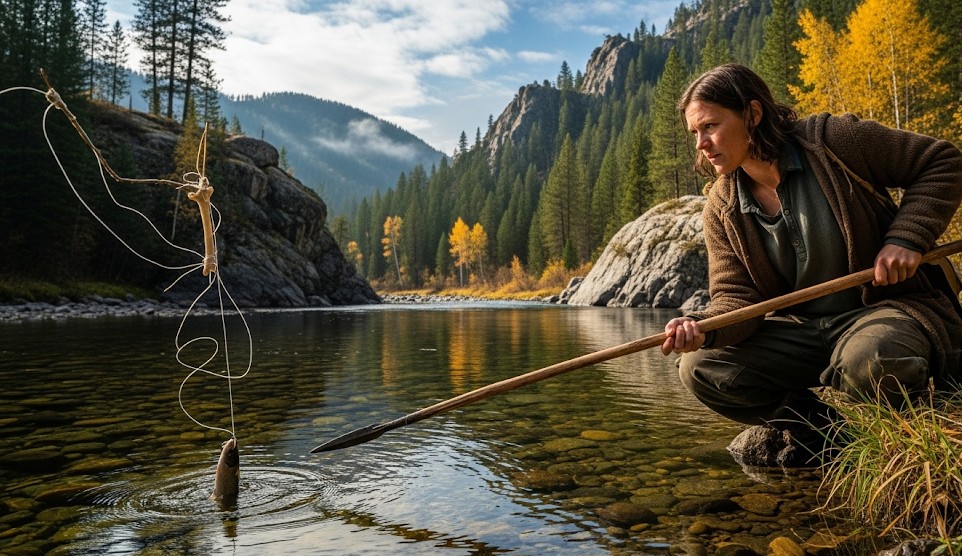
At a lake outflow, a stranded hiker made a handline from paracord inner strands and carved a small wooden gorge. Worms found under rocks produced two small trout near the current seam. A bottle trap baited with crumbs and scraps collected several minnows and one crayfish overnight. The catch was small, but it added protein and morale while the hiker conserved energy for shelter, water collection, and signaling.
Checklist
- Bank line or paracord inner strands
- Small hooks, safety pins, or emergency fishing kit
- Small weights or improvised sinkers
- Knife for carving and cleaning fish
- Plastic bottle or mesh for a small trap
- Small container for bait
- Fire kit or stove for cooking
- Trash bag for removing line, hooks, and trap materials
Contingencies
- No bites: Change depth, bait, or location every 10–15 minutes.
- Strong current: Fish eddies, seams, and slack water behind rocks.
- No hooks: Try baited traps, weirs, or emergency gorge methods where lawful and appropriate.
- No bait: Search under rocks, logs, leaf litter, and shallow water edges.
- No fire: Do not eat questionable raw fish. Focus on rescue, water, and safer food options.
After-Action
After the situation or practice session, note which baits worked, which structures held fish, and which improvised tools failed. Track whether your line was too visible, your hooks were too large, or your traps were placed in poor locations. Small lessons make future attempts much more efficient.
For a preparedness kit, pre-pack a micro fishing kit with a few small hooks, split shot, swivels, monofilament, and a compact handline. It weighs almost nothing but can save time when calories matter. Improvising is useful; having a tiny head start is even better.
← Previous | All Articles | Next →